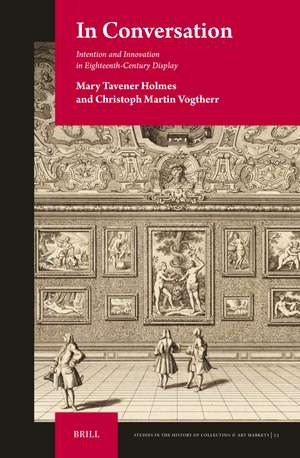
In Conversation: Intention and Innovation in Eighteenth-Century Display: Studies in the History of Collecting & Art Markets, cartea 23
Autor Mary Tavener Holmes, Christoph Martin Vogtherren Limba Engleză Hardback – 18 sep 2025

Preț: 739.26 lei
Preț vechi: 901.54 lei
-18%
Puncte Express: 1109
Carte disponibilă
Livrare economică 05-11 noiembrie
Livrare prin curier în România Termenul estimat este afișat lângă disponibilitate.
Transport gratuit pentru acest produs Plată online sau ramburs, în funcție de opțiunile comenzii.
Retur gratuit în 14 zile Comandă securizată și suport în română.
Specificații
ISBN-13: 9789004732858
ISBN-10: 9004732853
Pagini: 452
Dimensiuni: 155 x 235 x 30 mm
Greutate: 0.81 kg
Editura: Brill
Colecția Brill
Seria Studies in the History of Collecting & Art Markets
ISBN-10: 9004732853
Pagini: 452
Dimensiuni: 155 x 235 x 30 mm
Greutate: 0.81 kg
Editura: Brill
Colecția Brill
Seria Studies in the History of Collecting & Art Markets
V-ar putea interesa
-
 -19%Preț: 586.19 lei723.70 lei
 -
 Learning to Look at PaintingsMary ActonPreț: 294.97 lei
 -
 Art in Theory 1648-1815Charles HarrisonPreț: 348.38 lei
 -
 Changing Images of Pictorial SpaceWilliam V DunningPreț: 157.04 lei
 -
 Preț: 425.22 lei
 -
 A Guide to Eighteenth-Century ArtLinda WalshPreț: 250.33 lei
 -
 -32%Preț: 598.78 lei881.67 lei
 -
 The Louvre: All The PaintingsAnja Grebe-19%Preț: 471.20 lei579.60 lei
 -
 Display of Art in the Roman Palace, 1550–1750Gail Feigenbaum-19%Preț: 508.91 lei628.28 lei
 -
 -8%Preț: 486.99 lei529.34 lei
 -
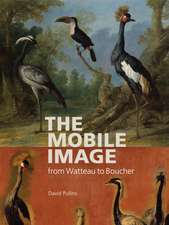 The Mobile Image from Watteau to BoucherDavid PullinsPreț: 443.07 lei
 -
 Treasured Possessions: From the Renaissance to the EnlightenmentDr Melissa CalaresuPreț: 310.24 lei
 -
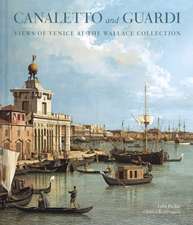 Canaletto and GuardiCharles Beddington-14%Preț: 171.86 lei200.01 lei
 -
 With Observation and ImaginationArthur K Wheelock-13%Preț: 246.61 lei283.63 lei
 -
 Inside Stories: Curating and displaying the stuff of lifeHilary Robertson-17%Preț: 236.01 lei284.62 lei
 -
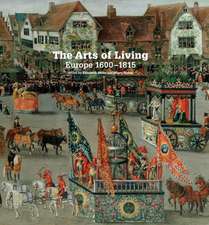 The Arts of Living EuropeElizabeth Miller-20%Preț: 168.50 lei210.67 lei
 -
 Preț: 266.00 lei
 -
 The Splendor of GermanyAnke Frohlich-SchauseilPreț: 349.52 lei
 -
 Preț: 364.41 lei
 -
 The Book of Colour ConceptsAlexandra LoskePreț: 206.79 lei
Notă biografică
Mary Tavener Holmes, Ph.D., is an independent scholar with a specialty in the art of the eighteenth century. Her publications include De Watteau à Fragonard: Les fêtes galantes (with Christoph Vogtherr, 2014) and Nicolas Lancret’s Dance before a Fountain (2006).
Christoph Martin Vogtherr is General Director of the Prussian Palaces and Gardens Foundation, Potsdam, and was before the director at Hamburger Kunsthalle and the Wallace Collection. He is a specialist of French eighteenth-century art and the history of art collecting.
Christoph Martin Vogtherr is General Director of the Prussian Palaces and Gardens Foundation, Potsdam, and was before the director at Hamburger Kunsthalle and the Wallace Collection. He is a specialist of French eighteenth-century art and the history of art collecting.
Cuprins
Acknowledgements IX
List of Figures
Introduction
1 Social Spaces: Displaying and Discussing Paintings in Eighteenth-Century European Collections
2 A New Theoretical Framework
3 The Vanishing Role of Iconography
4 Setting the Stage: Vienna and Versailles at the Beginning of the Eighteenth Century
Introduction to Part 1
1 Lothar Franz Graf Schönborn at Pommersfelden, Schloss Weißenstein
2 Eugen Prince of Savoy at Vienna, Upper Belvedere
3 Philippe II, Duc d’Orléans at Paris, Palais Royal
4 Pierre Crozat at Paris, rue de Richelieu
Introduction to Part 2
5 Jeanne-Baptiste d’Albert, Comtesse de Verrue at Paris, rue du Cherche-Midi
6 Jean de Jullienne at Paris, rue des Gobelins
7 François Berger at Paris, rue Saint-Marc
8 Etienne-François, Duc de Choiseul at Paris, rue de Richelieu
Introduction to Part 3
9 Elector Friedrich August II of Saxony / August III King of Poland at Dresden, Stallhof
10 The Electors Palatine at Düsseldorf, Schloss, and at Mannheim, Schloss
11 The French Royal Collection at Paris, Palais du Luxembourg
12 The Académie Royal de Peinture et de Sculpture at the Salon, Paris, Palais du Louvre
13 Abel-François Poisson de Vandières, Marquis de Marigny et de Menars at Paris, rue Saint-Thomas-du-Louvre
14 Friedrich II King of Prussia at Potsdam, Schloss Sanssouci and Bildergalerie
Introduction to Part 4
15 Sir Robert Walpole at Houghton Hall
16 Thomas Coke, Earl of Leicester at Holkham Hall
17 John Stuart, 3rd Earl of Bute at Luton Hoo
Introduction to Part 5
18 The Imperial Collection at Vienna, Upper Belvedere
Conclusion: Principles of Eighteenth-Century Paintings Displays
Bibliography
List of Figures
Introduction
1 Social Spaces: Displaying and Discussing Paintings in Eighteenth-Century European Collections
2 A New Theoretical Framework
3 The Vanishing Role of Iconography
4 Setting the Stage: Vienna and Versailles at the Beginning of the Eighteenth Century
Part 1: Pioneers of the New Principles
Introduction to Part 1
1 Lothar Franz Graf Schönborn at Pommersfelden, Schloss Weißenstein
2 Eugen Prince of Savoy at Vienna, Upper Belvedere
3 Philippe II, Duc d’Orléans at Paris, Palais Royal
4 Pierre Crozat at Paris, rue de Richelieu
Part 2: New Approaches by Private Collectors
Introduction to Part 2
5 Jeanne-Baptiste d’Albert, Comtesse de Verrue at Paris, rue du Cherche-Midi
6 Jean de Jullienne at Paris, rue des Gobelins
7 François Berger at Paris, rue Saint-Marc
8 Etienne-François, Duc de Choiseul at Paris, rue de Richelieu
Part 3: Rulers and Institutions
Introduction to Part 3
9 Elector Friedrich August II of Saxony / August III King of Poland at Dresden, Stallhof
10 The Electors Palatine at Düsseldorf, Schloss, and at Mannheim, Schloss
11 The French Royal Collection at Paris, Palais du Luxembourg
12 The Académie Royal de Peinture et de Sculpture at the Salon, Paris, Palais du Louvre
13 Abel-François Poisson de Vandières, Marquis de Marigny et de Menars at Paris, rue Saint-Thomas-du-Louvre
14 Friedrich II King of Prussia at Potsdam, Schloss Sanssouci and Bildergalerie
Part 4: The British Contribution
Introduction to Part 4
15 Sir Robert Walpole at Houghton Hall
16 Thomas Coke, Earl of Leicester at Holkham Hall
17 John Stuart, 3rd Earl of Bute at Luton Hoo
Part 5: On the Verge of the Museum Age
Introduction to Part 5
18 The Imperial Collection at Vienna, Upper Belvedere
Conclusion: Principles of Eighteenth-Century Paintings Displays
Bibliography