
Imposing Harmony
Autor Geoffrey Bakeren Limba Engleză Paperback – 24 mar 2008
În Imposing Harmony, dialogul dintre rigoarea cercetării de arhivă și vibrația unei culturi sonore demult apuse recompune o imagine fascinantă a orașului Cuzco. Ne-a atras atenția modul în care autorul reușește să transforme partitura istorică într-o analiză a puterii; eseurile sale nu doar completează documentația vizuală, ci reinterpretează arta ca pe un câmp de luptă culturală. Subliniem perspectiva inedită asupra spațiului urban: muzica nu era doar un ecou între zidurile catedralei, ci un fenomen viu, prezent în mănăstiri și parohii, unde muzicienii indigeni au devenit protagoniști ai propriei lor integrări sociale. Experimentăm, prin lectura acestui volum, o călătorie senzorială în care sunetul devine un instrument de mediere. Notăm cu interes cum Geoffrey Baker demonstrează că măiestria muzicii europene a permis elitelor andine să își consolideze poziția în ierarhia colonială, transformând un mecanism de control într-o formă de eflorescență culturală. Ca și Musical Practices and Mobility in Asunción, volumul pune în valoare rolul esențial al muzicienilor indigeni în modelarea identității urbane, dar cu un accent pe structura politică și pe modul în care instituțiile religioase rivalizau cu autoritatea centrală prin spectacole grandioase. Această lucrare se înscrie organic în opera autorului, continuând preocuparea sa pentru relația dintre sunet și societate, temă explorată și în Music and Urban Society in Colonial Latin America. Dacă în El Sistema autorul analiza impactul social al educației muzicale contemporane, în Imposing Harmony el caută rădăcinile acestei dinamici în trecutul colonial, oferind o perspectivă critică asupra modului în care arta poate servi simultan dominării și rezistenței culturale.
Preț: 260.10 lei
Carte tipărită la comandă
Livrare economică 01-15 decembrie
Specificații
ISBN-10: 0822341603
Pagini: 320
Ilustrații: 16 illustrations
Dimensiuni: 157 x 235 x 20 mm
Greutate: 0.44 kg
Editura: Duke University Press
V-ar putea interesa
-
 Chopin's PianoPaul Kildea-18%Preț: 65.37 lei79.72 lei
 -
 Journeys Through Galant ExpositionsL. Poundie BursteinPreț: 339.33 lei
 -
 -15%Preț: 447.05 lei527.12 lei
 -
 The Baroque Clarinet and ChalumeauAlbert R. RicePreț: 365.01 lei
 -
 El Sistema: Orchestrating Venezuela's YouthGeoffrey Baker-16%Preț: 364.10 lei431.68 lei
 -
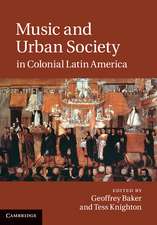 Music and Urban Society in Colonial Latin AmericaGeoffrey Baker-14%Preț: 793.01 lei922.10 lei
 -
 For the Love of MusicJohn MauceriPreț: 88.99 lei
 -
 DEBUSSY -- CHILDRENS CORNERClaude DebussyPreț: 47.23 lei
 -
 Buena Vista in the ClubGeoffrey BakerPreț: 294.06 lei
 -
 -17%Preț: 128.36 lei154.36 lei
 -
 Uncovering Music of Early European Women (1250-1750)Claire FontijnPreț: 397.12 lei
 -
 Preț: 196.84 lei
 -
 Preț: 92.30 lei
 -
 Preț: 89.27 lei
 -
 The Bible in Music: A Dictionary of Songs, Works, and MoreSiobhán Dowling Long-32%Preț: 395.37 lei580.37 lei
 -
 Preț: 72.80 lei
De ce să citești această carte
Recomandăm această carte cititorilor pasionați de istoria Americii Latine și muzicologie care doresc să depășească clișeele despre colonizarea culturală. Veți descoperi cum muzicienii indigeni din Cuzco nu au fost doar subiecți pasivi, ci actori care au folosit muzica barocă pentru a negocia puterea și prestigiul. Este o lectură esențială pentru a înțelege cum arta modelează geografia urbană și ierarhiile sociale.
Despre autor
Geoffrey Baker este profesor în cadrul departamentului de muzică la Royal Holloway, University of London. Expert recunoscut în muzicologia Americii Latine, acesta a explorat în lucrările sale intersecția dintre sunet, politică și societate, de la perioada colonială din Peru până la scenele contemporane de hip hop din Cuba, analizate în Buena Vista in the Club. Cercetările sale, publicate în reviste prestigioase precum Early Music, îmbină rigoarea istorică cu analizele socio-politice, oferind o viziune nuanțată asupra modului în care educația și practica muzicală influențează comunitățile vulnerabile sau structurile de putere imperiale.
Descriere scurtă
Cuprins
Recenzii
"Decentering understanding of the history of music in colonial Cuzco, Geoffrey Baker demonstrates the importance of moving away from the cathedral-centered analyses of the period's musical culture. Most memorably, he significantly deepens insight into the making of Andean social distinction by bringing to the fore the busy activity of Andean musicians not based in, trained by, or dependent on the Cuzco Cathedral at all." Kathryn Burns, author of Colonial Habits: Convents and the Spiritual Economy of Cuzco, Peru "Geoffrey Baker examines the musical culture--the soundscape--of colonial Cuzco, in all its complexity. He questions traditional scholarship on the music of Cuzco (and elsewhere in Latin America, for that matter) in which the cathedral, with its strongly Hispanic traditions, is understood as the center and focus of viceregal musical culture. In a city that was inhabited by a strong majority of indigenous descent, focus on a cathedral-centered organization rehearses a colonialist perspective. Baker successfully challenges it." Carolyn Dean, author of Inka Bodies and the Body of Christ: Corpus Christi in Colonial Peru