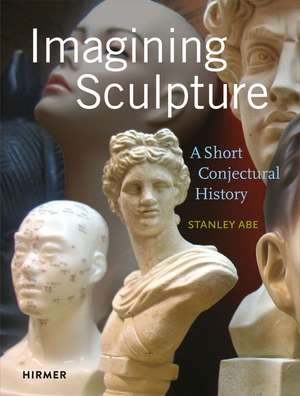
Imagining Sculpture: A Short Conjectural History
Autor Stanley Abeen Limba Engleză Hardback – 19 feb 2023
Imagining Sculpture is the story of the absence of a powerful European idea: Sculpture. In China statues, stele, and other figural objects were made for millennia but were not categorized as Sculpture. Imagining Sculpture explains how they were seen in China as objects beyond the category of Sculpture. Stanley Abe has written a series of short historical and fictional vignettes about travelers, scholars, officials, collectors, and antiquarians who encounter statues, figures, and effigies in China and the West from the fourteenth to the beginning of the twentieth century. Imagining Sculpture is visual, cinematic, and sumptuous, featuring rare photographs, paintings, sketches, letters, and ephemera. With little text, images propel the narrative.
Preț: 264.27 lei
Preț vechi: 319.41 lei
-17%
Puncte Express: 396
Carte disponibilă
Livrare economică 14-28 noiembrie
Livrare prin curier în România Termenul estimat este afișat lângă disponibilitate.
Transport gratuit de la 400.00 lei Plată online sau ramburs, în funcție de opțiunile comenzii.
Retur gratuit în 14 zile Comandă securizată și suport în română.
Specificații
ISBN-13: 9783777437583
ISBN-10: 3777437581
Pagini: 384
Ilustrații: 485 color plates
Dimensiuni: 182 x 236 x 40 mm
Greutate: 1.32 kg
Editura: Hirmer Publishers
Colecția Hirmer Publishers
ISBN-10: 3777437581
Pagini: 384
Ilustrații: 485 color plates
Dimensiuni: 182 x 236 x 40 mm
Greutate: 1.32 kg
Editura: Hirmer Publishers
Colecția Hirmer Publishers
V-ar putea interesa
-
 Art in ChinaCraig Clunas-23%Preț: 150.21 lei194.35 lei
 -
 -17%Preț: 36.50 lei43.96 lei
 -
 The Arts of China, Sixth EditionMichael SullivanPreț: 340.04 lei
 -
 A Source Book in Chinese PhilosophyWing-Tsit ChanPreț: 362.51 lei
 -
 -23%Preț: 602.53 lei782.51 lei
 -
 Preț: 425.22 lei
 -
 -27%Preț: 89.19 lei121.90 lei
 -
 Fantastic Fauna from China to CrimeaPetya Andreeva-21%Preț: 636.52 lei801.79 lei
 -
 Forms of the VisiblePhilippe DescolaPreț: 290.51 lei
 -
 Marguerite Yourcenar: A Dream of StoneMarguerite Yourcenar-20%Preț: 61.87 lei77.51 lei
 -
 Civilisations: How Do We Look / The Eye of FaithProfessor Mary Beard-19%Preț: 87.73 lei108.13 lei
 -
 One & Other NumbersPhaidon EditorsPreț: 78.90 lei
 -
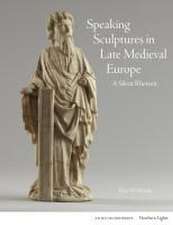 Speaking Sculptures in Late Medieval EuropeKim W. Woods-15%Preț: 449.77 lei529.15 lei
 -
 The ArtisansMadeleine ThienPreț: 49.36 lei
 -
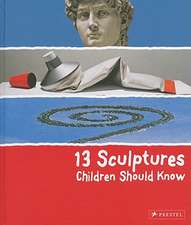 13 Sculptures Children Should KnowAngela Wenzel-7%Preț: 78.35 lei83.88 lei
 -
 The Art Escapes AtlasGestaltenPreț: 316.98 lei
 -
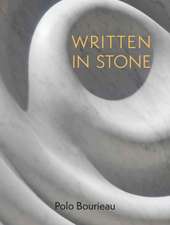 -19%Preț: 425.92 lei525.83 leiNou
 -
 Preț: 119.56 lei
Notă biografică
Stanley Abe is associate professor in the Department of Art, Art History and Visual Studies at Duke University. He is the author of Ordinary Images and served as editor in chief of Archives of Asian Art from 2011 to 2018.
Recenzii
"Abe has attempted something unusual, creative, and original in Imagining Sculpture. He has presented a “. . . mosaic of people, scenes, and voices from a past time that could not know its future” acknowledging that it is “. . . an untidy story and a troublesome history. It too strives to be appropriate for its purpose”