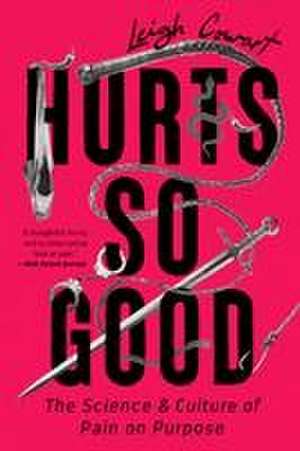
Hurts So Good: The Science and Culture of Pain on Purpose
Autor Leigh Cowarten Limba Engleză Paperback – 3 aug 2023
Masochism is sexy, human, reviled, worshiped, and delightfully bizarre. Deliberate and consensual pain has been with us for millennia, encompassing everyone from Black Plague flagellants to ballerinas dancing on broken bones to competitive eaters choking down hot peppers while they cry.
At its core, masochism is about feeling bad, then better—a phenomenon that is long overdue for a heartfelt and hilarious investigation. And Cowart would know: They are not just a researcher and science writer, they’re an inveterate, high-sensation seeking masochist. In Hurts So Good, Cowart unveils how our minds and bodies find meaning and relief in pain—a quirk in our programming that drives discipline and innovation even as it threatens to swallow us whole.
Preț: 85.78 lei
Preț vechi: 117.80 lei
-27%
Puncte Express: 129
Carte disponibilă
Livrare economică 28 septembrie-12 octombrie
Livrare express 11-17 septembrie pentru 52.46 lei
Livrare prin curier în România Termenul estimat este afișat lângă disponibilitate.
Transport gratuit de la 400.00 lei Plată online sau ramburs, în funcție de opțiunile comenzii.
Retur gratuit în 14 zile Comandă securizată și suport în română.
Specificații
ISBN-13: 9781541798038
ISBN-10: 1541798031
Pagini: 256
Dimensiuni: 138 x 208 x 20 mm
Greutate: 0.23 kg
Editura: Little Brown
Colecția PublicAffairs
Locul publicării:London, United Kingdom
ISBN-10: 1541798031
Pagini: 256
Dimensiuni: 138 x 208 x 20 mm
Greutate: 0.23 kg
Editura: Little Brown
Colecția PublicAffairs
Locul publicării:London, United Kingdom
Descriere
An exploration of why people all over the world love to engage in pain on purpose--from dominatrices, religious ascetics, and ultramarathoners to ballerinas, icy ocean bathers, and sideshow performers
Masochism is sexy, human, reviled, worshipped, and can be delightfully bizarre. Deliberate and consensual pain has been with us for millennia, encompassing everyone from Black Plague flagellants to ballerinas dancing on broken bones to competitive eaters choking down hot peppers while they cry. Masochism is a part of us. It lives inside workaholics, tattoo enthusiasts, and all manner of garden variety pain-seekers.
At its core, masochism is about feeling bad, then better-a phenomenon that is long overdue for a heartfelt and hilarious investigation. And Leigh Cowart would know: they are not just a researcher and science writer-they're an inveterate, high-sensation seeking masochist. And they have a few questions: Why do people engage in masochism? What are the benefits and the costs? And what does masochism have to say about the human experience?
By participating in many of these activities themselves, and through conversations with psychologists, fellow scientists, and people who seek pain for pleasure, Cowart unveils how our minds and bodies find meaning and relief in pain-a quirk in our programming that drives discipline and innovation even as it threatens to swallow us whole.
Masochism is sexy, human, reviled, worshipped, and can be delightfully bizarre. Deliberate and consensual pain has been with us for millennia, encompassing everyone from Black Plague flagellants to ballerinas dancing on broken bones to competitive eaters choking down hot peppers while they cry. Masochism is a part of us. It lives inside workaholics, tattoo enthusiasts, and all manner of garden variety pain-seekers.
At its core, masochism is about feeling bad, then better-a phenomenon that is long overdue for a heartfelt and hilarious investigation. And Leigh Cowart would know: they are not just a researcher and science writer-they're an inveterate, high-sensation seeking masochist. And they have a few questions: Why do people engage in masochism? What are the benefits and the costs? And what does masochism have to say about the human experience?
By participating in many of these activities themselves, and through conversations with psychologists, fellow scientists, and people who seek pain for pleasure, Cowart unveils how our minds and bodies find meaning and relief in pain-a quirk in our programming that drives discipline and innovation even as it threatens to swallow us whole.