Cantitate/Preț
Produs

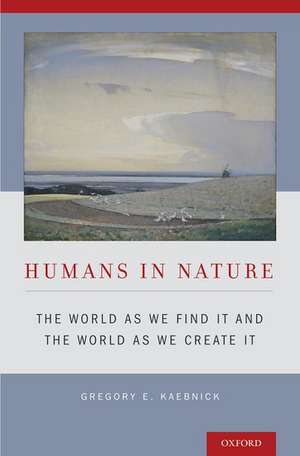
Humans in Nature: The World As We Find It and the World As We Create It

Autor Gregory E. Kaebnick
en Limba Engleză Hardback – 9 ian 2014

Notăm cu interes apariția volumului Humans in Nature, o lucrare ce abordează terapeutica și etica intervenției umane asupra biosferei și a propriei noastre constituții biologice. Într-o epocă în care biologia sintetică și organismele modificate genetic redefinesc frontierele medicinei și agriculturii, Gregory E. Kaebnick investighează dacă există limite legitime pentru aceste alterări. Credem că rigoarea cu care autorul disecă conceptul de „natural” oferă un cadru clinic necesar pentru evaluarea noilor tehnologii emergente.

Putem afirma că lucrarea reușește să evite extremele ideologice, propunând o perspectivă ancorată în „pasiunile” humiene și în principiul liberal al neutralității statului. Clinicienii care folosesc Altering Nature de B. A. Lustig ca referință vor găsi aici o completare esențială: în timp ce Lustig se concentrează pe progresele tehnice în medicina regenerativă și celule stem, Kaebnick oferă fundamentul filosofic pentru a decide nu doar ce putem face, ci ce ar trebui să facem din punct de vedere moral.

Această lucrare se poziționează ca o sinteză matură în cadrul operei autorului, continuând temele explorate în Synthetic Biology and Morality – Artificial Life and the Bounds of Nature. Dacă în volumele anterioare Gregory E. Kaebnick analiza punctual impactul biotehnologiei, în Humans in Nature acesta extinde cadrul de analiză către o teorie generală a relației om-natură. Stilul este precis, academic, dar orientat spre soluții practice pentru politici publice, făcând distincția necesară între idealurile morale personale și obligațiile legale impuse de guvern.

Citește tot Restrânge

Preț: 54256 lei

Preț vechi: 75045 lei
-28%

Puncte Express: 814

Carte tipărită la comandă

Livrare economică 17-28 iulie

Livrare prin curier în România Termenul estimat este afișat lângă disponibilitate.
Transport gratuit pentru acest produs Plată online sau ramburs, în funcție de opțiunile comenzii.
Retur gratuit în 14 zile Comandă securizată și suport în română.

Specificații

ISBN-13: 9780199347216
ISBN-10: 0199347212
Pagini: 224
Dimensiuni: 241 x 155 x 36 mm
Greutate: 0.7 kg
Editura: Oxford University Press
Colecția OUP USA
Locul publicării:New York, United States

De ce să citești această carte

Recomandăm această carte profesioniștilor din bioetică, medicină și politici publice care doresc să înțeleagă mizele morale ale biotehnologiei moderne. Cititorul câștigă o perspectivă clară asupra distincției dintre natural și artificial, învățând să navigheze dilemele etice complexe fără a recurge la dogmatism. Este un ghid esențial pentru a înțelege cum inovația medicală și conservarea naturii pot coexistă într-un cadru politic liberal.


Despre autor

Gregory E. Kaebnick este un distins cercetător la The Hastings Center și redactor-șef al publicației „Hastings Center Report”, una dintre cele mai influente reviste de bioetică la nivel mondial. Expertiza sa se concentrează pe intersecția dintre etica mediului și biotehnologie, fiind autorul și editorul mai multor volume de referință, precum The Ideal of Nature. Activitatea sa academică este recunoscută pentru efortul de a aduce claritate filosofică în dezbaterile publice despre genetică și biologia sintetică, promovând un dialog echilibrat între comunitatea științifică și societatea civilă.


Descriere

Contemporary debates over issues as wide-ranging as the protection of wildernesses and endangered species, the spread of genetically modified organisms, the emergence of synthetic biology, and the advance of human enhancement, all of which seem to spin into deeper and more baffling questions with every change in the news cycle, often circle back to the same fundamental question: should there be limits to the human alteration of the natural world? A growing number of people view the human capacity to alter natural states of affairs -- from formerly wild spaces and things around us to crops and livestock to our own human nature -- as cause for moral alarm. That reaction raises a number of perplexing philosophical questions, however: Can we identify "natural" states of affairs at all? Does the idea of being morally concerned about the human relationship to nature make any sense? Should such a concern influence public policy and politics, or should government stay strenuously neutral on such matters?Through a study of moral debates about the environment, agricultural biotechnology, synthetic biology, and human enhancement, Gregory E. Kaebnick, a research scholar at The Hastings Center and editor of the Hastings Center Report, argues that concerns about the human alteration of nature can be legitimate and serious, but also that they are complex, contestable, and of limited political force.Kaebnick defends attempts to identify "natural" states of affairs by disentangling the nature/artifact distinction from metaphysical hoariness. Drawing on David Hume, he also defends moral standards for the human relationship to nature, arguing that they, and moral standards generally, should be understood as grounded in what Hume called the "passions." Yet what counts as "natural" can be delineated only roughly, he concludes, and moral standards for interaction with nature are less a matter of obligation than of ideals. Kaebnick also concludes, drawing on an interpretation of the liberal principle of neutrality, that government may support those standards but must be careful not to enforce them. Thus Kaebnick looks for a middle way on debates that have tended toward polarization."As differences between nature and artifact become steadily less substantial, problems about preservation run to the core of how people can make sense of themselves, of each other, and of our shared world. Kaebnick's solutions are creative and compelling, theoretically elegant and politically practical. Providing distinctive ways forward, when much academic and policy discussion seems exhausted, his book demands wide attention. In return, it inspires hope." - James Nelson, Michigan State University

Notă biografică

Gregory E. Kaebnick is a scholar at The Hastings Center and editor of the Hastings Center Report. He has been coinvestigator of two research projects funded by the Alfred P. Sloan Foundation on the ethical issues of synthetic biology, principal investigator of a project funded by the National Endowment for the Humanities on appeals to nature in debates about biotechnology and the environment, coinvestigator in a National Institutes of Health-funded project on genetic paternity testing, and a participant in a series of other Hastings projects funded by the National Institutes of Health and the Rockefeller Foundation on issues concerning the application of medical technologies and agricultural biotechnology.