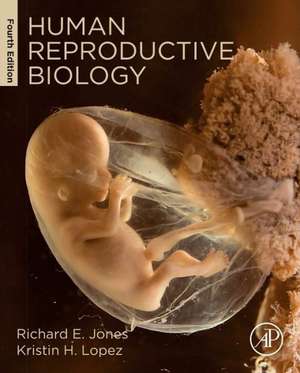
Human Reproductive Biology
Autor Richard E. Jones, Kristin H. Lopezen Limba Engleză Hardback – 3 dec 2013
Cea de-a patra ediție a lucrării Human Reproductive Biology este structurată riguros în cinci secțiuni majore care ghidează cititorul prin complexitatea biologică a reproducerii umane. Subliniem organizarea logică a materialului, care debutează cu studiul sistemelor reproductive feminine și masculine, trece prin procesele de diferențiere sexuală și pubertate, și culminează cu mecanismele fiziologice ale procreării și controlului fertilității. Această ediție, premiată pentru excelență academică, integrează cele mai recente rezultate din cercetarea biomedicală, oferind o perspectivă clinică asupra endocrinologiei și anatomiei.
Ne-a atras atenția modul în care Richard E. Jones și Kristin H. Lopez reușesc să echilibreze rigoarea științifică cu accesibilitatea vizuală, utilizând 180 de ilustrații, majoritatea color, pentru a clarifica procese precum transportul gameților sau ciclul menstrual. Considerăm că această lucrare reprezintă o evoluție firească în opera autorului Richard E. Jones; dacă în volumele sale anterioare, precum Hormones and Reproduction in Fishes, Amphibians, and Reptiles, acesta explora endocrinologia comparată la diverse specii, aici focalizarea este strictă și aprofundată pe biologia umană, de la nivel molecular la cel sistemic.
Clinicienii care utilizează Biology & Medical Dynamics of Human Reproduction de Laurence A. Cole ca referință principală vor găsi în acest volum un complement esențial, în special în ceea ce privește abordarea integrată a senescenței reproductive și a impactului social al sănătății reproductive. Față de Human Reproduction de Marc Yeste, care pune accent pe biotehnologie și tehnici de reproducere asistată, volumul de față prioritizează fundamentul biologic și fiziologic, fiind indispensabil pentru o înțelegere solidă a mecanismelor naturale înainte de abordarea intervențiilor tehnologice.
Preț: 683.18 lei
Preț vechi: 960.65 lei
-29%
Carte tipărită la comandă
Livrare economică 30 noiembrie-14 decembrie
Specificații
ISBN-10: 0123821843
Pagini: 400
Ilustrații: 180 illustrations (140 in full color)
Dimensiuni: 216 x 276 x 23 mm
Greutate: 1.43 kg
Ediția:4. Auflage.
Editura: ELSEVIER SCIENCE
V-ar putea interesa
-
 -26%Preț: 1487.93 lei2020.71 lei
 -
 -24%Preț: 330.62 lei434.73 lei
 -
 Williams Textbook of EndocrinologyShlomo Melmed-29%Preț: 1344.34 lei1885.53 leiRecomandat
 -
 The Developing Human: Clinically Oriented EmbryologyMark G. Torchia-29%Preț: 490.41 lei693.56 lei
 -
 -26%Preț: 58.41 lei78.77 lei
 -
 Change Your Life In Seven DaysPaul McKenna-5%Preț: 122.20 lei128.63 lei
 -
 Essential ReproductionMartin H. Johnson-19%Preț: 433.38 lei535.03 lei
 -
 The Lucky EggLucky Sekhon-5%Preț: 217.82 lei229.28 lei
 -
 The Female Reproductive SystemIan Peate-5%Preț: 184.05 lei193.74 lei
 -
 The Male Reproductive SystemIan Peate-5%Preț: 184.05 lei193.74 lei
 -
 -30%Preț: 85.01 lei121.30 lei
 -
 -26%Preț: 1083.80 lei1461.68 lei
 -
 The Bright and Bold Human Body: The Reproductive SystemSonya NewlandPreț: 108.74 lei
 -
 Biology & Medical Dynamics of Human ReproductionLaurence A Cole-23%Preț: 1275.33 lei1662.25 lei
 -
 Life, AlmostJennie Agg-5%Preț: 88.34 lei93.00 lei
 -
 Pregnancy and Birth: A Graphic GuideLaura Godfrey-IsaacsPreț: 125.63 lei
 -
 -20%Preț: 557.72 lei700.78 lei
 -
 Clinical Reproductive Medicine and SurgeryTommaso Falcone-5%Preț: 912.63 lei960.66 lei
Public țintă
Reproductive biologists, endocrinologists, developmental biologists, and those interested in the reproductive biology of humans. Can also be used as a text for undergraduate students in endocrinology, reproductive biology, and developmental biology.De ce să citești această carte
Recomandăm această resursă studenților la medicină și cercetătorilor în endocrinologie care caută o bază teoretică solidă, premiată internațional. Cititorul câștigă o înțelegere clară a proceselor reproductive, susținută de o iconografie modernă și date actualizate despre fertilitate și dezvoltare. Este un instrument de referință care face trecerea de la biologia teoretică la practica biomedicală, fiind esențial pentru pregătirea examenelor de specialitate.
Descriere scurtă
- Winner of a 2015 Texty Award from the Text and Academic Authors Association
- Beautifully redrawn full-color illustrations complement completely updated material with the latest research results, and clear, logical presentation of topics
- Covers the basic science of reproduction—endocrinology, anatomy, physiology, development, function and senescence of the reproductive system—as well as applied aspects including contraception, infertility and diseases of the reproductive system
- New companion website features full-color illustrations as PowerPoint and jpeg files for both professors and students to use for study and presentations
Cuprins
Part II: Sex Differentiation and DevelopmentChapter 5: Sexual Differentiation Chapter 6: PubertyChapter 7: Reproductive Aging
Part III: ProcreationChapter 8: The Human Sexual ResponseChapter 9: Gamete Transport and FertilizationChapter 10: PregnancyChapter 11: Labor and BirthChapter 12: The Neonate and the New Parents
Part IV: Fertility and Its Control Chapter 13: ContraceptionChapter 14: Induced AbortionChapter 15: Infertility
Part V: Special Topics in Human Reproductive BiologyChapter 16: Brain SexChapter 17: Sexually Transmitted DiseasesChapter 18: Glossary
Recenzii
"Elegantly written, profusely illustrated, and comprehensively revised to keep pace with rapidly moving research frontiers, the new edition of Jones and Lopez's Human Reproductive Biology is the text of choice for any college-level course in human reproduction. New material has been skillfully integrated into what was already a successful book. New illustrations and well-designed boxes and side-panels enliven the text while updated references guide students into the primary literature. This new edition easily laps the competition." --Peter T. Ellison, Harvard University
"This text is a comprehensive treatment of a highly significant area of science that will be greatly appreciated by reproductive biologists and anyone else with an interest in human reproductive biology. The text provides an entree into virtually every aspect of human reproductive biology, from classical paradigms to contemporary ideas and approaches. The presentation is clear and the illustrations useful. This is an excellent effort by only two authors." --Paul M. Wassarman, Mount Sinai School of Medicine, New York
"This is clearly the best text on Reproduction available. Jones and Lopez have carefully analyzed and integrated and years of classical work on reproductive biology and transformed it into a very readable book on human reproduction. Although I have been teaching a course on human reproduction for the last sixteen years, and I have reviewed 3 different texts on this subject, I learned something new the first time I perused the new edition of Jones and Lopez." --Cliff Jones, School of Medicine, University of South Dakota
"This is the most comprehensive text on human reproduction I’ve read. It covers not only the basic biology of reproduction but also perspectives from evolution and across cultures, as well as practical information that will be useful to all readers, whether students, teachers, or researchers. It’s certainly the best textbook for anthropology and evolution courses dealing with reproduction." --Wendy Trevathan, New Mexico State University