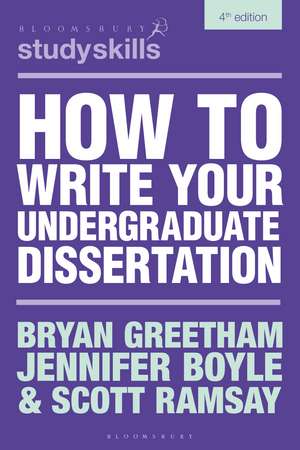
How to Write Your Undergraduate Dissertation
Autor Bryan Greetham, Jennifer Boyle, Scott Ramsayen Limba Engleză Paperback – 26 noi 2026
It shows students how to choose the most appropriate methods for collecting and analysing their data and how to then integrate this research into their dissertation. Students will learn how to develop consistent and persuasive arguments and write up their research in a clear and concise style.
New to this Edition:
- Contains guidance on working effectively with AI tools
- The fourth edition has been restructured to make for a more accessible reading experience
- Features additional pop-out boxes which explain key terms
This book is an essential resource for undergraduates of all disciplines who are required to write a dissertation as part of their degree.
Preț: 120.48 lei
Preț vechi: 144.67 lei
-17% Precomandă
Puncte Express: 181
Preț estimativ în valută:
21.31€ • 25.17$ • 18.36£
21.31€ • 25.17$ • 18.36£
Carte nepublicată încă
Doresc să fiu notificat când acest titlu va fi disponibil:
Se trimite...
Specificații
ISBN-13: 9781350540026
ISBN-10: 1350540021
Pagini: 384
Dimensiuni: 156 x 234 x 25 mm
Greutate: 0.45 kg
Ediția:4th edition
Editura: BLOOMSBURY ACADEMIC
Locul publicării:London, United Kingdom
ISBN-10: 1350540021
Pagini: 384
Dimensiuni: 156 x 234 x 25 mm
Greutate: 0.45 kg
Ediția:4th edition
Editura: BLOOMSBURY ACADEMIC
Locul publicării:London, United Kingdom
Cuprins
Acknowledgements
Introduction
PART I: EXAMINERS AND SUPERVISORS
1. The Dissertation: What Is It, and What is Your Role?
2. The Dissertation: Your Audience - Supervisors and Examiners
PART II: GENERATING AND DEVELOPING ORIGINAL IDEAS
3. What Activities Suit You Best?
4. Types of Research
5. What Interests You Most?
6. Generating Ideas: How to Come Up with New Ideas and Fresh Perspectives
7. Developing Your Ideas: How to Structure Your Thinking
8. Refining Your Ideas: How to Test Your Thinking
PART III: DECIDING ON YOUR PROJECT
9. Academic Sources: Books, Articles and Literature. Knowing What to Look For
10. Academic Sources: Books, Articles and Literature. How to Search
11. Choosing the Topic: Making Sure It's Manageable
12. Choosing the Topic: What are Research Ethics, and Why Are They Important?
PART IV: ORGANISING YOUR WORK
13. Planning Your Research
14. Managing Your Time
15. Your Retrieval System
16. Reading
17. Note-taking
18. Plagiarism
PART V: DOING YOUR RESEARCH
19. Research Types
20. Secondary Sources
21. Quantitative Research
22. Qualitative Research
PART VI: PLANNING YOUR DISSERTATION
23. The Main Components and Introduction
24. The Literature Review
25. Research Methods, Findings, Conclusions and Appendices
PART VII: ORGANISING YOUR THINKING
26. Components of a Consistent Argument
27. Connections Within a Consistent Argument
28. Using Evidence: How to Describe It
29. Using Evidence: How to Make Sense of It
30. Using Evidence - How to Avoid Mistakes
31. Communicating Clearly
PART VIII: WRITING YOUR DISSERTATION
32. The First Draft
33. Finding Your Own Voice
34. Writing With Style and Simplicity
35. Referencing and Bibliographies
PART IX: EDITING
36. Editing Your Structure
37. Editing Your Content
PART X: PRESENTING YOUR WORK
38. Oral Presentations
39. Poster Presentations
Conclusion
Bibliography
Index
Introduction
PART I: EXAMINERS AND SUPERVISORS
1. The Dissertation: What Is It, and What is Your Role?
2. The Dissertation: Your Audience - Supervisors and Examiners
PART II: GENERATING AND DEVELOPING ORIGINAL IDEAS
3. What Activities Suit You Best?
4. Types of Research
5. What Interests You Most?
6. Generating Ideas: How to Come Up with New Ideas and Fresh Perspectives
7. Developing Your Ideas: How to Structure Your Thinking
8. Refining Your Ideas: How to Test Your Thinking
PART III: DECIDING ON YOUR PROJECT
9. Academic Sources: Books, Articles and Literature. Knowing What to Look For
10. Academic Sources: Books, Articles and Literature. How to Search
11. Choosing the Topic: Making Sure It's Manageable
12. Choosing the Topic: What are Research Ethics, and Why Are They Important?
PART IV: ORGANISING YOUR WORK
13. Planning Your Research
14. Managing Your Time
15. Your Retrieval System
16. Reading
17. Note-taking
18. Plagiarism
PART V: DOING YOUR RESEARCH
19. Research Types
20. Secondary Sources
21. Quantitative Research
22. Qualitative Research
PART VI: PLANNING YOUR DISSERTATION
23. The Main Components and Introduction
24. The Literature Review
25. Research Methods, Findings, Conclusions and Appendices
PART VII: ORGANISING YOUR THINKING
26. Components of a Consistent Argument
27. Connections Within a Consistent Argument
28. Using Evidence: How to Describe It
29. Using Evidence: How to Make Sense of It
30. Using Evidence - How to Avoid Mistakes
31. Communicating Clearly
PART VIII: WRITING YOUR DISSERTATION
32. The First Draft
33. Finding Your Own Voice
34. Writing With Style and Simplicity
35. Referencing and Bibliographies
PART IX: EDITING
36. Editing Your Structure
37. Editing Your Content
PART X: PRESENTING YOUR WORK
38. Oral Presentations
39. Poster Presentations
Conclusion
Bibliography
Index