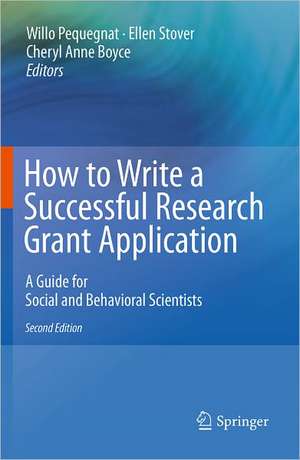
How to Write a Successful Research Grant Application
Editat de Willo Pequegnat, Ellen Stover, Cheryl Anne Boyceen Limba Engleză Paperback – 13 oct 2010
Subliniem, încă de la început, formatul aplicat al lucrării How to Write a Successful Research Grant Application: un volum de 300 de pagini organizat riguros în două secțiuni critice, susținut de resurse digitale și un exemplu real de propunere de cercetare. Această a doua ediție, publicată de Springer Us, funcționează ca un ghid clinic pentru navigarea ecosistemului de finanțare publică și privată, fiind singura resursă de acest tip redactată direct de investigatori din cadrul agențiilor federale de cercetare. Observăm o progresie logică a conținutului, de la identificarea priorităților de cercetare și selectarea mecanismului adecvat, până la finețea scrierii ipotezelor testabile și a planurilor de analiză a datelor. Reținem utilitatea capitolului dedicat perioadei de după câștigarea grantului, un aspect adesea ignorat în manualele de profil. Față de Grantsmanship for New Investigators, care oferă o perspectivă compactă și teoretică asupra procesului, lucrarea coordonată de Willo Pequegnat se distinge prin detalierea tehnică a secțiunilor de buget, asigurarea calității și etica subiecților umani. Experiența editorială a coordonatorilor, vizibilă și în lucrări precum Family and HIV/AIDS sau Community Interventions and AIDS, se traduce aici printr-o abordare pragmatică a cercetării de sănătate publică. Tonul este precis, axat pe evitarea erorilor comune de redactare și pe interpretarea corectă a declarațiilor de sinteză după recenzia aplicației. Structura modulară permite utilizatorului să acceseze rapid protocoale specifice pentru cercetări calitative sau studii de intervenție, transformând procesul birocratic într-o metodologie științifică coerentă.
Preț: 816.09 lei
Preț vechi: 859.05 lei
-5%
Carte tipărită la comandă
Livrare economică 07-21 decembrie
Specificații
ISBN-10: 1441914536
Pagini: 300
Ilustrații: XXXI, 300 p.
Dimensiuni: 156 x 233 x 25 mm
Greutate: 0.61 kg
Ediția:2nd 2011 edition
Editura: Springer Us
Locul publicării:New York, NY, United States
V-ar putea interesa
-
 The Craft of Research, Fifth EditionWayne C. BoothPreț: 112.29 lei
 -
 -8%Preț: 296.59 lei322.63 lei
 -
 How to Complete a Successful Research ProjectKathleen McMillanPreț: 215.10 lei
 -
 Writing Successful Science ProposalsAndrew J. FriedlandPreț: 183.34 lei
 -
 -34%Preț: 190.62 lei288.03 lei
 -
 Storytelling for GrantseekersCheryl A ClarkePreț: 246.64 lei
 -
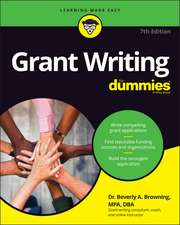 Grant Writing for DummiesBeverly A BrowningPreț: 170.66 lei
 -
 -9%Preț: 516.76 lei567.86 lei
 -
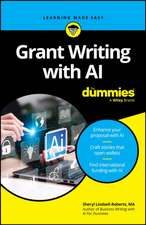 Grant Writing with AI For DummiesS. Lindsell-RobertPreț: 132.57 lei
 -
 Get FundedJeffrey Wayne EliasPreț: 340.68 lei
 -
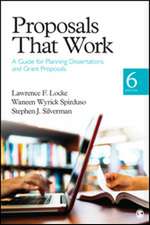 Proposals That WorkLawrence F. Locke-15%Preț: 622.61 lei732.48 lei
 -
 The Nuts and Bolts of Grant WritingCynthia E. Carr-15%Preț: 446.08 lei524.80 lei
 -
 Publishing Your Medical ResearchDaniel W. Byrne-11%Preț: 481.24 lei540.39 lei
 -
 -20%Preț: 278.94 lei350.45 lei
 -
 -36%Preț: 118.93 lei185.65 lei
 -
 Proposal WritingCynthia A. ScheinbergPreț: 488.38 lei
 -
 -5%Preț: 526.16 lei553.86 lei
 -
 -27%Preț: 72.98 lei99.38 lei
Public țintă
ResearchDe ce să citești această carte
Recomandăm această lucrare cercetătorilor care vizează finanțări în domeniile bio-comportamentale și psiho-sociale. Dincolo de tehnicile de scriere, cititorul câștigă o înțelegere profundă a procesului de recenzie federal, învățând să „citească printre rânduri” feedback-ul evaluatorilor. Este un instrument indispensabil pentru transformarea unei ipoteze academice într-un proiect finanțabil, oferind modele concrete de buget și planuri de management al datelor.
Despre autor
Editorii acestui volum, Willo Pequegnat, Ellen Stover și Cheryl Anne Boyce, sunt experți recunoscuți în cadrul instituțiilor federale de sănătate din Statele Unite. Willo Pequegnat are o carieră dedicată cercetării în sănătate publică, fiind autorul unor lucrări fundamentale despre intervențiile comunitare și rolul familiei în gestionarea epidemiilor, precum Working with Families in the Era of HIV/AIDS. Expertiza lor colectivă acoperă intersecția dintre științele comportamentale, etica cercetării și mecanismele complexe de finanțare guvernamentală, oferind cititorilor o perspectivă rară din interiorul sistemului de evaluare a granturilor.
Cuprins
Notă biografică
Ellen Stover is Director of the Division of AIDS and Health and Behavior Research at the National Institute of Mental Health.
Cheryl Boyce is Associate Director for Pediatric Research Training and Career Development and Chief, Child Abuse and Neglect Program at the National Institute of Mental Health.
Textul de pe ultima copertă
A Guide for Social and Behavioral Scientists, 2nd Edition
By Willo Pequegnat, Ellen Stover, and Cheryl Boyce
National Institute of Mental Health, Rockville, MD, USA
Over the last fifty years behavioral and medical research has been generously supported by the federal government, private foundations, and other philanthropic organizations contributing to the development of a vibrant public health system both in the United States and worldwide. However, these funds are dwindling and to stay competitive, investigators must understand the funding environment and know how to translate their hypotheses into research grant applications that reviewers evaluate as having scientific merit.
The Second Edition of How to Write a Successful Research Grant Application is the only book of its kind written by federal research investigators which provides technical assistance for researchers applying for biobehavioral and psychosocial research funding and can give them an edge in this competitive environment. The book provides invaluable tips on all aspects of the art of grantsmanship, including: how to determine research opportunities and priorities, how to develop the different elements of an application, how to negotiate the electronic submission and review processes, and how to disseminate the findings. Charts, visual aids, Web links, an extensive real-world example of a research proposal with budget, and a "So You Were Awarded Your Grant—Now What?" chapter show prospective applicants how to:
- Formulate a testworthy—and interesting—hypothesis.
- Select the appropriate research mechanism.
- Avoid common pitfalls in proposal writing.
- Develop an adequate control group.
- Conduct a rigorous qualitativeinquiry.
- Develop a budget justification of costs.
- Develop a human subjects of animal welfare plan.
- Write a data analytic plan.
- Design a quality control/assurance program.
- Read between the lines of a summary of the review of your application.