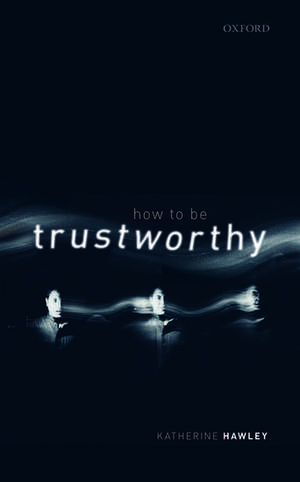
How To Be Trustworthy
Autor Katherine Hawleyen Limba Engleză Hardback – 26 sep 2019
Nivelul de studiu vizat de acest volum este cel de licență și master în filosofie, fiind totodată o referință solidă pentru cercetătorii în etică și epistemologie socială. În How To Be Trustworthy, Katherine Hawley propune o analiză riguroasă a mecanismelor care ne fac să fim percepuți drept parteneri de încredere sau, dimpotrivă, nesiguri. Apreciem modul în care autoarea depășește definiția simplistă a onestității, concentrându-se pe gestionarea angajamentelor într-o lume marcată de incertitudine. Premisa centrală este una pragmatică: devenim nedemni de încredere nu doar prin rea-voință, ci și prin incapacitatea de a ne calibra promisiunile în raport cu realitatea.
Cititorii familiarizați cu How Can I Be Trusted? de Nancy Nyquist Potter vor aprecia modul în care Hawley extinde discuția despre vulnerabilitate și putere, adăugând o perspectivă metafizică asupra modului în care circumstanțele personale dificile — de la sărăcie la excludere socială — creează obstacole invizibile în calea integrității. Față de lucrarea sa anterioară, Trust, care oferea o introducere generală în domeniu, acest titlu sapă mai adânc în tensiunea dintre generozitate și prudență. Merită menționat că Hawley își folosește expertiza din Philosophy of Science Today pentru a structura argumentele cu o claritate logică impecabilă, evitând abstractizările excesive în favoarea unor dileme morale concrete, întâlnite în viața de părinte, coleg sau cetățean. Stilul este analitic, dar accesibil, oferind o perspectivă nuanțată asupra motivului pentru care, uneori, a fi o persoană de încredere înseamnă a învăța să spui „nu” pentru a proteja calitatea angajamentelor deja asumate.
Preț: 256.63 lei
Carte disponibilă
Livrare economică 26 iunie-01 iulie
Specificații
ISBN-10: 0198843909
Pagini: 176
Dimensiuni: 144 x 224 x 15 mm
Greutate: 0.33 kg
Editura: OUP OXFORD
Colecția OUP Oxford
Locul publicării:Oxford, United Kingdom
V-ar putea interesa
-
 Down GirlKate Manne-37%Preț: 57.83 lei92.17 lei
 -
 EntitledKate Manne-27%Preț: 56.70 lei77.83 lei
 -
 A Biography of Loneliness: The History of an EmotionFay Bound Alberti-20%Preț: 87.69 lei109.91 lei
 -
 -26%Preț: 77.32 lei104.50 lei
De ce să citești această carte
Această carte se adresează celor interesați de etică aplicată și de dinamica relațiilor sociale. Cititorul câștigă o înțelegere profundă a modului în care angajamentele ne modelează identitatea socială. Este o recomandare excelentă pentru profesioniștii care gestionează echipe sau pentru oricine dorește să navigheze mai etic prin complexitatea obligațiilor cotidiene, învățând să recunoască limitele propriei capacități de a promite.
Despre autor
Katherine Hawley este lector de filosofie la University of St Andrews, fiind o figură proeminentă în dezbaterile contemporane despre metafizică și epistemologie. Opera sa acoperă teme diverse, de la persistența obiectelor materiale în timp, analizată în How Things Persist, până la fundamentele filosofice ale științelor. Prin această lucrare, Hawley își consolidează poziția de specialist în studiul încrederii, reușind să transfere rigoarea academică specifică Oxford University Press într-un discurs relevant pentru provocările morale ale societății moderne.
Descriere
Recenzii
The appeal of Hawley's work is her expert ability to highlight complex issues related to trust and trustworthiness that lie at the intersection of ethics and epistemology. Moreover, these philosophical issues are familiar to us as ones we encounter and navigate in our routine social interactions. The breadth and clarity of the issues covered will interest readers looking to critically reflect on trust concepts and how they might operate in the social world.
How to be Trustworthy is a highly readable and thought-provoking study of trust and trustworthiness that is philosophically and conceptually sophisticated. It is a must-read for anyone interested in the philosophy of trust and social epistemology more generally, one that encompasses a much broader range of social and cognitive phenomena that are relevant to this topic than is usually recognised.