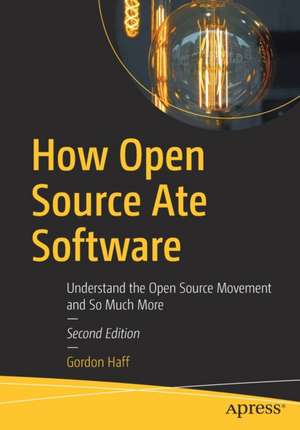
How Open Source Ate Software
Autor Gordon Haffen Limba Engleză Paperback – 10 feb 2021
Ne-a atras atenția modul în care How Open Source Ate Software debutează prin disecarea tranziției de la conceptul de „free software” la cel de „open source”, folosind ca exercițiu de analiză succesul arhitecturii Kubernetes și al ecosistemului Linux. Autorul Gordon Haff nu se limitează la filozofia codului liber, ci demonstrează practic cum acest model a devenit fundația pe care se construiesc astăzi afacerile tehnologice de succes. Remarcăm structura riguroasă a cărții, care ghidează cititorul prin opt capitole esențiale: de la rădăcinile istorice și modelul de dezvoltare specific, până la complexitatea licențierii și a guvernanței. Pe linia practică a volumului Getting Started with Open Source Technologies, dar cu un focus mult mai apăsat pe strategiile de business și pe impactul organizațional, lucrarea oferă răspunsuri concrete la întrebarea: cum poți vinde software care este, prin definiție, gratuit? Un element distinctiv al acestei ediții a doua este capitolul dedicat aspectelor legale, unde sunt analizate mărcile înregistrate și nuanțele licențierii, elemente critice pentru orice lider tehnologic. De asemenea, autorul extinde analiza către hardware-ul deschis, menționând RISC-V, și discută despre securitate prin prisma diferenței dintre proiectele comunitare și produsele comerciale. Deși abordează teme economice complexe, similare cu cele din The Economics of Open Source Software Development, Gordon Haff păstrează un ton tehnic și aplicat, făcând legătura între principiile open source și practicile moderne de DevOps. Este o resursă care explică de ce open source nu mai este doar o alternativă, ci motorul principal al inovației în software-ul proprietar contemporan.
Preț: 293.73 lei
Preț vechi: 367.17 lei
-20%
Carte disponibilă
Livrare economică 17 iunie-01 iulie
Specificații
ISBN-10: 1484267990
Pagini: 260
Ilustrații: XX, 237 p. 16 illus.
Dimensiuni: 178 x 254 x 15 mm
Greutate: 0.5 kg
Ediția:2nd edition
Editura: Apress
Locul publicării:Berkeley, CA, United States
V-ar putea interesa
-
 Practical LXC and LXD: Linux Containers for Virtualization and OrchestrationSenthil Kumaran S.-20%Preț: 259.53 lei324.41 lei
 -
 Introducing Zfs on LinuxDamian Wojslaw-20%Preț: 319.48 lei399.36 lei
 -
 Cyber OperationsMike O'Leary-20%Preț: 465.76 lei582.20 lei
 -
 Red Hat Certified Engineer (RHCE) Study GuideAndrew Mallett-20%Preț: 206.00 lei257.51 lei
 -
 Learn Kubernetes in a Month of LunchesElton Stoneman-20%Preț: 391.83 lei489.79 lei
De ce să citești această carte
Recomandăm această carte antreprenorilor și managerilor IT care doresc să înțeleagă mecanismele economice și juridice din spatele software-ului deschis. Veți câștiga o perspectivă clară asupra modului în care comunitățile pot fi transformate în produse comerciale viabile, învățând să navigați printre provocările licențierii și ale guvernanței. Este un ghid esențial pentru a înțelege cum colaborarea deschisă accelerează dezvoltarea tehnologică în orice organizație.
Despre autor
Gordon Haff este un strateg tehnologic recunoscut, cu o experiență vastă în industria IT, fiind o voce influentă în cadrul ecosistemului Red Hat. Expertiza sa se concentrează pe intersecția dintre tehnologiile emergente, modelele de afaceri și strategiile open source. Prin activitatea sa de autor și conferențiar, Haff analizează modul în care cloud computing-ul, virtualizarea și dezvoltarea colaborativă redefinesc peisajul competitiv global. Stilul său de scriere reflectă o capacitate rară de a sintetiza concepte tehnice complexe în strategii de business coerente.
Descriere scurtă
This fully updated second edition includes an entire chapter on legal considerations such as trademarks and the latest happenings in open source licensing. It also expands on open hardware trends such as RISC-V, open governance, and the difference between community projects and commercial products, especially as seen through the lens of security.
You’ll look at project and community examples including Linux, BSD, Apache, and Kubernetes, understand the open source development model, and how open source has influenced approaches more broadly, even within proprietary software, such as open betas. You'll also examine the flipside, the "Second Machine Age," and thechallenges of open source-based business models.
Today, open source serves as shorthand for much broader trends and behaviors. It’s not just about a free (in all senses of the word) alternative to commercial software. It increasingly is the new commercial software. How Open Source Ate Software, second edition reveals how open source has much in common, and is often closely allied, with many other trends in business and society. You'll see how it enables projects that go beyond any individual company. That makes open source not just a story about software, but a story about almost everything.
What You'll Learn
- The opportunities that open source creates and the challenges that come with them
- The ways in which companies can create business models to successfully sell "free" software
- How the open source development model works from creating communities to selling commercial products
- The important issues associated with open source project and product governance and licensing
- How open source principles can apply more broadly to DevOps and other organizational practices
Anyone who is contemplating building a community and a business around open source software.