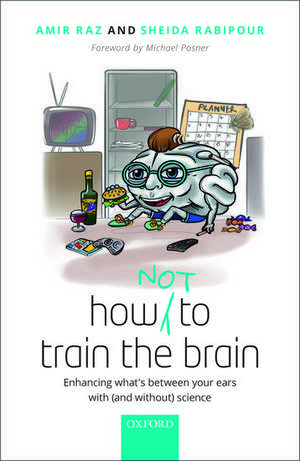
How (not) to train the brain: Enhancing what's between your ears with (and without) science
Autor Amir Raz, Sheida Rabipouren Limba Engleză Hardback – 18 apr 2019
Ne-a atras atenția un aspect crucial pe care Amir Raz și Sheida Rabipour îl subliniază încă din primele pagini ale acestui volum publicat de OUP OXFORD: piața programelor de „brain training” a explodat, promițând performanțe supraumane, însă puține dintre aceste soluții rezistă unui examen științific riguros. Notăm cu interes cum autorii pornesc de la demitizarea unui exercițiu clasic de memorie pentru a ne arăta diferența dintre o simplă sarcină repetitivă și o reală îmbunătățire a funcției cognitive.
How (not) to train the brain este o lectură esențială într-o epocă în care suntem bombardați cu aplicații și tehnici care pretind că ne pot „reprograma” mintea. Cine a parcurs The Sharpbrains Guide to Brain Fitness va aprecia aici rigoarea academică suplimentară; în timp ce alte ghiduri oferă adesea liste de exerciții practice, Amir Raz aduce o perspectivă critică, bazată pe analiza a sute de studii clinice, pentru a ne învăța să discernem între neuroștiință și marketing. Această abordare se aliniază perfect cu opera anterioară a autorului, precum The Suggestible Brain sau Placebo Talks, unde acesta a explorat modul în care percepția și sugestia ne modelează realitatea biologică.
Recomandăm acest volum pentru tonul său echilibrat. Nu este un manual de auto-ajutorare care promite succesul peste noapte, ci o hartă complexă a ceea ce înseamnă cu adevărat fitnessul cognitiv. Autorii explică de ce anumite stimulări electrice sau jocuri de logică pot funcționa în laborator, dar eșuează în viața cotidiană. Structura cărții permite cititorului să înțeleagă nu doar „cum” să-și antreneze creierul, ci mai ales „ce” să evite pentru a nu cădea în capcana pseudostiinței.
Preț: 331.77 lei
Preț vechi: 421.15 lei
-21%
Carte tipărită la comandă
Livrare economică 05-16 iunie
Specificații
ISBN-10: 019878967X
Pagini: 372
Dimensiuni: 146 x 134 x 18 mm
Greutate: 0.62 kg
Editura: OUP OXFORD
Colecția OUP Oxford
Locul publicării:Oxford, United Kingdom
De ce să citești această carte
Recomandăm această carte oricui este interesat de optimizarea personală, dar dorește să evite soluțiile „miraculoase” fără fundament. Veți câștiga o înțelegere clară a mecanismelor neuroștiinței moderne și, mai ales, un filtru critic prin care să evaluați orice produs de „brain training”. Este o investiție în propria igienă mentală, oferind instrumentele necesare pentru a distinge între exercițiile care funcționează și simplele mituri comerciale.
Despre autor
Amir Raz este un cercetător renumit în domeniul neuroștiinței cognitive, cunoscut pentru studiile sale interdisciplinare care leagă psihologia de practica clinică. Cu o carieră dedicată înțelegerii modului în care sugestia, hipnoza și atenția influențează creierul uman, Raz a publicat lucrări fundamentale precum Hypnosis and meditation și Casting Light on the Dark Side of Brain Imaging. Alături de Sheida Rabipour, acesta aduce în How (not) to train the brain o expertiză vastă, transformând datele complexe de laborator într-o analiză accesibilă publicului larg, menită să protejeze consumatorul de dezinformarea din domeniul sănătății mintale.
Descriere
Recenzii
The mind is fascinating, and I appreciate authors such as these who challenge the status quo and share innovative, thought-provoking ideas. This is a great resource that readers can use to make their own informed decisions about brain training programs.Weighted Numerical Score: 95 - 4 Stars!
This illuminating and informative book shows the complexities and debates regarding brain training, with engaging examples and current evidence, and also outlines the next frontier in brain training.
I thoroughly enjoyed reading 'How (not) to Train the Brain'. The nuanced approach to describing the brain-training literature brought a smile to my face.
This book introduces a much-needed scientific framework to a field replete with pseudo-scientific claims and promises
Are you looking for a rigorous answer to the question of whether brain training works? In this book, you will find a nicely-written, clever, and bal-anced analysis of the science behind brain training.
This book does an outstanding job in reviewing the many issues involved when it comes to brain training... It was a pleasure in reading this volume to see new ideas build on older ones...