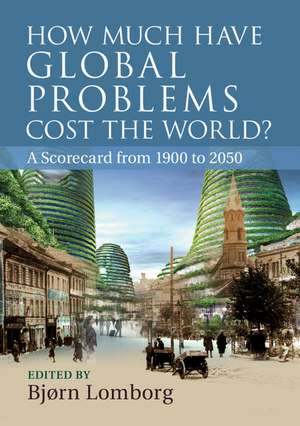
How Much have Global Problems Cost the World?
Editat de Bjørn Lomborgen Limba Engleză Paperback – 10 oct 2013
Problema fundamentală pe care o rezolvă How Much Have Global Problems Cost the World? este absența unor date comparative riguroase în fața afirmațiilor alarmiste despre starea lumii. Adesea auzim că trăim în cea mai dificilă eră din istorie, însă ne lipsesc instrumentele pentru a măsura dacă situația s-a degradat cu adevărat sau dacă, dimpotrivă, am înregistrat progrese. Apreciem modul în care Bjørn Lomborg și echipa sa de economiști transformă provocări abstracte precum foametea, barierele comerciale sau poluarea aerului în cifre concrete, exprimate ca procente din Produsul Intern Brut global. Structura lucrării este una tehnică și exhaustivă, oferind cititorului un „scor” al umanității pe o perioadă de un secol și jumătate, din 1900 până în 2050. Pe linia practică a volumului Global Crises, Global Solutions, dar cu focus pe costul istoric și proiecția financiară a inacțiunii, această carte nu se rezumă la politici publice, ci la fundamentul lor economic. Este o resursă esențială pentru a înțelege, de exemplu, dacă schimbările climatice au generat în 2010 costuri mai mari decât malnutriția, oferind o perspectivă rară asupra prioritizării resurselor. Această lucrare reprezintă o evoluție firească în opera lui Bjørn Lomborg. Dacă în The Skeptical Environmentalist autorul contesta utilizarea selectivă a datelor științifice în ecologie, iar în Smart Solutions to Climate Change analiza eșecurile politicilor de mediu, volumul de față extinde analiza la întreaga sferă a dezvoltării umane. Cele 118 tabele și 172 de ilustrații oferă suportul vizual necesar pentru a naviga prin date complexe, transformând acest titlu de la Cambridge University Press într-o referință obligatorie pentru mediul academic și cel decizional.
Preț: 256.91 lei
Carte tipărită la comandă
Livrare economică 27 noiembrie-11 decembrie
Specificații
ISBN-10: 1107679338
Pagini: 404
Ilustrații: 172 b/w illus. 118 tables
Dimensiuni: 170 x 244 x 22 mm
Greutate: 0.7 kg
Editura: Cambridge University Press
Locul publicării:New York, United States
V-ar putea interesa
-
 The Rational OptimistMatt RidleyPreț: 80.42 lei
 -
 Common WealthJeffrey SachsPreț: 94.17 lei
 -
 GrowthDaniel SusskindPreț: 93.52 lei
 -
 Economics: A Very Short IntroductionPartha Dasgupta-19%Preț: 57.76 lei71.48 lei
 -
 Preț: 202.50 lei
 -
 The Age of Sustainable DevelopmentJeffrey D. SachsPreț: 337.50 lei
 -
 How Economics Can Save the WorldErik Angner-26%Preț: 62.62 lei84.52 lei
 -
 -18%Preț: 77.50 lei94.95 lei
 -
 The World Under CapitalismBranko MilanovicPreț: 145.91 lei
 -
 The World in 2050: How to Think About the FutureHamish McRae-26%Preț: 69.62 lei93.89 lei
 -
 It's Better Than It LooksGregg EasterbrookPreț: 87.20 lei
 -
 2052Jorgen RandersPreț: 146.93 lei
 -
 Clearing the AirHannah RitchiePreț: 121.89 lei
 -
 ProgressJohan NorbergPreț: 78.12 lei
 -
 KaputWolfgang MunchauPreț: 79.03 lei
 -
 Peak HumanJohan Norberg-16%Preț: 99.56 lei118.59 lei
 -
 Going NuclearTim GregoryPreț: 124.00 lei
 -
 The State of the World AtlasDan Smith-17%Preț: 92.33 lei110.63 lei
 -
 Nature, Culture, and InequalityThomas PikettyPreț: 93.66 lei
 -
 Ten Global Trends Every Smart Person Should KnowRonald BaileyPreț: 159.90 lei
De ce să citești această carte
Această carte se adresează profesioniștilor din economie, politici publice și studenților care doresc să treacă dincolo de retorica jurnalistică. Cititorul câștigă o metodologie clară de comparare a crizelor globale prin prisma impactului lor economic real. Merită achiziționată pentru capacitatea de a oferi o ierarhie bazată pe cifre a celor mai mari provocări ale omenirii, ajutându-vă să înțelegeți unde au fost investite corect resursele și unde am eșuat.
Descriere scurtă
Cuprins
Recenzii
'This 150-year view of humanity's biggest challenges, measured in economic terms, gives unique data on the globe's important issues to students, teachers and the general public. Ultimately, it affords everyone the opportunity to answer with facts the questions of humanity's scorecard: are we doing better or worse? Overall, there is more good news than bad, but we could still do better.' Per Pinstrup-Andersen, H. E. Babcock Professor of Food, Nutrition and Public Policy and J. Thomas Clark Professor of Entrepreneurship, Cornell University
'This book is a bracing tonic. An excellent survey for students, teachers and the general public with a wealth of thought provoking material. If you want to know how the world is doing, and get hard, comparable numbers to back it up, this is where to go.' Alix Peterson Zwane, Executive Director, Evidence Action and the Deworm the World Initiative, and former Senior Program Officer, Bill and Melinda Gates Foundation