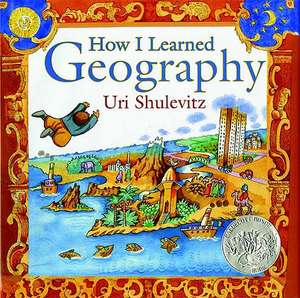
How I Learned Geography
Autor Uri Shulevitzen Limba Engleză Hardback – apr 2008 – vârsta până la 8 ani
Ne-a atras atenția, încă de la primele pagini, absurdul dureros al unei situații care, în ochii unui copil flămând, pare aproape o glumă proastă: tatăl se întoarce acasă nu cu pâinea mult așteptată pentru cină, ci cu o hartă colorată a lumii. How I Learned Geography este o incursiune emoționantă în mecanismele de supraviețuire ale minții infantile, acolo unde foamea fizică este, în mod neașteptat, domolită de hrana spirituală a explorării imaginare. Observăm cum camera cenușie a unei familii de refugiați este inundată de culoare în momentul în care harta este întinsă pe perete, transformând lipsurile materiale într-un pașaport către locuri exotice. Această operă este considerată cea mai personală lucrare a lui Uri Shulevitz, fiind ancorată direct în exilul său din timpul celui de-al Doilea Război Mondial. Dacă în The Fool of the World and the Flying Ship autorul explora folclorul prin prisma magicului, iar în The Sky Was My Blanket analiza supraviețuirea în condiții de război, aici el alege să evidențieze contrastul dintre realitatea cruntă și libertatea interioară. Atmosfera amintește de Chance, o altă lucrare autobiografică a sa, dar în timp ce aceea oferă o perspectivă mai amplă asupra evadării din fața terorii, How I Learned Geography se concentrează pe un singur obiect simbolic care devine ancoră de salvare. Stilul narativ este simplu, accesibil chiar și preșcolarilor, însă încărcătura emoțională a ilustrațiilor în acuarelă și tuș rezonează profund cu cititorii de orice vârstă. Putem afirma că volumul nu este doar o lecție de geografie, ci o pledoarie pentru reziliență, arătându-ne cum arta și curiozitatea pot oferi un refugiu atunci când lumea exterioară devine de nelocuit.
Preț: 127.75 lei
Carte disponibilă
Livrare economică 16-30 noiembrie
Livrare express 30 octombrie-05 noiembrie pentru 59.67 lei
Specificații
ISBN-10: 0374334994
Pagini: 32
Dimensiuni: 260 x 261 x 12 mm
Greutate: 0.42 kg
Ediția:First.
Editura: Farrar, Straus and Giroux (Byr)
Locul publicării:New York, NY
V-ar putea interesa
-
 The Fool of the World and the Flying ShipArthur RansomePreț: 143.92 lei
 -
 The Quiet PlaceSarah StewartPreț: 117.40 lei
 -
 Preț: 62.64 lei
 -
 Preț: 312.18 lei
 -
 Research on the Edge: SpaceAngela RoystonPreț: 65.65 lei
 -
 Big Business: YouTubeAdam SutherlandPreț: 66.41 lei
 -
 -72%Preț: 25.10 lei89.34 lei
 -
 Preț: 65.18 lei
 -
 -22%Preț: 54.03 lei68.91 lei
 -
 -22%Preț: 168.56 lei215.90 lei
 -
 -21%Preț: 170.54 lei216.97 lei
 -
 Bumps and BreaksJoanna BrundlePreț: 92.61 lei
 -
 Cuts and BleedingJoanna BrundlePreț: 92.56 lei
 -
 Human Rights and LibertyCharlie OgdenPreț: 70.43 lei
De ce să citești această carte
Recomandăm această carte părinților care doresc să abordeze teme complexe precum războiul, empatia și sărăcia într-o manieră blândă și plină de speranță. Este o lectură esențială pentru copiii de peste 4 ani, oferindu-le o perspectivă istorică valoroasă și învățându-i că imaginația este o resursă inepuizabilă de putere în momentele dificile. Nota autorului de la final adaugă un strat de autenticitate care transformă povestea într-o lecție de viață memorabilă.
Despre autor
Uri Shulevitz este un autor și ilustrator de talie mondială, laureat al medaliei Caldecott. Născut în Varșovia în 1935, a trăit experiența traumatizantă a blitz-ului german la vârsta de patru ani, fiind forțat să fugă împreună cu familia sa. Timp de opt ani a fost nomad prin Europa, stabilindu-se ulterior la Paris și apoi în Israel și SUA. Această viață marcată de strămutări și lipsuri și-a pus amprenta asupra operei sale, Shulevitz folosind desenul ca formă de rezistență încă din fragedă copilărie. Experiențele sale de refugiat sunt transpuse cu o rară sensibilitate în cărți care îmbină rigoarea istorică cu magia vizuală.
Recenzii
"The story and its triumphant afterword demonstrate that Uri masters much more than geography; he realizes the importance of nurturing the soul." --Starred, "Publishers Weekly" "Signature watercolor illustrations contrast the stark misery of refugee life with the boundless joys of the imagination." --"Kirkus Reviews""" "A tribute to the power of wide imaginative horizons, this gains impact from its basis in Shulevitz's own experiences, which give it reality beyond mere wishful thinking." "--Bulletin of the Center for Children's Books""" "This is a natural pair with Peter Sis's "The Wall" for its depiction of a gifted young artist finding inspiration and expressing himself despite profoundly daunting circumstances." "--The Horn Book"
"Whether enjoyed as a reflection of readers' own imaginative travels, or used as a creative entree to classroom geography units, this simple, poignant offering will transport children as surely as the map it celebrates." --Starred, "Booklist"
"The story and its triumphant afterword demonstrate that Uri masters much more than geography; he realizes the importance of nurturing the soul." --Starred, "Publishers Weekly" "Signature watercolor illustrations contrast the stark misery of refugee life with the boundless joys of the imagination." --"Kirkus Reviews""" "A tribute to the power of wide imaginative horizons, this gains impact from its basis in Shulevitz's own experiences, which give it reality beyond mere wishful thinking." "--Bulletin of the Center for Children's Books""" "This is a natural pair with Peter Sis's "The Wall" for its depiction of a gifted young artist finding inspiration and expressing himself despite profoundly daunting circumstances." "--The Horn Book"
"Fascinating." -- "The Wall Street Journal""This poignant story can spark discussion about the power of the imagination to provide comfort in times of dire need." --Starred, "School Library Journal" "The story and its triumphant afterword demonstrate that Uri masters much more than geography; he realizes the importance of nurturing the soul." --Starred, "Publishers Weekly"
"Whether enjoyed as a reflection of readers' own imaginative travels, or used as a creative entree to classroom geography units, this simple, poignant offering will transport children as surely as the map it celebrates." --Starred, "Booklist""Signature watercolor illustrations contrast the stark misery of refugee life with the boundless joys of the imagination." --"Kirkus Reviews""" "A tribute to the power of wide imaginative horizons, this gains impact from its basis in Shulevitz's own experiences, which give it reality beyond mere wishful thinking." "--Bulletin of the Center for Children's Books""" "This is a natural pair with Peter Sis's "The Wall" for its depiction of a gifted young artist finding inspiration and expressing himself despite profoundly daunting circumstances." "--The Horn Book"
"Fascinating." -- "The Wall Street Journal""" "It is a masterpiece."" --"" New York Times Book Review""" "Shulevitz's simply worded text can be read to preschoolers, but it packs an emotional punch that will resonate with older children and even adults. The watercolor and ink illustrations add further depth as Shulevitz switches from a monochrome palette to a chorus of colors spotlighting how the map stirred his imagination." "--Washington Post Book World""" "Caldecott Medal winner Uri Shulevitz's newest picture book, "How I Learned Geography," is really a love story for the world. It belongs to the newly popular genre of memoir as picture book. Shulevitz handles his autobiographical material with grace and humor. . . . Shulevitz always puts character at the forefront of his work. The expressions and gestures of his characters are believable, human-scale, and tender, full of dreaming." "--"""The Boston Globe""
"Lyrical watercolors depict . . . the power of imagination." --"The San Francisco Chronicle"
"The essence of his tale lies in the power of imagination." "--The Sacramento Bee" "The story and its triumphant afterword demonstrate that Uri masters much more than geography; he realizes the importance of nurturing the soul." --Starred, "Publishers Weekly""This poignant story can spark discussion about the power of the imagination to provide comfort in times of dire need." --Starred, "School Library Journal" "Whether enjoyed as a reflection of readers' own imaginative travels, or used as a creative entree to classroom geography units, this simple, poignant offering will transport children as surely as the map it celebrates." --Starred, "Booklist""" "Signature watercolorillustrations contrast the stark misery of refugee life with the boundless joys of the imagination." --"Kirkus Reviews""" "This is a wonderful tale and a timely message of hope." --Ellen Scott, The Bookworm, Omaha, NE "A tribute to the power of wide imaginative horizons, this gains impact from its basis in Shulevitz's own experiences, which give it reality beyond mere wishful thinking." "--Bulletin of the Center for Children's Books""" "This is a natural pair with Peter Sis's "The Wall" for its depiction of a gifted young artist finding inspiration and expressing himself despite profoundly daunting circumstances." "--The Horn Book""" "This simple, poignant offering will transport children as surely as the map it celebrates." "--Book Links"
“Fascinating.” — "The Wall Street Journal""" "It is a masterpiece."" —"" New York Times Book Review""" "Shulevitz's simply worded text can be read to preschoolers, but it packs an emotional punch that will resonate with older children and even adults. The watercolor and ink illustrations add further depth as Shulevitz switches from a monochrome palette to a chorus of colors spotlighting how the map stirred his imagination." "—Washington Post Book World""" “Caldecott Medal winner Uri Shulevitz's newest picture book, "How I Learned Geography", is really a love story for the world. It belongs to the newly popular genre of memoir as picture book. Shulevitz handles his autobiographical material with grace and humor. . . . Shulevitz always puts character at the forefront of his work. The expressions and gestures of his characters are believable, human-scale, and tender, full of dreaming." "—"""The Boston Globe""
“Lyrical
"Fascinating." --"The Wall Street Journal""" "It is a masterpiece."" --"" New York Times Book Review""" "Shulevitz's simply worded text can be read to preschoolers, but it packs an emotional punch that will resonate with older children and even adults. The watercolor and ink illustrations add further depth as Shulevitz switches from a monochrome palette to a chorus of colors spotlighting how the map stirred his imagination." "--Washington Post Book World""" "Caldecott Medal winner Uri Shulevitz's newest picture book, "How I Learned Geography", is really a love story for the world. It belongs to the newly popular genre of memoir as picture book. Shulevitz handles his autobiographical material with grace and humor. . . . Shulevitz always puts character at the forefront of his work. The expressions and gestures of his characters are believable, human-scale, and tender, full of dreaming." "--"""The Boston Globe""
"Lyrical watercolors depict . . . the power of imagination." --"The San Francisco Chronicle"
"The essence of his tale lies in the power of imagination." "--The Sacramento Bee" "The story and its triumphant afterword demonstrate that Uri masters much more than geography; he realizes the importance of nurturing the soul." --Starred, "Publishers Weekly""This poignant story can spark discussion about the power of the imagination to provide comfort in times of dire need." --Starred, "School Library Journal""Whether enjoyed as a reflection of readers' own imaginative travels, or used as a creative entree to classroom geography units, this simple, poignant offering will transport children as surely as the map it celebrates." --Starred, "Booklist""" "Signature watercolor illustrations contrast the stark misery of refugee life with the boundless joys of the imagination." --"Kirkus Reviews""" "This is a wonderful tale and a timely message of hope."--Ellen Scott, The Bookworm, Omaha, NE "A tribute to the power of wide imaginative horizons, this gains impact from
Descriere scurtă
The award-winning artist's most personal work to date is based on his childhood memories of World War II and features stunning illustrations that celebrate the power of imagination. An author's note includes a brief description of his family's experience, two of his early drawings, and the only surviving photograph of himself from that time.
"How I Learned Geography" is a 2009 Caldecott Honor Book and a 2009 Bank Street - Best Children's Book of the Year.