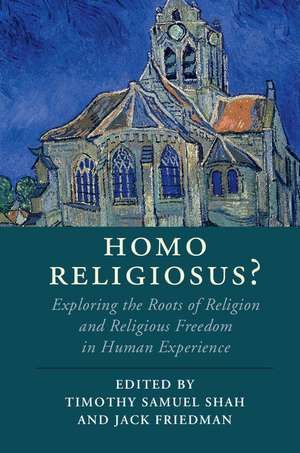
Homo Religiosus?
Editat de Timothy Samuel Shah, Jack Friedmanen Limba Engleză Paperback – 22 mar 2019
Suntem de părere că volumul Homo Religiosus? reprezintă o piesă esențială în peisajul academic actual, impunându-se prin abordarea sa profund interdisciplinară. Lucrarea nu se limitează la un singur domeniu, ci navighează cu rigoare la intersecția dintre științele cognitive, sociologia, antropologia, epistemologia și filozofia morală pentru a examina rădăcinile experienței umane. Credem că miza centrală a cărții — dacă predispoziția biologică și cognitivă spre credință poate justifica libertatea religioasă ca drept universal — oferă o perspectivă proaspătă asupra rolului normativ al religiei în spațiul public. Această ediție extinde cadrul propus de The Roots of Religion de Roger Trigg cu date noi din neuroștiințe și epidemiologie, abordând inclusiv relația dintre religie și sănătatea publică. În timp ce lucrări precum Is Religion Natural? se concentrează pe mecanismele evolutive, volumul editat de Timothy Samuel Shah și Jack Friedman merge mai departe, legând aceste fundamente naturale de teoria drepturilor omului și de democrația deliberativă. Putem afirma că lucrarea se integrează coerent în opera lui Timothy Samuel Shah, completând temele explorate în Under Caesar's Sword sau Christianity and Freedom. Dacă lucrările anterioare se concentrau pe aspectele politice și istorice ale libertății, Homo Religiosus? caută fundamentele ontologice ale acesteia. Structura volumului este organizată sub formă de dezbatere, oferind cititorului un progres logic: de la întrebarea fundamentală despre natura religioasă a ființei umane, analizată de Christian Smith și Phil Zuckerman, până la implicațiile pentru dreptul natural și democrație discutate de Nicholas Wolterstorff și Stephen Macedo. Această succesiune de argumente și contra-argumente asigură o acoperire exhaustivă a subiectului, transformând lectura într-un exercițiu intelectual solicitant dar clarificat.
Preț: 233.08 lei
Carte tipărită la comandă
Livrare economică 17 noiembrie-01 decembrie
Specificații
ISBN-10: 1108433952
Pagini: 278
Ilustrații: 1 table
Dimensiuni: 152 x 229 x 16 mm
Greutate: 0.46 kg
Editura: Cambridge University Press
Locul publicării:New York, United States
De ce să citești această carte
Recomandăm această carte cercetătorilor și studenților din domeniile filozofiei, teologiei și științelor politice care doresc să înțeleagă fundamentele libertății religioase dincolo de argumentele juridice clasice. Cititorul câștigă o perspectivă nuanțată asupra modului în care structura cognitivă umană influențează organizarea socială și politică, primind un instrument teoretic solid pentru a evalua locul religiei în societățile contemporane marcate de tensiuni între secularism și pluralism.
Despre autor
Timothy Samuel Shah este director adjunct al Proiectului pentru Libertate Religioasă din cadrul Centrului Berkley pentru Religie, Pace și Afaceri Mondiale și profesor la Universitatea Georgetown. Expertiza sa se concentrează pe intersecția dintre religie și politica globală, fiind un autor prolific pe tema libertății religioase și a drepturilor omului. Printre lucrările sale de referință se numără „God's Century: Resurgent Religion and Global Politics” și seria „Christianity and Freedom”. Shah este recunoscut pentru eforturile sale de a aduce în atenția comunității internaționale problema persecuției minorităților religioase și pentru rigoarea cu care analizează rolul credinței în democrațiile moderne.
Descriere scurtă
Cuprins
Recenzii
'In recent years, academic and policy debates over religious freedom have had the unexpected but welcome effect of encouraging researchers to revisit several long-neglected questions: just what we mean by 'religion', whether religion is universal, and the implications of religion's presence in societies for our understanding of human nature. Although these questions are being posed anew in many circles, Timothy Samuel Shah and Jack Friedman's Homo Religiosus? is the first book to bring together a multidisciplinary group of scholars to address the issues in a philosophically sophisticated and comparative manner. The result is a pathbreaking book. The exercise is also bracing: even as its contributors speak in varied voices, their shared effort highlights the most critical epistemological and ethical shifts underway today in the comparative study of religion and human freedom.' Robert W. Hefner, The Pardee School of Global Affairs, Boston University