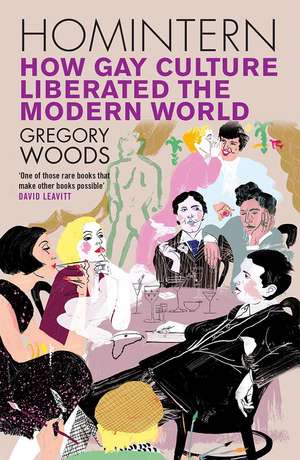
Homintern: How Gay Culture Liberated the Modern World
Autor Gregory Woodsen Limba Engleză Paperback – 21 noi 2017
Bazându-ne pe datele oferite de Yale University Press, remarcăm în Homintern o lucrare de o anvergură istorică și culturală impresionantă, care documentează modul în care rețelele de socializare și colaborare ale persoanelor homosexuale au modelat modernitatea occidentală. Subliniem că titlul, o aluzie ironică la „Comintern”-ul leninist, investighează existența unor structuri informale de solidaritate între scriitori, actori, politicieni și spioni care, deși marginalizați, au reușit să influențeze decisiv curentul cultural majoritar. Autorul, Gregory Woods, propune o structură narativă bogată în detalii biografice și anecdote revelatoare, mutând focusul de la simple cronologii la o analiză a strategiilor de supraviețuire și afirmare în orașe-cheie precum Paris, Berlin sau New York.
Notăm cu interes că acest volum reprezintă o culminare a cercetărilor lui Woods asupra literaturii și identității, continuând direcția teoretică stabilită în lucrări precum Articulate Flesh, unde argumenta că poezia homosexuală este parte integrantă a curentului literar principal, nu o nișă izolată. Cititorii familiarizați cu Toward Stonewall de Nicholas C Edsall vor aprecia la Homintern trecerea de la o sinteză a subculturilor la o explorare mult mai specifică a influenței estetice și politice la nivel global. Spre deosebire de Gay Gotham, care se concentrează strict pe scena artistică din New York, volumul de față oferă o perspectivă transcontinentală, demonstrând cum vizibilitatea a devenit, treptat, o măsură a progresului modern.
Preț: 143.00 lei
Carte disponibilă
Livrare economică 09-23 noiembrie
Livrare express 23-29 octombrie pentru 31.79 lei
Specificații
ISBN-10: 0300228740
Pagini: 440
Ilustrații: 24 b-w illus.
Dimensiuni: 127 x 197 x 38 mm
Greutate: 0.5 kg
Editura: Yale University Press
Colecția Yale University Press
De ce să citești această carte
Recomandăm această carte pentru rigoarea academică dublată de un stil narativ captivant. Cititorul va obține o înțelegere profundă a modului în care rețelele LGBTQ au acționat ca un motor al inovației în artele spectacolului, literatură și politică în secolul XX. Este o lectură esențială pentru cei interesați de istorie socială și de mecanismele prin care minoritățile reușesc să transforme cultura dominantă.
Despre autor
Gregory Woods este un distins profesor de studii gay și lesbiene la Nottingham Trent University, fiind considerat unul dintre principalii istorici și critici britanici ai literaturii queer. Cariera sa îmbină cercetarea academică cu poezia, publicând volume precum Records of an Incitement to Silence sau We Have the Melon. Expertiza sa în cartografierea temelor homoerotice în literatura secolului XX este reflectată în volumul Homintern, unde reușește să sintetizeze decenii de cercetare într-o cronică culturală vastă și accesibilă, recunoscută prin nominalizarea la Lambda Literary Awards.
Descriere scurtă
"An avalanche of stories, ribald gossip, and lengthy asides . . . collectively confirm the book’s central thesis: gay culture, or at least gays and lesbians, did indeed liberate the modern world."—Booklist
In a hugely ambitious study which crosses continents, languages, and almost a century, Gregory Woods identifies the ways in which homosexuality has helped shape Western culture. Extending from the trials of Oscar Wilde to the gay liberation era, this book examines a period in which increased visibility made acceptance of homosexuality one of the measures of modernity.
Woods shines a revealing light on the diverse, informal networks of gay people in the arts and other creative fields. Uneasily called “the Homintern” (an echo of Lenin’s “Comintern”) by those suspicious of an international homosexual conspiracy, such networks connected gay writers, actors, artists, musicians, dancers, filmmakers, politicians, and spies. While providing some defense against dominant heterosexual exclusion, the grouping brought solidarity, celebrated talent, and, in doing so, invigorated the majority culture.
Woods introduces an enormous cast of gifted and extraordinary characters, most of them operating with surprising openness; but also explores such issues as artistic influence, the coping strategies of minorities, the hypocrisies of conservatism, and the effects of positive and negative discrimination. Traveling from Harlem in the 1910s to 1920s Paris, 1930s Berlin, 1950s New York and beyond, this sharply observed, warm-spirited book presents a surpassing portrait of twentieth-century gay culture and the men and women who both redefined themselves and changed history.