Cantitate/Preț
Produs

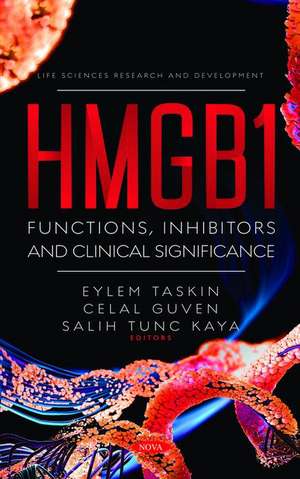
HMGB1: Functions, Inhibitors and Clinical Significance

Editat de Salih Tunc Kaya, Celal Guven, Eylem Taskin
en Limba Engleză Hardback – 8 dec 2022

Această monografie științifică publicată de Nova reprezintă o sinteză tehnică a cercetărilor actuale privind proteina HMGB1, un mediator esențial în răspunsul imun înnăscut. Structurat riguros în trei secțiuni, volumul depășește simpla descriere a proteinelor de tip alarmină, oferind o analiză detaliată a modului în care High Mobility Group Box-1 influențează patogeneza unor afecțiuni complexe. Remarcăm abordarea multidisciplinară a editorilor Salih Tunc Kaya, Celal Guven și Eylem Taskin, care conectează biologia moleculară de aplicațiile clinice imediate, de la oncologie la neurologie.

Prima parte a lucrării investighează intersecția dintre cancer și ischemia miocardică prin prisma feroptozei, în timp ce a doua secțiune se concentrează pe interacțiunile metabolice, evidențiind rolul HMGB1 în inflamația țesutului adipos și rezistența la insulină. Ultima secțiune, dedicată bolilor neurodegenerative, analizează potențialul terapeutic al antagoniștilor HMGB1 în gestionarea epilepsiei și a accidentelor vasculare cerebrale. Cititorii familiarizați cu Damage-Associated Molecular Patterns in Human Diseases Vol.1 & Vol. 2 de Walter Gottlieb Land vor aprecia modul în care acest volum izolează și aprofundează mecanismele specifice ale HMGB1, oferind o perspectivă mult mai focalizată asupra inhibitorilor și semnificației clinice a acestei molecule particulare față de tratatele generale despre DAMP-uri.

Stilul este unul academic, dens în date experimentale, fiind integrate studii recente despre interacțiunea cu receptorii TLR4 și implicarea în furtuna citokinică. Considerăm că această lucrare este esențială pentru înțelegerea proceselor de autofagie și stres oxidativ în hepatocite, precum și pentru explorarea noilor oportunități terapeutice în bolile neuroimunologice.

Citește tot Restrânge

Preț: 87345 lei

Preț vechi: 101564 lei
-14%

Puncte Express: 1310

Carte disponibilă

Livrare economică 04-18 mai


Specificații

ISBN-13: 9798886974089
Pagini: 280
Dimensiuni: 152 x 229 mm
Greutate: 0.55 kg
Editura: Nova
Colecția nova
Locul publicării:United States

De ce să citești această carte

Această monografie este indispensabilă cercetătorilor și clinicienilor din domeniile imunologiei și patologiei moleculare. Cititorul câștigă o înțelegere profundă a modului în care o singură moleculă de semnalizare poate influența afecțiuni atât de diverse precum diabetul, cancerul și scleroza multiplă. Este o resursă critică pentru cei care studiază inhibitorii de alarmine și caută ținte terapeutice noi pentru controlul inflamației cronice și al neurodegenerării.


Descriere

Damage-associated molecular patterns (DAMPs), a term also known as alarmins coined by Walter G. Land, Seong, and Matzinger, are endogenous danger molecules that are released from damaged or dying cells and activate the innate immune system by interacting with pattern recognition receptors (PRRs). One of the most well-known DAMPs is high mobility group box-1 (HMGB1), the name being such due to its very fast movement in gel electrophoresis. Importantly, HMGB1 has been shown to contribute to the pathogenesis of various diseases including myocardial ischemia/reperfusion injury, epilepsy, diabetes, multiple sclerosis, cancer, as well as hepatic steatosis, and fatty liver disease. There are three sections in the book. The first section is named HMGB1 and Cancer, including two chapters. One of the chapters in the first section is focused on HMGB1 in cancer therapy and managing COVID-19 infection, as well as multiple sclerosis. The second chapter in the first section is the crosstalk between cancer and myocardial ischemia/reperfusion injury (MIR) through HMGB1 via ferroptotic cell death. The second section is HMGB1 and metabolic interactions, consisting of two chapters. The first chapter is HMGB1 and inflammation in adipose tissue, resulting in insulin resistance and type 2 diabetes.The second chapter in the second section sums up recent data related to HMGB1 and liver injury, e.g., drug-induced liver injury, alcoholic liver disease, non-alcoholic fatty liver disease, viral hepatitis, sepsis, and acute chronic liver failure, hepatocellular death through oxidative stress, inflammatory signaling, and autophagy in hepatocytes. The third section is about HMGB1 and neurodegenerative diseases. The section contains four chapters. The first chapter in the section evaluates HMGB1 and its antagonist in brain disorders, including epilepsy, headache, neuroimmunological disorders, neurodegenerative disorders, and stroke. The second chapter in the third section is about the role of HMGB1 on post-brain injury, including potential mechanisms and therapeutic opportunities as well. The third chapter in the third section evaluates the interaction of HMGB1 and Multiple sclerosis via TLR4/NF-?B signaling pathway, leading to the release of proinflammatory cytokines causing an inflammatory response. The last chapter in the third chapter aims to explain the effects of HMGB1 on Epilepsy.