
Hillard, D: Publishing Python Packages
Autor Dane Hillarden Limba Engleză Paperback – 12 ian 2023
Ne-a atras atenția modul în care Publishing Python Packages transformă procesul adesea arid al distribuției de cod într-o metodologie riguroasă, bazată pe design patterns și automatizare. Găsim în această carte un flux de lucru complet pentru arhitectura pachetelor, începând cu bazele structurii unui proiect și avansând rapid către integrarea continuă (CI) și securitatea dependențelor. Dane Hillard nu se limitează la simpla grupare a modulelor, ci pune accent pe crearea de software mențenabil, utilizând Manning Publications drept platformă pentru a livra bune practici în testare și DevOps.
Apreciem structura progresivă a volumului, care ghidează cititorul prin cele patru etape critice: de la 'Foundations' la 'The Long Haul'. Autorul detaliază implementarea testelor automate cu tox și rafinarea codului prin instrumente de analiză statică precum black și mypy. Ca și Tomas Beuzen în Python Packages, Dane Hillard distilează experiență reală în principii acționabile, însă pune un accent mai puternic pe scalabilitate și pe utilizarea GitHub Actions pentru pipeline-uri de livrare continuă. Un element distinctiv este includerea instrucțiunilor pentru extensii C și scripturi de consolă, aspecte tehnice esențiale pentru pachetele profesionale care trebuie să performeze în ecosistemul Python Package Index.
Spre deosebire de lucrări axate strict pe operațiuni, precum DevOps in Python de Moshe Zadka, acest volum este centrat pe produsul software în sine. Ne sunt prezentate soluții concrete pentru menținerea pachetelor 'evergreen' prin Dependabot și pyupgrade, asigurând astfel o viață lungă proiectelor open source sau interne. Este o resursă tehnică ce echilibrează perfect execuția practică cu standardele industriei.
Preț: 305.41 lei
Preț vechi: 381.76 lei
-20%
Carte disponibilă
Livrare economică 05-19 septembrie
Livrare express 22-28 august pentru 30.12 lei
Specificații
ISBN-10: 161729991X
Pagini: 275
Dimensiuni: 185 x 232 x 13 mm
Greutate: 0.44 kg
Editura: Manning Publications
V-ar putea interesa
-
 Pride and PrejudiceJane Austen-17%Preț: 36.39 lei43.65 lei
 -
 MeditationsMarcus AureliusPreț: 32.87 lei
 -
 Code Complete: A practical handbook of software constructionSteve McConnell-20%Preț: 282.95 lei353.69 lei
 -
 -20%Preț: 272.37 lei340.47 lei
 -
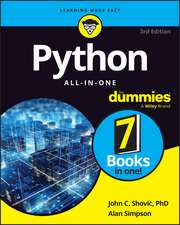 Python All-in-One For DummiesJohn C. Shovic-20%Preț: 235.80 lei294.75 lei
 -
 Python Essentials For DummiesJohn C. Shovic-20%Preț: 78.48 lei98.10 lei
 -
 GitHub Copilot Certification Study GuideTom Taulli-20%Preț: 320.11 lei400.14 lei
 -
 Coding For Dummies, All New EditionPaul McFedries-20%Preț: 115.67 lei144.59 lei
 -
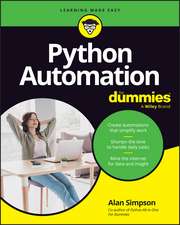 Python Automation For DummiesAlan Simpson-20%Preț: 144.23 lei180.29 lei
 -
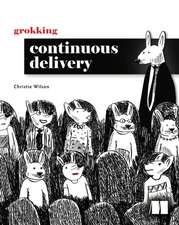 Grokking Continuous DeliveryChristie Wilson-20%Preț: 350.21 lei437.76 lei
 -
 Preț: 387.63 lei
 -
 Github Actions in ActionMichael Kaufmann-20%Preț: 269.24 lei336.55 lei
 -
 -35%Preț: 286.72 lei440.13 lei
 -
 -38%Preț: 181.82 lei291.02 lei
 -
 Advanced Guide to Python 3 ProgrammingJohn Hunt-20%Preț: 549.99 lei687.49 lei
 -
 Preț: 433.14 lei
 -
 Chaos Engineering with PythonMandeep Ubhi-20%Preț: 180.29 lei225.35 lei
 -
 AI and MicroservicesDileep Kumar Pandiya-20%Preț: 253.04 lei316.29 lei
De ce să citești această carte
Recomandăm această carte programatorilor Python de nivel intermediar care doresc să treacă de la scrierea de scripturi izolate la dezvoltarea de biblioteci profesionale. Veți câștiga o metodologie clară pentru automatizarea testării, documentării și publicării pe PyPI. Este ghidul ideal pentru cei care vor să contribuie la ecosistemul open source sau să optimizeze distribuția de cod în cadrul echipelor lor, asigurând o mentenanță minimă pe termen lung.