Cantitate/Preț
Produs

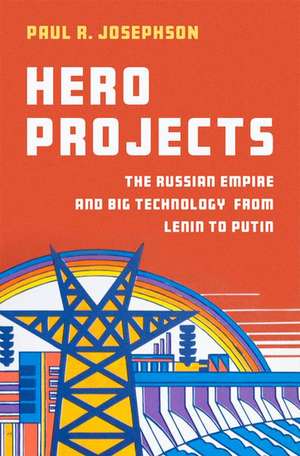
Hero Projects: The Russian Empire and Big Technology from Lenin to Putin

Autor Paul R. Josephson
en Limba Engleză Hardback – 20 mar 2024

Această monografie istorică și politică investighează modul în care „proiectele secolului” au servit drept coloană vertebrală pentru ambițiile imperiale rusești pe parcursul a mai bine de o sută de ani. Recomandăm acest volum celor interesați de intersecția dintre tehnologie și autoritarism, autorul Paul R. Josephson demonstrând cum infrastructura masivă — de la conductele din tundră până la centralele nucleare — nu a fost doar un motor economic, ci un instrument de colonizare internă și control ideologic. Ne-a atras atenția analiza continuității dintre regimuri: fie că vorbim de țari, lideri sovietici sau administrația Putin, „megaproiectele” au fost susținute prin sacrificii umane imense, implicând țărani și deținuți politic, pentru a proiecta o imagine de grandoare pe scena mondială. Cartea reprezintă o alternativă focalizată la A History of Russia and Its Empire de Kees Boterbloem pentru cursurile de geopolitică, având avantajul unei lentile tehnocratice asupra istoriei imperiale. În contextul operei sale, Hero Projects sintetizează temele explorate de Paul R. Josephson în lucrări anterioare precum The Conquest of the Russian Arctic sau Nuclear Russia, extinzând cadrul de cercetare de la industrii specifice la o viziune panoramică asupra culturii politice ruse. Stilul este riguros și analitic, transformând datele despre hidrocentrale și canale în argumente despre natura puterii de la Kremlin și ambițiile actuale de restaurare a granițelor sovietice.

Citește tot Restrânge

Preț: 35924 lei

Preț vechi: 40805 lei
-12%

Puncte Express: 539

Carte disponibilă

Livrare economică 01-12 mai


Specificații

ISBN-13: 9780197698396
ISBN-10: 0197698395
Pagini: 344
Dimensiuni: 226 x 163 x 43 mm
Greutate: 0.59 kg
Editura: Oxford University Press
Colecția OUP USA
Locul publicării:New York, United States

De ce să citești această carte

Merită să citiți această carte pentru a înțelege cum tehnologia devine un instrument al ideologiei și al expansiunii teritoriale. Paul R. Josephson oferă o perspectivă rară asupra modului în care infrastructura a modelat destinul Rusiei, de la gulag la războaiele contemporane. Este o lectură esențială pentru studenții la relații internaționale și istorie care doresc să descifreze rădăcinile tehnocratice ale autoritarismului rus modern.


Despre autor

Paul R. Josephson este profesor de științe politice la Sarah Lawrence College și un specialist recunoscut în istoria științei și tehnologiei în spațiul sovietic și rus. Expertiza sa se concentrează pe impactul politic și de mediu al marilor proiecte industriale, subiect pe care l-a explorat extensiv în lucrări precum The Conquest of the Russian Arctic și Nuclear Russia. Abordarea sa interdisciplinară combină analiza politică cu istoria socială, oferind o înțelegere profundă a modului în care regimurile ruse au utilizat ingineria pentru a-și consolida controlul asupra teritoriului și populației.


Descriere

From Lenin and Stalin to Putin, Russia's economic development has relied on large scale technologies. These technologies--often called "hero projects," "projects of the century," or "megaprojects"--have been central to the nation's economic growth and military power. Despite their massive environmental and social costs, hero technologies moved ahead in service of the unbridled interests of state officials, the hubris of engineers, and the coalescence of the masses under a national ideology of glorious achievement and military grandeur. In Hero Projects, Paul R. Josephson traces how, over the last one hundred years, the Russian tsars, commissars, and oligarchs embraced megaprojects to create the world's largest empire. Built by peasants, gulag prisoners, and Communist volunteers, the wide-ranging projects--including pipelines across the tundra, railroads from Europe to the Pacific Ocean, hydropower stations and canals from the northwest to arid Central Asia, and nuclear facilities--forever altered the landscape, politics, and society. As Josephson argues, if hero projects were embraced by the public as showcasing technological wonder, they have always ultimately served to enrich the Kremlin and demonstrate the nation's technological prowess on the global stage. And they continue to be a major feature of authoritarian Russian political rule in the twenty-first century; having rebuilt Russia's resource state and pushed a self-proclaimed "renaissance" of nuclear weapons and reactors, Putin has determined in 2022 to expand the empire to its Soviet borders by war on Ukraine, in Crimea, and against Georgia and Moldova. Sweeping in scope, Hero Projects establishes the strong continuities in political culture in Russian history; reshapes the meaning of empire, extending it to include internal colonization; and expands environmental and social history through the study of big technology.

Recenzii

Paul R. Josephson is the doyen of the Soviet history of technology and science. His groundbreaking studies have consistently provided powerful inspiration and important landmarks for younger researchers all over the world. In Hero Projects, Josephson proves the significance of profound historical research in coming at an appropriate understanding of Putinism. Moscow's Kremlin bosses are obviously so driven by the imperial demons of the twentieth century that the realities of the twenty-first century remain incomprehensible to them. After reading this book, it's clear that the history of the Soviet Union may be over, but it is far from being overcome.
This work is recommended for large academic and public libraries, as well as collections focused on Russian history or the history of technology.
This book is a rich and thought-provoking read about the past and present structures of power in Russia through its specific modes of mastering nature and territory through technology.

Notă biografică

Paul R. Josephson is Professor Emeritus of History at Colby College. He is a specialist on the history of big science and technology in the twentieth century. The author of fourteen books, he focuses on environmental and political questions, and on the comparative history of Russia and the US. His most recent book, Nuclear Russia: The Atom in Russian Politics and Culture, is a cultural history of the nuclear age in Russia.