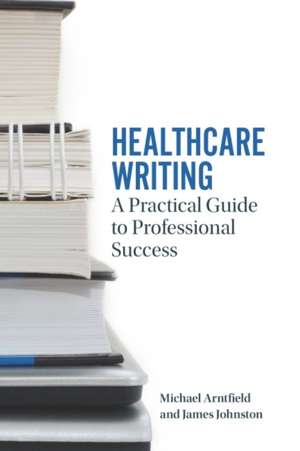
Healthcare Writing: A Practical Guide to Professional Success
Autor Michael A. Arntfield, James W. Johnstonen Limba Engleză Paperback – 4 aug 2016
Preț: 349.16 lei
Preț vechi: 401.83 lei
-13%
Puncte Express: 524
Preț estimativ în valută:
61.73€ • 73.75$ • 53.47£
61.73€ • 73.75$ • 53.47£
Carte disponibilă
Livrare economică 21 februarie-07 martie
Livrare express 07-13 februarie pentru 86.100 lei
Specificații
ISBN-13: 9781554812295
ISBN-10: 1554812291
Pagini: 248
Dimensiuni: 152 x 229 x 12 mm
Greutate: 0.4 kg
Editura: BROADVIEW PR
Colecția Broadview Press
Locul publicării:Peterborough, Canada
ISBN-10: 1554812291
Pagini: 248
Dimensiuni: 152 x 229 x 12 mm
Greutate: 0.4 kg
Editura: BROADVIEW PR
Colecția Broadview Press
Locul publicării:Peterborough, Canada
V-ar putea interesa
-
 -20%Preț: 196.17 lei245.21 lei
 -
 Interim Report of the Committee on Geographic Variation in Health Care Spending and Promotion of High-Value Health Care: Preliminary Committee ObservaCommittee on Geographic Variation in Hea-5%Preț: 266.37 lei280.39 lei
 -
 Workbook for Pharmacology for Pharmacy TechniciansKathy Moscou-5%Preț: 280.75 lei295.53 lei
 -
 Accommodating the Chinese: The American Hospital in China, 1880-1920Michelle Campbell Renshaw-15%Preț: 405.41 lei476.94 lei
 -
 Preț: 523.96 lei
 -
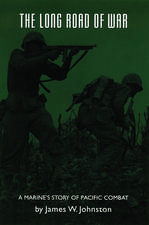 The Long Road of WarJames W JohnstonPreț: 200.65 lei
 -
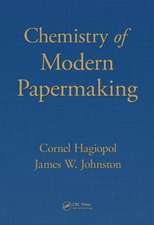 Chemistry of Modern PapermakingCornel Hagiopol-18%Preț: 1605.90 lei1958.42 lei
 -
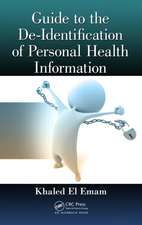 -20%Preț: 906.00 lei1132.51 lei
 -
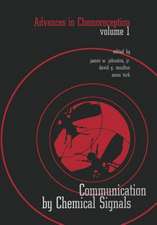 Advances in Chemoreception: Volume I Communication by Chemical SignalsJames W. JohnstonPreț: 383.96 lei
 -
 Where No Doctor Has Gone BeforeRobert Huish-5%Preț: 248.97 lei262.07 lei
 -
 Building Community Capacity: Case Examples from Around the WorldRosemary M Caron-31%Preț: 1211.62 lei1749.14 lei
 -
 -31%Preț: 961.73 lei1388.52 lei
 -
 Health Care Fraud & Abuse ProgramLorena Townsend-31%Preț: 962.90 lei1389.29 lei
 -
 Health Care Fraud & Questionable Costs: Select InvestigationsMarco N Stallone-31%Preț: 960.76 lei1387.90 lei
 -
 Fraud Detection & Deterrence in Medicare & MedicaidAnton Ferilli-31%Preț: 962.23 lei1388.84 lei
 -
 -5%Preț: 89.19 lei93.88 lei
 -
 Defying DecrepitudeAlan T. Peacock-19%Preț: 82.41 lei101.22 lei
Recenzii
Notable for its use of real document examples drawn from actual healthcare settings, in addition to its central section’s extended focus on narrative medicine and new media writing, Healthcare Writing: A Practical Guide to Professional Success provides a wide-ranging, much-needed contemporary perspective on the modes and contexts of writing most pertinent to today’s healthcare professionals. Aimed at students enrolled in university- or college-level healthcare programs, healthcare communication specialists, as well as at current clinical practitioners seeking a portable reference and guide, this book combines a detailed discussion of approaches to key healthcare document types—both professional and academic—with a thorough but accessible overview of essential points of grammar, punctuation, and style.
“Written communication in all its forms is a vital component of clinical care, building professional relationships, and documenting learning. Unfortunately, most training programs offer no formal teaching or assessment of this complex skill. Healthcare Writing covers all the bases: chart notes, emails and letters, social media, reflective pieces, illness narratives, presentations, and research. Highly recommended for learners and educators from all healthcare disciplines.” —Allan Peterkin, MD, author of PORTFOLIO TO GO: 1000 Writing Prompts and Provocations for Clinical Learners
“Arntfield and Johnston’s text ushers this important field of professional communication into view for the purposes of teaching and learning. It skillfully synthesizes practical composition guidelines, writing studies theory, and everyday ‘institutional’ writing practices with more conceptual sections such as narrative medicine, pathography, scientific research, and reflective practice. The authors highlight the implications of digital technologies and situate healthcare writing within various medical and social contexts. This text is refreshingly non-proscriptive, and it can be easily adapted to existing pedagogy across healthcare programs while meeting the needs of novices and experts alike.” — Kathryn Alexander, Simon Fraser University
“This textbook is refreshingly non-prescriptive, and can easily be adapted to existing teaching across healthcare programs while meeting the needs of the novices and experts alike. Its objective is to teach students enrolled in university or college-level healthcare programs, healthcare communication specialists, as well as current clinical practitioners seeking a portable reference guide.” — The Lamp, NSW Nurses & Midwives’ Association
“Written communication in all its forms is a vital component of clinical care, building professional relationships, and documenting learning. Unfortunately, most training programs offer no formal teaching or assessment of this complex skill. Healthcare Writing covers all the bases: chart notes, emails and letters, social media, reflective pieces, illness narratives, presentations, and research. Highly recommended for learners and educators from all healthcare disciplines.” —Allan Peterkin, MD, author of PORTFOLIO TO GO: 1000 Writing Prompts and Provocations for Clinical Learners
“Arntfield and Johnston’s text ushers this important field of professional communication into view for the purposes of teaching and learning. It skillfully synthesizes practical composition guidelines, writing studies theory, and everyday ‘institutional’ writing practices with more conceptual sections such as narrative medicine, pathography, scientific research, and reflective practice. The authors highlight the implications of digital technologies and situate healthcare writing within various medical and social contexts. This text is refreshingly non-proscriptive, and it can be easily adapted to existing pedagogy across healthcare programs while meeting the needs of novices and experts alike.” — Kathryn Alexander, Simon Fraser University
“This textbook is refreshingly non-prescriptive, and can easily be adapted to existing teaching across healthcare programs while meeting the needs of the novices and experts alike. Its objective is to teach students enrolled in university or college-level healthcare programs, healthcare communication specialists, as well as current clinical practitioners seeking a portable reference guide.” — The Lamp, NSW Nurses & Midwives’ Association
Cuprins
Preface
Acknowledgements
Part I: Everyday Writing in Healthcare
Chapter 1: In-Patient Writing: Notes, Charts, and Reports
Chapter 2: Interpersonal Writing: Letters, Emails, and Presentations
Part II: Narratives in Healthcare
Chapter 3: Narrative Medicine, Parallel Charting, and Portfolio Writing
Chapter 4: Pathographies, Blogs, and Healthcare Wikis
Chapter 5: Social Media and Public Health
Part III: Fundamentals of Healthcare Writing
Chapter 6: Basics of Grammar, Punctuation, and Style
Chapter 7: Healthcare Research and Academic Writing (Part 1): Prewriting, Critical Analyses, Reports, and Essays
Chapter 8: Healthcare Research and Academic Writing (Part 2): Finding and Using Sources
Chapter 6 Review Quizzes
Glossary
References
Permissions Acknowledgements
Index
Acknowledgements
Part I: Everyday Writing in Healthcare
Chapter 1: In-Patient Writing: Notes, Charts, and Reports
Chapter 2: Interpersonal Writing: Letters, Emails, and Presentations
Part II: Narratives in Healthcare
Chapter 3: Narrative Medicine, Parallel Charting, and Portfolio Writing
Chapter 4: Pathographies, Blogs, and Healthcare Wikis
Chapter 5: Social Media and Public Health
Part III: Fundamentals of Healthcare Writing
Chapter 6: Basics of Grammar, Punctuation, and Style
Chapter 7: Healthcare Research and Academic Writing (Part 1): Prewriting, Critical Analyses, Reports, and Essays
Chapter 8: Healthcare Research and Academic Writing (Part 2): Finding and Using Sources
Chapter 6 Review Quizzes
Glossary
References
Permissions Acknowledgements
Index