
Healthcare Information Management Systems
en Limba Engleză Paperback – 23 sep 2015
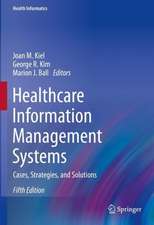
Publicat sub egida prestigioasei edituri Springer, volumul Healthcare Information Management Systems, aflat la a patra ediție, se prezintă ca un manual de referință cu o organizare riguroasă în 644 de pagini. Formatul paperback facilitează consultarea frecventă, fiind structurat logic pentru a ghida cititorul de la fundamentele istorice ale suportului decizional clinic până la provocările contemporane ale interoperabilității și politicilor de sănătate digitală. Observăm că această ediție pune un accent deosebit pe integrarea studiilor de caz, oferind o perspectivă clinică asupra implementării sistemelor de evidență electronică a sănătății (EHR). Suntem de părere că valoarea adăugată rezidă în onestitatea analizei: autorii nu se limitează la beneficii, ci explorează „cele zece motive pentru care interoperabilitatea este dificilă” și motivele pentru care promisiunile tehnologiei nu sunt întotdeauna îndeplinite. Din punct de vedere structural, progresia de la funcționalitățile EHR către factorul uman și uzabilitate indică o maturizare a domeniului informaticii medicale. Manual de referință comparabil cu Aspects of Electronic Health Record Systems de Harold P. Lehmann, dar actualizat conform ghidurilor și evoluțiilor tehnologice din 2015, volumul reușește să acopere lacunele dintre teorie și execuția administrativă. În contextul operei editorilor, Charlotte A. Weaver și Marion J. Ball continuă aici direcțiile explorate în Big Data-Enabled Nursing, extinzând analiza de la seturile de date masive către managementul sistemic și schimbarea culturală necesară pentru siguranța pacientului. Recomandăm acest volum ca pe un instrument de planificare strategică, esențial pentru navigarea într-un ecosistem de sănătate tot mai digitalizat.
Preț: 483.98 lei
Preț vechi: 509.46 lei
-5%
Carte disponibilă
Livrare economică 17 noiembrie-01 decembrie
Specificații
ISBN-10: 3319307584
Pagini: 644
Ilustrații: XXIII, 618 p. 65 illus., 57 illus. in color.
Dimensiuni: 155 x 235 x 35 mm
Greutate: 0.89 kg
Ediția:4th edition 2015
Editura: Springer
Locul publicării:Cham, Switzerland
V-ar putea interesa
-
 -25%Preț: 1193.18 lei1594.12 lei
-
 -27%Preț: 911.29 lei1251.19 lei
-
 -22%Preț: 933.91 lei1195.96 lei
-
 Principles of Biomedical InformaticsIra J. Kalet-15%Preț: 527.63 lei617.98 lei
-
 Independent Component AnalysisAapo Hyvärinen-20%Preț: 1140.87 lei1426.08 lei
-
 -5%Preț: 2370.63 lei2495.39 lei
-
 Volumetric Image AnalysisGabriele Lohmann-9%Preț: 1610.04 lei1769.27 lei
-
 -5%Preț: 542.10 lei570.63 lei
-
 -18%Preț: 2094.28 lei2554.00 lei
-
 -5%Preț: 447.22 lei470.75 lei
-
 -5%Preț: 652.67 lei687.02 lei
-
 Pediatric InformaticsChristoph Lehmann-5%Preț: 387.72 lei408.12 lei
-
 -15%Preț: 596.13 lei701.32 lei
-
 Computers in Private Practice ManagementByron B. Oberst-5%Preț: 717.26 lei755.01 lei
-
 -18%Preț: 1465.37 lei1787.03 lei
-
 Healthcare Information Management SystemsJoan M. Kiel-5%Preț: 775.24 lei816.04 lei
-
 Big Data-Enabled NursingConnie W. Delaney-5%Preț: 1246.45 lei1312.05 lei
-
 PflegeinformatikKathryn J. Hannah-5%Preț: 540.21 lei568.65 lei
-
 Basiswissen Medizinische StatistikChristel Weiß-5%Preț: 270.36 lei284.59 lei
-
 Medizinische Statistik mit SAS Studio unter SODAGisela Büchele-5%Preț: 143.10 lei150.64 lei
De ce să citești această carte
Recomandăm această lucrare liderilor din domeniul sănătății (CEO, CIO, directori medicali) și informaticienilor clinici care au nevoie de un cadru teoretic dublat de dovezi practice. Cititorul câștigă o înțelegere profundă a modului în care sistemele informatice pot fi implementate eficient pentru a genera rezultate, evitând în același timp capcanele comune ale adoptării tehnologice. Este o resursă indispensabilă pentru oricine gestionează tranziția către o medicină centrată pe pacient și siguranță digitală.
Despre autor
Editorii acestui volum sunt figuri proeminente în domeniul informaticii medicale. Marion J. Ball este recunoscută internațional pentru contribuțiile sale la educația în informatică și managementul sistemelor de sănătate, având o carieră dedicată integrării tehnologiei în practica clinică. Charlotte A. Weaver este un expert în informatică medicală și asistență medicală (nursing), concentrându-se pe utilizarea datelor pentru îmbunătățirea rezultatelor clinice. Împreună cu George R. Kim și Joan M. Kiel, aceștia au consolidat o abordare multidisciplinară care îmbină expertiza tehnică cu managementul organizațional, reflectată în numeroasele lor publicații de specialitate.
Descriere scurtă
Cuprins
Big Data Analytical Technologies and Decision Support in Critical Care.- Data Driven Analytics for Personalized Healthcare.- Cognitive Computing for Electronic Medical Records.- Health Information Systems 2025.
Notă biografică
Textul de pe ultima copertă
This 4th Edition of Healthcare Information Management Systems: Cases, Strategies, and Solutions has been thoroughly updated, as concepts such as Meaningful Use (MU), interoperability, personalized medicine and health IT have had a considerable impact on patient safety and health outcomes. It outlines the issues of EHR adoption under MU and, as anticipated gains in efficiency, quality and costs have not always been seen, it also provides a framework within which solutions to the frustration, dissatisfaction, and growing concerns can be found. Many suggest that a technology sea change is needed with a second generation of EHRs developed on 21st century architectures that more closely match the flexibility and power of mobile and web-based applications available in the general marketplace.
Building on the success of its previous three editions, this book will guide healthcare professionals as they confront the technical, organizational, and management issues related to the selection, implementation, and management of healthcare information systems. It will contribute to taking us into a healthcare system that delivers value, is a pleasure to work wit
hin, and relieves the taxpayers’ burden.