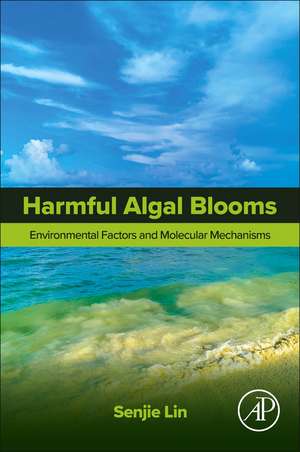
Harmful Algal Blooms: Environmental Factors and Molecular Mechanisms
Autor Senjie Linen Limba Engleză Paperback – 29 iul 2025
Other sections explore an integrated molecular approach to incorporate energy, nutrients, defenses, and sexual reproduction (ENDs) as a resolution for HAB growth. This is an important resource for researchers and students in marine biology and ecology fields, as well as phycological and environmental studies.
- Provides foundational knowledge and the latest discoveries on understanding and preventing the spread of harmful algal blooms
- Details harmful algae and its molecular biology, genomics, physiology, and ecology
- Offers molecular ecological approaches and molecular techniques for researching harmful algae
Preț: 977.45 lei
Preț vechi: 1277.13 lei
-23%
Puncte Express: 1466
Carte tipărită la comandă
Livrare economică 01-15 iunie
Specificații
ISBN-13: 9780443157431
ISBN-10: 044315743X
Pagini: 306
Dimensiuni: 152 x 229 x 13 mm
Greutate: 0.5 kg
Editura: ELSEVIER SCIENCE
ISBN-10: 044315743X
Pagini: 306
Dimensiuni: 152 x 229 x 13 mm
Greutate: 0.5 kg
Editura: ELSEVIER SCIENCE
Cuprins
1. Harmful algal blooms and complexity of their drivers
2. Genetic diversity and invasive species
3. Algal toxins, biosynthesis pathways and adaptive significance
4. Ecological models to constrain the causes of HABs
5. Effects of ocean warming and molecular mechanisms
6. Effects of ocean acidification and molecular mechanisms
7. Effects of eutrophication and molecular mechanisms
8. Roles of mixotrophy and symbiosis and molecular mechanisms
9. Biotic interactions and biocontrol tools
10. Sexual reproduction, cell cycle, and molecular regulators
11. An integrative molecular ecological approach to unraveling HAB drivers
12. Molecular approach to detecting, monitoring, and understanding the drivers of HABs
Glossary
2. Genetic diversity and invasive species
3. Algal toxins, biosynthesis pathways and adaptive significance
4. Ecological models to constrain the causes of HABs
5. Effects of ocean warming and molecular mechanisms
6. Effects of ocean acidification and molecular mechanisms
7. Effects of eutrophication and molecular mechanisms
8. Roles of mixotrophy and symbiosis and molecular mechanisms
9. Biotic interactions and biocontrol tools
10. Sexual reproduction, cell cycle, and molecular regulators
11. An integrative molecular ecological approach to unraveling HAB drivers
12. Molecular approach to detecting, monitoring, and understanding the drivers of HABs
Glossary