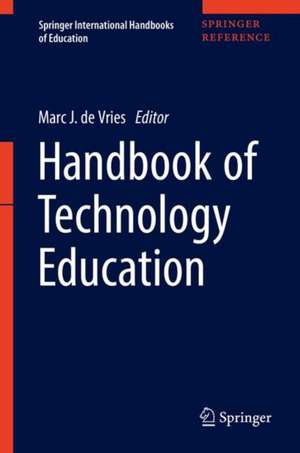
Handbook of Technology Education: Springer International Handbooks of Education
Editat de Marc J. de Vriesen Limba Engleză Hardback – 6 oct 2017
Remarcăm în Handbook of Technology Education o abordare profund interdisciplinară, care reușește să conecteze fundamentele filozofice ale tehnologiei cu aplicații practice în domenii diverse, de la robotică și materiale rezistente până la industria textilă și alimentară. Această lucrare de referință, publicată sub egida Springer, oferă o radiografie globală a evoluției disciplinei, punând un accent deosebit pe integrarea tehnologiei în cadrul curriculumului STEM.
Structura volumului reflectă o progresie logică, pornind de la ontologia tehnologiei și „nomadologie” ca lentilă de explorare a alfabetizării tehnologice, continuând cu strategii pedagogice și terminând cu utilizarea tehnologiei în sine ca instrument de predare (CAD, animații, social media). Ne-a atras atenția secțiunea dedicată provocărilor specifice de învățare, unde autorii analizează critic cum pot fi transformate conceptele abstracte în experiențe autentice de învățare.
Această lucrare extinde cadrul propus de The Bloomsbury Handbook of Technology Education cu date noi din cercetări recente privind educația inginerească pre-universitară și utilizarea e-portofoliilor pentru evaluare. Comparativ cu Locating Technology Education in STEM Teaching and Learning, care se concentrează strict pe poziționarea „T”-ului în acronimul STEM, volumul editat de Marc J. de Vries oferă o perspectivă mult mai vastă, incluzând aspecte culturale, de gen și sustenabilitate.
Poziționată în continuarea preocupărilor autorului din Teaching about Technology, unde acesta argumenta necesitatea unei baze teoretice clare pentru profesori, această nouă apariție din seria Springer International Handbooks of Education devine un instrument esențial pentru profesionalizarea continuă a cadrelor didactice și pentru dezvoltatorii de politici educaționale.
Din seria Springer International Handbooks of Education
- 20%
 Preț: 4064.07 lei
 - 18%
 Preț: 4812.89 lei
 - 18%
 Preț: 2402.75 lei
 - 18%
 Preț: 2457.35 lei
 - 20%
 Preț: 3067.62 lei
 - 18%
 Preț: 2659.80 lei
 - 18%
 Preț: 2429.30 lei
 - 18%
 Preț: 4050.52 lei
 - 18%
 Preț: 2471.47 lei
 - 18%
 Preț: 2104.01 lei
 - 18%
 Preț: 2672.54 lei
 - 18%
 Preț: 2962.33 lei
 - 18%
 Preț: 2957.93 lei
 - 24%
 Preț: 5029.01 lei
 - 18%
 Preț: 5470.68 lei
 - 18%
 Preț: 4522.77 lei
 - 18%
 Preț: 5301.46 lei
 - 18%
 Preț: 2950.97 lei
 - 18%
 Preț: 2968.24 lei
 - 24%
 Preț: 2661.00 lei
 - 24%
 Preț: 2650.88 lei
 - 24%
 Preț: 4281.41 lei
 - 24%
 Preț: 3501.83 lei
 - 18%
 Preț: 4482.14 lei
 - 24%
 Preț: 2854.05 lei
 - 24%
 Preț: 2953.77 lei
 - 24%
 Preț: 1926.45 lei
 - 24%
 Preț: 1985.47 lei
 - 24%
 Preț: 2876.34 lei
 - 24%
 Preț: 2281.22 lei
 - 24%
 Preț: 3915.45 lei
 - 24%
 Preț: 2620.87 lei
 - 24%
 Preț: 2233.59 lei
 - 24%
 Preț: 2178.55 lei
 - 24%
 Preț: 2575.03 lei
 - 24%
 Preț: 3688.62 lei
 - 24%
 Preț: 3122.97 lei
 - 24%
 Preț: 2792.24 lei
 - 18%
 Preț: 4224.19 lei
 - 24%
 Preț: 3190.53 lei
 - 24%
 Preț: 2858.38 lei
 - 24%
 Preț: 3141.09 lei
Preț: 2940.20 lei
Preț vechi: 3585.61 lei
-18%
Carte disponibilă
Livrare economică 18 mai-01 iunie
Specificații
ISBN-10: 331944686X
Pagini: 964
Ilustrații: XVIII, 954 p. 108 illus., 68 illus. in color.
Dimensiuni: 155 x 235 x 45 mm
Greutate: 1.74 kg
Ediția:1st ed. 2018
Editura: Springer International Publishing
Colecția Springer
Seria Springer International Handbooks of Education
Locul publicării:Cham, Switzerland
De ce să citești această carte
Recomandăm acest manual cercetătorilor și formatorilor de cadre didactice care doresc o resursă academică solidă pentru înțelegerea educației tehnologice moderne. Cititorul câștigă o viziune de ansamblu asupra metodologiilor de predare bazate pe design și cercetare, primind argumente teoretice și practice pentru implementarea tehnologiei ca disciplină cognitivă, nu doar meșteșugărească, în curriculumul contemporan.
Despre autor
Marc J. de Vries este un reputat academician și editor, cunoscut pentru activitatea sa la Universitatea de Tehnologie din Delft. Expertiza sa se situează la intersecția dintre filozofia tehnologiei și educația inginerească, teme pe care le-a explorat extensiv în lucrări precum Innovation Research in Technology and Engineering Management și Learning Concepts in Technology and Engineering. Prin contribuțiile sale, De Vries a influențat modul în care tehnologia este predată la nivel internațional, militând pentru o înțelegere conceptuală profundă a obiectelor și sistemelor tehnice în procesul educațional.