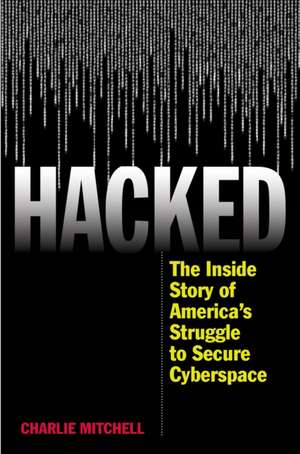
Hacked: The Inside Story of America's Struggle to Secure Cyberspace
Autor Charlie Mitchellen Limba Engleză Hardback – 20 iun 2016
Preț: 150.48 lei
Preț vechi: 166.07 lei
-9%
Puncte Express: 226
Carte indisponibilă temporar
Livrare prin curier în România Termenul estimat este afișat lângă disponibilitate.
Transport gratuit de la 400.00 lei Plată online sau ramburs, în funcție de opțiunile comenzii.
Retur gratuit în 14 zile Comandă securizată și suport în română.
Specificații
ISBN-13: 9781442255210
ISBN-10: 1442255218
Pagini: 320
Dimensiuni: 162 x 239 x 29 mm
Greutate: 0.59 kg
Editura: Bloomsbury Publishing
Colecția Rowman & Littlefield
Locul publicării:New York, United States
ISBN-10: 1442255218
Pagini: 320
Dimensiuni: 162 x 239 x 29 mm
Greutate: 0.59 kg
Editura: Bloomsbury Publishing
Colecția Rowman & Littlefield
Locul publicării:New York, United States
V-ar putea interesa
-
 The Rise and Fall of the Great PowersPaul KennedyPreț: 123.48 lei
 -
 Web Of DeceitMark CurtisPreț: 134.15 lei
 -
 Foreign Policy In A Transformed WorldMark Webber-15%Preț: 592.50 lei697.06 lei
 -
 Foreign Affairs in English CourtsF. a. Mann-33%Preț: 912.00 lei1359.57 lei
 -
 -24%Preț: 195.19 lei255.18 lei
 -
 Plantation Silviculture in EuropePeter Savill-32%Preț: 525.74 lei778.38 lei
 -
 The New Energy ParadigmDieter Helm-32%Preț: 717.90 lei1058.51 lei
 -
 -20%Preț: 281.07 lei353.02 lei
 -
 Reframing Social CitizenshipPeter Taylor-Gooby-21%Preț: 345.74 lei439.28 lei
 -
 Preț: 238.19 lei
 -
 Health Policy in BritainChristopher Ham-15%Preț: 333.50 lei390.68 lei
 -
 Citizenship Across the CurriculumMichael B. SmithPreț: 199.11 lei
 -
 Preț: 276.19 lei
 -
 The Soul at WorkFranco "Bifo" Berardi-16%Preț: 98.95 lei117.39 lei
 -
 The Food WarsWalden BelloPreț: 136.30 lei
 -
 The Conservative Party and social policyHugh BochelPreț: 278.04 lei
Cuprins
Foreward
1. "Carry Out Our Demand If You Want to Escape Us"
2. The First Cyber President
3. Sirens on Capitol Hill
4. To Build a Framework
5. The Department of Insecurity
6. The Telecom Challenge
7. The FTC, "Protecting America's Consumers"
8. Fear and Failure, Again, on Capitol Hill
9. The Information-Sharing Matrix
10. A New Congress Brings a New Energy to Cyber Debate 1
11. The Promise and Peril of "Strong Encryption"
12. Cyber Tensions Define the U.S.-China Relationship
13. Help Wanted, Desperately, for Cybersecurity
14. Senate Debate Takes Shape, Then-Surprise!-Stalls
15. At Long Last, the Political System Arrives at an Answer
16. The Unfinished Journey
Author's Note
Bibliographical Essay
Index
About the Author
1. "Carry Out Our Demand If You Want to Escape Us"
2. The First Cyber President
3. Sirens on Capitol Hill
4. To Build a Framework
5. The Department of Insecurity
6. The Telecom Challenge
7. The FTC, "Protecting America's Consumers"
8. Fear and Failure, Again, on Capitol Hill
9. The Information-Sharing Matrix
10. A New Congress Brings a New Energy to Cyber Debate 1
11. The Promise and Peril of "Strong Encryption"
12. Cyber Tensions Define the U.S.-China Relationship
13. Help Wanted, Desperately, for Cybersecurity
14. Senate Debate Takes Shape, Then-Surprise!-Stalls
15. At Long Last, the Political System Arrives at an Answer
16. The Unfinished Journey
Author's Note
Bibliographical Essay
Index
About the Author
Recenzii
Every one of 16 critical infrastructures in the U.S. economy is susceptible to cyberattacks: agriculture, transportation, the power grid, even the pacemakers already implanted in patient's chests. And still, according to Washington, D.C., cybersecurity journalist Charlie Mitchell, 'The effort to secure cyberspace, by government and industry, remains in the embryonic stages.' The military, technology experts, business and government agree that the threats are clear, new attacks are discovered all the time and the tools for building defenses are at hand--why hasn't the federal government done more? In Hacked, his first book, Mitchell explains the conflicting interests and political struggles in the messy business of creating and implementing effective cybersecurity policy.
Most of the structures that need to be protected in the U.S. are privately owned. This sets up a tension between national security interests and concerns for personal freedoms, business operations and privacy. In 2008, as the Obama administration began to address the question of cybersecurity, many officials began to realize that 'it was a mistake to view cybersecurity as a technical issue. It was about people, process and commitment.'
Mitchell dives deep into the negotiations, innovations and failed initiatives of both government and industry. His descriptions of the most tortured legislative battles are straightforward and comprehensible. This is an accessible insiders' guide to a difficult subject that will interest anyone concerned about national cybersecurity.
In 2014, a Federal Trade Commission report on consumer complaints put identity theft at the top of the list for the 15th consecutive year; as this book points out, U.S. lawmakers have taken almost that long to develop and implement a comprehensive policy to protect government, commerce, and citizens from digital crime. In this exhaustive overview, Mitchell, editor and cofounder of Inside Cybersecurity, an online news source dedicated to Internet policy in Congress, compares the online security discussions in Congress of the past decade to the evolution of environmental policy in the early 1970s. He traces the evolution of U.S. Internet security policy beginning with President George W. Bush, who established the first National Cybersecurity Initiative by signing two policy directives in early 2008, with most of the book focusing on the Obama Administration. The book draws largely from the author's daily reporting for Inside Cybersecurity; Mitchell livens the writing up with pop culture references to William Faulkner and the political satire film The Interview, but it's best suited for serious policy wonks seeking to understand the complexities of digital security policymaking in Washington.
Hacked is an absolute must read written by one of the most talented journalists in the nation's capital. Charlie Mitchell provides a riveting, behind-the-scenes account of how Washington policymakers are trying to address the cybersecurity threat and what it means to everyday Americans. Hacked describes the choices policy makers face, and the grave dangers that lurk if solutions aren't found.
Mitchell comprehensively reviews the complex history of U.S. cybersecurity program and policy development. This well-written account is a must-read for anyone who wants to be successful in building a strong cybersecurity framework at the national level. Understanding the lessons to be learned from reading the debates that Mitchell documents can accelerate progress and reduce the learning curve.
The next Great War may not be televised but digitized. Sadly, what makes the issue of cybersecurity reform and implementation even more frustrating is that it is one of those rare issues where there is bipartisan agreement on the problem, just no clear solution. Hacked provides the most thorough explanation to date as to why we are still here without a plan. Mitchell, thanks to years of experience, has a no B.S. prism with which he reports and writes about Washington and it makes Hacked an important and accessible read on this vexing semi-invisible problem.
Most of the structures that need to be protected in the U.S. are privately owned. This sets up a tension between national security interests and concerns for personal freedoms, business operations and privacy. In 2008, as the Obama administration began to address the question of cybersecurity, many officials began to realize that 'it was a mistake to view cybersecurity as a technical issue. It was about people, process and commitment.'
Mitchell dives deep into the negotiations, innovations and failed initiatives of both government and industry. His descriptions of the most tortured legislative battles are straightforward and comprehensible. This is an accessible insiders' guide to a difficult subject that will interest anyone concerned about national cybersecurity.
In 2014, a Federal Trade Commission report on consumer complaints put identity theft at the top of the list for the 15th consecutive year; as this book points out, U.S. lawmakers have taken almost that long to develop and implement a comprehensive policy to protect government, commerce, and citizens from digital crime. In this exhaustive overview, Mitchell, editor and cofounder of Inside Cybersecurity, an online news source dedicated to Internet policy in Congress, compares the online security discussions in Congress of the past decade to the evolution of environmental policy in the early 1970s. He traces the evolution of U.S. Internet security policy beginning with President George W. Bush, who established the first National Cybersecurity Initiative by signing two policy directives in early 2008, with most of the book focusing on the Obama Administration. The book draws largely from the author's daily reporting for Inside Cybersecurity; Mitchell livens the writing up with pop culture references to William Faulkner and the political satire film The Interview, but it's best suited for serious policy wonks seeking to understand the complexities of digital security policymaking in Washington.
Hacked is an absolute must read written by one of the most talented journalists in the nation's capital. Charlie Mitchell provides a riveting, behind-the-scenes account of how Washington policymakers are trying to address the cybersecurity threat and what it means to everyday Americans. Hacked describes the choices policy makers face, and the grave dangers that lurk if solutions aren't found.
Mitchell comprehensively reviews the complex history of U.S. cybersecurity program and policy development. This well-written account is a must-read for anyone who wants to be successful in building a strong cybersecurity framework at the national level. Understanding the lessons to be learned from reading the debates that Mitchell documents can accelerate progress and reduce the learning curve.
The next Great War may not be televised but digitized. Sadly, what makes the issue of cybersecurity reform and implementation even more frustrating is that it is one of those rare issues where there is bipartisan agreement on the problem, just no clear solution. Hacked provides the most thorough explanation to date as to why we are still here without a plan. Mitchell, thanks to years of experience, has a no B.S. prism with which he reports and writes about Washington and it makes Hacked an important and accessible read on this vexing semi-invisible problem.