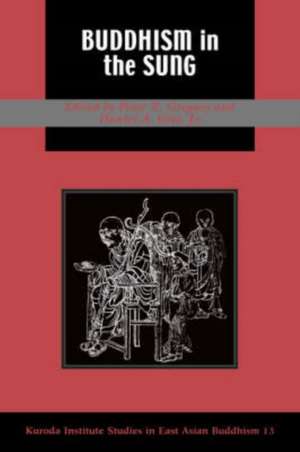
Gregory
Editat de Peter N Gregory, Daniel A Getzen Limba Engleză Paperback – 31 oct 2002
Analiza interacțiunilor dintre tradițiile de elită și clasa intelectuală a vremii constituie pilonul central al volumului Gregory, editat de Peter N Gregory și Daniel Aaron Getz. Această ediție revizuită, publicată de University of Hawaii Press, abordează dinastia Sung (960–1279) nu ca pe un început al declinului religios, ci ca pe o eră de vitalitate intelectuală și socială remarcabilă. Reținem faptul că, spre deosebire de studiile anterioare care s-au concentrat aproape exclusiv pe școala Ch’an, această lucrare restabilește echilibrul academic prin acordarea unei atenții egale tradiției T’ien-t’ai, evidențiind modul în care ambele au modelat viața culturală chineză. Lucrarea extinde cadrul propus de Out of the Cloister – Literati Perspectives on Buddhism in Sung China, 960–1279 de Mark Halperin cu date noi din cercetări recente care demonstrează înrădăcinarea profundă a budismului în structura socială a epocii. În timp ce Mark Halperin analizează perspectiva literati asupra devoțiunii, volumul de față explorează modul în care aceste tradiții de elită au răspuns și au influențat practicile laice. Structura narativă a eseurilor incluse este una academică, riguroasă, menită să corecteze prejudecata istoriografică conform căreia budismul post-T’ang ar fi fost o simplă remanentă a „epocii de aur”. Credem că relevanța acestui titlu pentru curriculumul de istorie a Asiei de Est este fundamentală, oferind o imagine contextualizată a sinificării budismului, proces explorat și în A History of Chinese Buddhist Faith and Life de Kai Sheng, dar cu un focus specific pe mecanismele de putere și influență din perioada Sung.
Preț: 234.83 lei
Carte tipărită la comandă
Livrare economică 26 noiembrie-10 decembrie
Specificații
ISBN-10: 0824826817
Pagini: 656
Dimensiuni: 157 x 234 x 31 mm
Greutate: 0.9 kg
Ediția:Revised edition
Editura: University of Hawaii Press
V-ar putea interesa
-
 The Cross and the CrescentRichard FletcherPreț: 129.71 lei
 -
 Rennyo and the Roots of Modern Japanese BuddhismMark L. Blum-31%Preț: 790.84 lei1147.50 lei
 -
 -16%Preț: 214.63 lei257.02 lei
 -
 Religion and Culture in Early Modern Europe, 1500-1800Kasper von Greyerz-30%Preț: 427.87 lei608.76 lei
 -
 The Writings of Henry Barrow, 1587-1590Henry BarrowPreț: 499.88 lei
 -
 John Flavel: Puritan Life and Thought in Stuart EnglandBrian H. Cosby-36%Preț: 565.72 lei881.98 lei
 -
 -36%Preț: 676.64 lei1052.61 lei
 -
 Rabbi Moses: A Documentary CatalogueRabbi Jacob Neusner-27%Preț: 253.93 lei349.07 lei
 -
 -37%Preț: 666.08 lei1057.70 lei
 -
 -29%Preț: 343.70 lei485.47 lei
 -
 -30%Preț: 444.01 lei630.87 lei
 -
 Hearing the Voice of God: In Search of ProphecyMordecai Schreiber-17%Preț: 325.74 lei391.39 lei
 -
 Reluctant MessiahSalamon Eskinazi-18%Preț: 336.56 lei411.43 lei
 -
 Response to ModernityMichaela MeyerPreț: 285.79 lei
 -
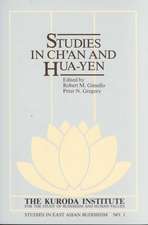 Studies in Ch'an and Hua-YenRobert M GimelloPreț: 184.29 lei
 -
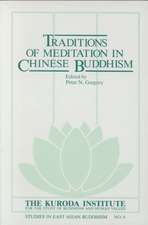 Traditions of Meditation in Chinese BuddhismPeter N GregoryPreț: 198.26 lei
 -
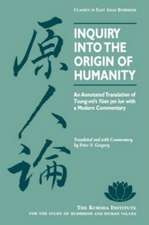 Inquiry Into the Origin of HumanityTsung-MiPreț: 176.99 lei
 -
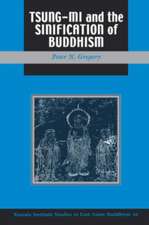 GregoryPeter N GregoryPreț: 194.16 lei
 -
 -18%Preț: 1297.46 lei1582.26 lei
 -
 The Bermuda Triangle Islamic PerspectiveWayne Lonnie BrownPreț: 58.09 lei
 -
 Rethinking Biblical Scholarship: Changing Perspectives 4Philip R. Davies-18%Preț: 1118.04 lei1363.46 lei
 -
 Muhammad Messenger of AllahQadi IyadPreț: 267.64 lei
 -
 Preț: 139.70 lei
De ce să citești această carte
Această carte se adresează cercetătorilor și studenților interesați de istoria Chinei și evoluția budismului. Cititorul câștigă o înțelegere nuanțată a dinastiei Sung, depășind clișeul declinului religios. Este un volum esențial pentru a înțelege cum tradițiile Ch’an și T’ien-t’ai au coexistat și au influențat elita intelectuală, oferind o perspectivă academică solidă asupra unei perioade adesea ignorate în studiile budiste occidentale.