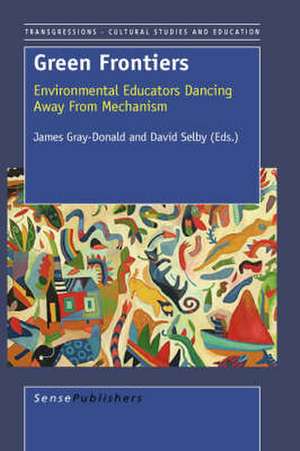
Green Frontiers
Editat de James Gray-Donald, David Selbyen Limba Engleză Hardback – 4 mai 2008
| Toate formatele și edițiile | Preț | Express |
|---|---|---|
| Paperback (1) | 440.64 lei 38-44 zile | |
| Brill – 31 dec 2007 | 440.64 lei 38-44 zile | |
| Hardback (1) | 626.34 lei 38-44 zile | |
| Sense Publishers – 4 mai 2008 | 626.34 lei 38-44 zile |
Preț: 626.34 lei
Preț vechi: 773.26 lei
-19% Nou
Puncte Express: 940
Preț estimativ în valută:
110.83€ • 129.97$ • 97.33£
110.83€ • 129.97$ • 97.33£
Carte tipărită la comandă
Livrare economică 04-10 februarie 26
Preluare comenzi: 021 569.72.76
Specificații
ISBN-13: 9789087904647
ISBN-10: 9087904649
Pagini: 312
Dimensiuni: 156 x 234 x 19 mm
Greutate: 0.61 kg
Editura: Sense Publishers
Locul publicării:Netherlands
ISBN-10: 9087904649
Pagini: 312
Dimensiuni: 156 x 234 x 19 mm
Greutate: 0.61 kg
Editura: Sense Publishers
Locul publicării:Netherlands
Descriere
Descriere de la o altă ediție sau format:
Environmental education has reached an interesting crossroads. There has never before been such media attention on hard-to-grasp issues such as climate change, nor has there ever been such scientific understanding and agreement about the varied aspects of the environmental crisis, the loss of biodiversity, and the health effects of human-made toxins and pollutants. In addition, there has never been so much high quality research within environmental education, with new journals flourishing in Canada, Australia, and South Africa to give just a few examples. Yet, despite all this knowledge and attention, there has not been a significant shift in the way the economy operates, the way governments govern or the way people live. Consumption of resources continues to increase and these patterns continue to be closely correlated with levels of waste, pollution, environmental ill health, and social injustice. This book showcases the work and thinking of environmental educators who are concerned about the residual mechanism within their field, the guiding symbol of the web of life in all its dynamism notwithstanding. The notion of web recognizes interaction between all elements in a system but falls short of recognizing the flow of the whole through the system and its parts. The notion of dance is used here to convey this fundamental, yet oft overlooked, dimension to wholeness.