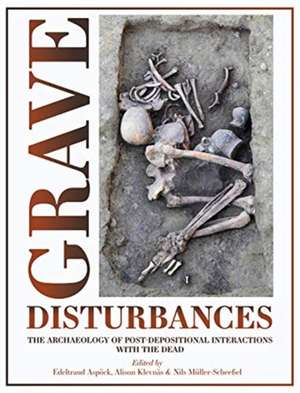
Grave Disturbances
Editat de Edeltraud Aspöck, Alison Klevnäs, Nils Müller-Scheeßelen Limba Engleză Hardback – 5 aug 2020
Considerăm că Grave Disturbances, coordonat de Edeltraud Aspöck, Alison Klevnäs și Nils Müller-Scheeßel, marchează o schimbare de paradigmă necesară în arheologia funerară contemporană. Dacă, în mod tradițional, mormintele perturbate erau privite ca surse de date „compromise”, acest volum propune transformarea acestor intervenții post-depoziționale într-un obiect de studiu de sine stătător. Ceea ce aduce nou această lucrare este rigoarea metodologică aplicată pentru a diferenția degradarea naturală de acțiunea umană, oferind instrumente analitice pentru a înțelege de ce societățile trecute au ales să revină la locul de odihnă al morților lor. Structura celor unsprezece capitole ne poartă printr-o geografie arheologică impresionantă, incluzând studii de caz din Slovacia epocii bronzului, civilizația Maya sau Egiptul Noului Regat. Autorii explorează nuanțat motivele acestor incursiuni, de la simplul câștig material sau rațiuni politice, până la necesități ritualice complexe, precum comemorarea sau apropiarea simbolică. Grave Disturbances completează perspectiva oferită de Interdisciplinary Explorations of Postmortem Interaction, adăugând o focalizare mult mai specifică pe intervenția fizică imediată asupra mormântului individual, spre deosebire de abordarea mai largă, identitară și simbolică a lui Estella Weiss-Krejci. Textul este dens, academic, dar extrem de bine structurat, fiind publicat de Oxbow Books Limited în format hardback. Introducerea semnată de editori servește drept un ghid metodologic esențial pentru cercetătorii care se confruntă cu situri funerare complexe. Ritmul lecturii este susținut de diversitatea contextelor culturale prezentate, demonstrând că studiul „tulburărilor” mormintelor poate dezvălui mai multe despre cei vii decât depozitul funerar original.
Preț: 502.33 lei
Preț vechi: 620.16 lei
-19%
Carte disponibilă
Livrare economică 10-24 noiembrie
Specificații
ISBN-10: 1789254426
Pagini: 256
Dimensiuni: 198 x 253 x 22 mm
Greutate: 0.9 kg
Editura: Oxbow Books Limited
De ce să citești această carte
Recomandăm această lucrare arheologilor și studenților la antropologie care doresc să depășească analiza statică a mormintelor. Cititorul câștigă o înțelegere profundă a modului în care comunitățile din trecut interacționau activ cu rămășițele umane, transformând un mormânt „deranjat” dintr-un eșec de excavare într-o fereastră valoroasă către comportamentul social și religios antic.