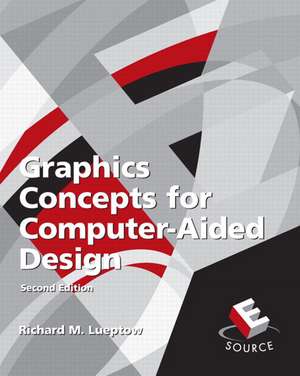
Graphics Concepts for Computer-Aided Design
Autor Richard M Lueptowen Limba Engleză Paperback – 18 apr 2007
Preț: 595.13 lei
Preț vechi: 734.72 lei
-19%
Puncte Express: 893
Carte tipărită la comandă
Livrare economică 09-23 noiembrie
Livrare prin curier în România Termenul estimat este afișat lângă disponibilitate.
Transport gratuit pentru acest produs Plată online sau ramburs, în funcție de opțiunile comenzii.
Retur gratuit în 14 zile Comandă securizată și suport în română.
Specificații
ISBN-13: 9780132229876
ISBN-10: 0132229870
Pagini: 120
Dimensiuni: 202 x 252 x 8 mm
Greutate: 0.27 kg
Ediția:2Nouă
Editura: Pearson Education
Colecția Prentice Hall
Locul publicării:Upper Saddle River, United States
ISBN-10: 0132229870
Pagini: 120
Dimensiuni: 202 x 252 x 8 mm
Greutate: 0.27 kg
Ediția:2Nouă
Editura: Pearson Education
Colecția Prentice Hall
Locul publicării:Upper Saddle River, United States
V-ar putea interesa
-
 -20%Preț: 863.99 lei1079.99 lei
 -
 Technical Drawing with Engineering GraphicsFrederick Giesecke-18%Preț: 722.81 lei881.47 lei
 -
 Designer Drafting and Visualizing for the Entertainment WorldPatricia Woodbridge-8%Preț: 521.53 lei566.89 lei
 -
 -31%Preț: 513.80 lei746.67 lei
 -
 Basic Engineering DrawingR. S. Rhodes-13%Preț: 619.91 lei712.54 lei
 -
 -23%Preț: 610.74 lei793.17 lei
 -
 -4%Preț: 372.69 lei388.22 lei
 -
 -31%Preț: 228.82 lei331.30 lei
 -
 -20%Preț: 528.98 lei661.23 lei
 -
 -20%Preț: 449.75 lei562.18 lei
 -
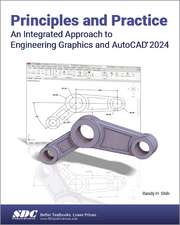 -20%Preț: 501.25 lei626.56 lei
 -
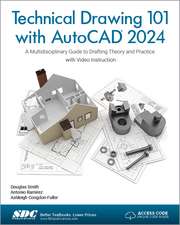 Technical Drawing 101 with AutoCAD 2024Ashleigh Congdon-Fuller-20%Preț: 498.92 lei623.65 lei
 -
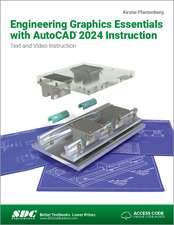 -20%Preț: 550.32 lei687.89 lei
 -
 -20%Preț: 527.16 lei658.95 lei
 -
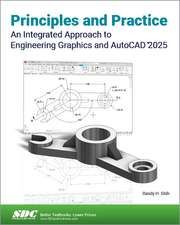 -20%Preț: 491.95 lei614.94 lei
 -
 -20%Preț: 537.18 lei671.48 lei
 -
 -20%Preț: 538.48 lei673.10 lei
 -
 -20%Preț: 504.94 lei631.17 lei
 -
 Drawing for Product DesignersKevin Henry-30%Preț: 160.26 lei229.64 lei
Descriere
For Freshman or Introductory courses in Engineering and Computer Science.
Engineering has always required graphics to communicate ideas. However, the transition from hand drawings to computer-aided design has resulted in many important concepts being left out of the standard engineering curriculum. This book is a compact resource that connects traditional engineering graphics with computer-aided design.
Engineering has always required graphics to communicate ideas. However, the transition from hand drawings to computer-aided design has resulted in many important concepts being left out of the standard engineering curriculum. This book is a compact resource that connects traditional engineering graphics with computer-aided design.
Cuprins
1. Engineering Graphics.
The Importance of Engineering Graphics. Engineering Graphics. CAD. Design and CAD.
2. Projections Used in Engineering Graphics.
Projections. 3-D Projections. Multiview Projections. Working Drawings.
3. Freehand Sketching.
Why Freehand Sketches? Freehand Sketching Fundamentals. Basic Freehand Sketching. Advanced Freehand Sketching.
4. Computer-Aided Design and Drafting.
CAD Models. CAD and Solids Modeling. The Nature of Solids Modeling.
5. Standard Practice for Engineering Drawings.
Introduction to Drawing Standards. Sheet Layouts. Lines. Dimension Placement and Conventions. Section and Detail Views. Fasteners and Screw Threads. Assembly Drawings.
6. Tolerances.
Why Tolerances? Displaying Tolerances on Drawings. How to Determine Tolerances. Surface Finish. Geometric Dimensioning and Tolerancing.
The Importance of Engineering Graphics. Engineering Graphics. CAD. Design and CAD.
2. Projections Used in Engineering Graphics.
Projections. 3-D Projections. Multiview Projections. Working Drawings.
3. Freehand Sketching.
Why Freehand Sketches? Freehand Sketching Fundamentals. Basic Freehand Sketching. Advanced Freehand Sketching.
4. Computer-Aided Design and Drafting.
CAD Models. CAD and Solids Modeling. The Nature of Solids Modeling.
5. Standard Practice for Engineering Drawings.
Introduction to Drawing Standards. Sheet Layouts. Lines. Dimension Placement and Conventions. Section and Detail Views. Fasteners and Screw Threads. Assembly Drawings.
6. Tolerances.
Why Tolerances? Displaying Tolerances on Drawings. How to Determine Tolerances. Surface Finish. Geometric Dimensioning and Tolerancing.
Caracteristici
• Compact coverage of many concepts – Key topics are efficiently explored, providing students with a solid foundation in the fundamentals.
• Basic concepts, conventions, and terminology for engineering graphics – Although when using CAD, computers handle the "busywork," engineers still need to master the basic concepts of engineering graphics.
• Freehand sketching – Chapter 3 provides an in-depth exploration of this often-overlooked skill, necessary to engineering design.
• Computer aided design (CAD) – Students gain an understanding of the underlying concepts of computer-aided design as well as exploring examples of how CAD can be used to generate complex parts and assemblies.
• Standard practices for engineering drawings – Even when using CAD, engineers need to understand and implement standard engineering conventions for dimensions, sections, and fasteners.
• Tolerancing is covered in detail – To enable students to provide tolerances on their drawings, the text explains basic and advanced concepts in tolerancing, including Geometric Dimensioning and Tolerancing.
• Objectives at the beginning of each chapter outline the material to help guide students through the chapter.
• Easy to read and understand format, including examples and figures, makes the material accessible to students.
• Basic concepts, conventions, and terminology for engineering graphics – Although when using CAD, computers handle the "busywork," engineers still need to master the basic concepts of engineering graphics.
• Freehand sketching – Chapter 3 provides an in-depth exploration of this often-overlooked skill, necessary to engineering design.
• Computer aided design (CAD) – Students gain an understanding of the underlying concepts of computer-aided design as well as exploring examples of how CAD can be used to generate complex parts and assemblies.
• Standard practices for engineering drawings – Even when using CAD, engineers need to understand and implement standard engineering conventions for dimensions, sections, and fasteners.
• Tolerancing is covered in detail – To enable students to provide tolerances on their drawings, the text explains basic and advanced concepts in tolerancing, including Geometric Dimensioning and Tolerancing.
• Objectives at the beginning of each chapter outline the material to help guide students through the chapter.
• Easy to read and understand format, including examples and figures, makes the material accessible to students.
Caracteristici noi
• New sections are included on:
– Sketching auxiliary views
– Modeling a part in CAD
– Virtual assembly of parts
– Section views
– Auxiliary and detail views
– Fits
• 49 new figures have been added, in addition to 75 figures from the original edition of which 12 are revised figures.
• A 31% increase in the number of problems bring the total problems from 45 to 59.
– Sketching auxiliary views
– Modeling a part in CAD
– Virtual assembly of parts
– Section views
– Auxiliary and detail views
– Fits
• 49 new figures have been added, in addition to 75 figures from the original edition of which 12 are revised figures.
• A 31% increase in the number of problems bring the total problems from 45 to 59.