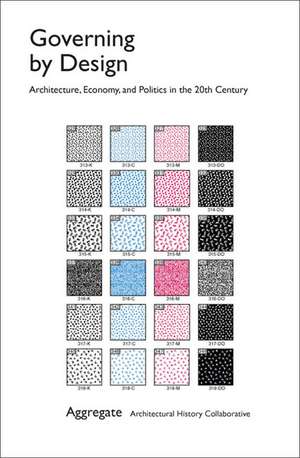
Governing by Design: Architecture, Economy, and Politics in the Twentieth Century: Culture Politics & the Built Environment
Autor Aggregateen Limba Engleză Paperback – 15 apr 2012
În paginile volumului Governing by Design, cititorul descoperă o perspectivă asupra istoriei arhitecturale care transcende biografiile marilor proiectanți, dezvăluind mecanismele invizibile ale puterii care modelează spațiul în care trăim. Notăm cu interes modul în care colectivul Aggregate reușește să deconstruiască mitul arhitectului-geniu, mutând atenția către forțele economice, politice și tehnologice care dictează evoluția mediului construit în secolul al XX-lea.
Experimentăm o lectură densă, de tip academic, unde designul nu este privit doar ca estetică, ci ca un instrument de control și securitate. Suntem de părere că rigoarea cu care sunt explorate teme precum ergonomia, biopolitica și capitalul oferă o claritate rară asupra modului în care normele sociale devin structuri fizice. Colecționarii și cercetătorii care au apreciat Buildings and Power de Thomas A. Markus vor găsi aici aceeași calitate a analizei critice, însă Governing by Design extinde discuția către era globalizării și a rețelelor complexe de influență. De asemenea, lucrarea rezonează cu temele din Political Theory and Architecture de Duncan Bell, ambele volume postulând că arhitectura este o forță politică activă, nu doar un decor pentru viața publică.
Remarcăm structura eseistică a volumului, care permite o explorare multifațetată a modului în care „guvernamentalitatea” — regulile și protocoalele societății — se materializează în locuințe, instituții și la nivel statal. Este o experiență intelectuală care ne provoacă să vedem fiecare clădire ca pe un nod într-o rețea de putere menită să gestioneze riscul și să asigure o permanență socială într-o lume în continuă schimbare.



Preț: 388.79 lei
Carte tipărită la comandă
Livrare economică 02-16 decembrie
Specificații
ISBN-10: 0822961784
Pagini: 300
Ilustrații: 55
Dimensiuni: 152 x 232 x 20 mm
Greutate: 0.4 kg
Ediția:1
Editura: University of Pittsburgh Press
Colecția University of Pittsburgh Press
Seria Culture Politics & the Built Environment
V-ar putea interesa
-
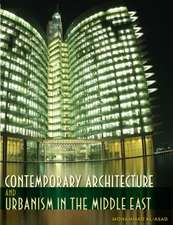 Contemporary Architecture and Urbanism in the Middle EastMohammad Al-AsadPreț: 400.25 lei
 -
 Architecture of Middle GeorgiaJohn LinleyPreț: 250.73 lei
 -
 Historic CyprusRupert GunnisPreț: 184.03 lei
 -
 Preț: 198.73 lei
 -
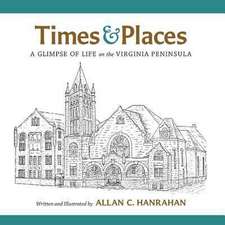 Times & PlacesAllan C HanrahanPreț: 97.94 lei
 -
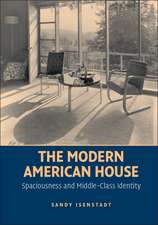 The Modern American HouseSandy IsenstadtPreț: 309.79 lei
 -
 FlatironAlice Sparberg AlexiouPreț: 134.93 lei
 -
 The Private Palladio: Informal Vertical CommunitiesGuido Beltramini-26%Preț: 143.18 lei193.17 lei
 -
 Burgen im Welterbegebiet Oberes MittelrheintalThomas BillerPreț: 119.62 lei
 -
 Ohne Wasser keine BurgAxel W. GleuePreț: 252.43 lei
 -
 Rom von obenAlberta Campitelli-11%Preț: 638.89 lei717.86 lei
 -
 Preț: 225.75 lei
 -
 -10%Preț: 365.46 lei406.63 lei
 -
 Experimentos Con la Vida Misma: Arquitecturas Domesticas Radicales Entre 1937 y 1959 = Experiments with Life ItselfFrancisco Gonzalez De CanalesPreț: 236.73 lei
 -
 Preț: 154.61 lei
De ce să citești această carte
Această carte este esențială pentru profesioniștii din arhitectură, urbanism și științe politice care doresc să înțeleagă rolul designului dincolo de planșetă. Cititorul câștigă un instrument critic de analiză a spațiului public, învățând să identifice modul în care politicile de stat și fluxurile de capital se transformă în beton și oțel. Este un argument solid pentru ideea că arhitectura este, înainte de toate, o formă de guvernare.
Despre autor
Aggregate, cunoscut și sub numele de Aggregate Architectural History Collaborative, este un grup dedicat cercetării riguroase în istoria și teoria arhitecturii. Membrii săi, istorici de prestigiu, colaborează pentru a genera noi metodologii de analiză a mediului construit, punând accent pe intersecția dintre design, economie și structuri de putere. Prin publicațiile lor la edituri academice precum University of Pittsburgh Press, aceștia au devenit o voce de referință în critica arhitecturală contemporană, promovând o viziune interdisciplinară care integrează sociologia și filosofia politică în studiul spațiului.
Descriere scurtă
In these chapters, historians offer their analysis on design as a vehicle for power and as a mediator of social currents. Power is defined through a variety of forms: modernization, obsolescence, technology, capital, ergonomics, biopolitics, and others. The chapters explore the diffusion of power through the establishment of norms and networks that frame human conduct, action, identity, and design. They follow design as it functions through the body, in the home, and at the state and international level.
Overall, Aggregate views the intersection of architecture with the human need for what Foucault termed “governmentality”—societal rules, structures, repetition, and protocols—as a way to provide security and tame risk. Here, the conjunction of power and the power of design reinforces governmentality and infuses a sense of social permanence despite the exceedingly fluid nature of societies and the disintegration of cultural memory in the modern era.
Recenzii
—Lawrence J. Vale, Massachusetts Institute of Technology
—John Archer, University of Minnesota
—Journal of the Society of Architectural Historians