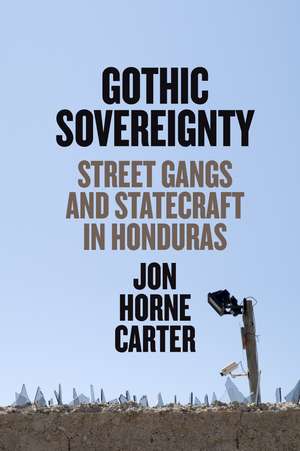
Gothic Sovereignty: Street Gangs and Statecraft in Honduras
Autor Jon Horne Carteren Limba Engleză Paperback – feb 2022
Abordarea propusă de Jon Horne Carter în Gothic Sovereignty se distinge printr-o interdisciplinaritate densă, împletind antropologia socioculturală cu teoria politică, istoria imperialismului și analiza economică. Ne-a atras atenția modul în care autorul refuză explicațiile simpliste ale violenței, preferând să exploreze intersecția dintre politicile de securitate americane (precum „War on Drugs”) și fragmentarea suveranității statului hondurian. Analiza pornește de la micro-istoria unui tânăr acuzat de uciderea unui agent DEA, extinzând ulterior cadrul către mecanismele macro ale corupției și impunității.
Subliniem structura riguroasă a volumului, organizată în trei părți tematice: „Angels”, „Devils” și „Justice”. Primele secțiuni documentează viața cotidiană în cartiere și transformarea bandelor sub presiunea încarcerării în masă, în timp ce partea finală analizează modul în care penitenciarele au devenit spații de organizare politică și criminală. Cititorii familiarizați cu Maras de Thomas C. Bruneau vor aprecia modul în care acest volum aduce nou o dimensiune teoretică profundă, folosind concepte precum cel de „suveranitate gotică” pentru a descrie o realitate unde linia dintre legal și ilegal este permanent estompată. Spre deosebire de studiile pur securitare, lucrarea lui Carter oferă o perspectivă imersivă asupra disperării și rezilienței în fața globalizării tardive.
Găsim în această carte o progresie narativă care amintește de un roman prin fluiditatea scriiturii, dar care rămâne ancorată în rigoarea academică a editurii University of Texas Press. Este o resursă esențială pentru înțelegerea crizelor migraționiste actuale din America Centrală, oferind contextul istoric al transformării unor grupuri locale în actori transnaționali de temut.
Preț: 252.50 lei
Carte disponibilă
Livrare economică 18 mai-01 iunie
Livrare express 01-07 mai pentru 38.23 lei
Specificații
ISBN-10: 147732416X
Pagini: 368
Dimensiuni: 152 x 229 x 33 mm
Greutate: 0.59 kg
Editura: University of Texas Press
Colecția University of Texas Press
De ce să citești această carte
Această carte este indispensabilă cercetătorilor din domeniul sociologiei și antropologiei politice care doresc să înțeleagă rădăcinile violenței sistemice din Honduras. Cititorul câștigă o perspectivă clară asupra modului în care politicile externe și corupția internă pot transforma comunitățile marginalizate în „societăți criminale”. Este o lectură fundamentală pentru a descifra mecanismele complexe din spatele titlurilor de știri despre migrație și carteluri.
Despre autor
Jon Horne Carter este un cercetător specializat în antropologie socioculturală, cu un interes marcat pentru America Latină și dinamica puterii în statele postcoloniale. Studiile sale se concentrează pe intersecția dintre violență, economiile ilicite și formele emergente de suveranitate în contextul neoliberalismului. Prin lucrarea de față, publicată la University of Texas Press, el își consolidează poziția de expert în realitățile sociale complexe din Honduras, oferind o analiză care combină munca de teren extensivă cu teoria critică contemporană.
Descriere scurtă
Carter begins with the story of a thirteen-year-old gang member accused in the murder of an undercover DEA agent, asking how the nation’s seductive criminal underworld has transformed the lives of young people. He then widens the lens to describe a history of imperialism and corruption that shaped this underworld—from Cold War counterinsurgency to the “War on Drugs” to the near-impunity of white-collar crime—as he follows local gangs who embrace new trades in the illicit economy. Carter describes the gangs’ transformation from neighborhood groups to sprawling criminal societies, even in the National Penitentiary, where they have become political as much as criminal communities. Gothic Sovereignty reveals not only how the revolutionary potential of gangs was lost when they merged with powerful cartels but also how close analysis of criminal communities enables profound reflection on the economic, legal, and existential discontents of globalization in late liberal nation-states.
Notă biografică
Cuprins
- Preface
- A Note on Translations and Anonymization
- Introduction
- Part I. Angels
- Chapter 1. Flash
- Chapter 2. Baroque
- Chapter 3. Allegory
- Chapter 4. Image
- Chapter 5. Danger
- Part II. Devils
- Chapter 6. Underworld
- Chapter 7. Dragons
- Chapter 8. Crime
- Chapter 9. Storm
- Chapter 10. Rubbish
- Chapter 11. Evil
- Chapter 12. Corruption
- Chapter 13. Lumpen
- Part III: Justice
- Chapter 14. Community
- Chapter 15. Sovereignty
- Chapter 16. Apocalypse
- Chapter 17. Trust
- Chapter 18. Futures
- Afterword
- Acknowledgments
- Notes
- Index