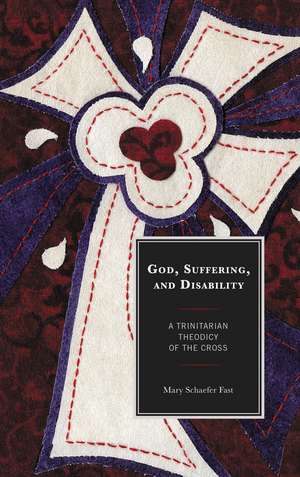
God, Suffering, and Disability: A Trinitarian Theodicy of the Cross
Autor Mary Schaefer Fasten Limba Engleză Hardback – 22 mai 2019
Preț: 582.69 lei
Preț vechi: 863.66 lei
-33%
Puncte Express: 874
Carte tipărită la comandă
Livrare economică 30 noiembrie-14 decembrie
Livrare prin curier în România Termenul estimat este afișat lângă disponibilitate.
Transport gratuit pentru acest produs Plată online sau ramburs, în funcție de opțiunile comenzii.
Retur gratuit în 14 zile Comandă securizată și suport în română.
Specificații
ISBN-13: 9781978702196
ISBN-10: 1978702191
Pagini: 250
Dimensiuni: 160 x 229 x 22 mm
Greutate: 0.49 kg
Editura: Bloomsbury Publishing
Colecția Fortress Academic
Locul publicării:New York, United States
ISBN-10: 1978702191
Pagini: 250
Dimensiuni: 160 x 229 x 22 mm
Greutate: 0.49 kg
Editura: Bloomsbury Publishing
Colecția Fortress Academic
Locul publicării:New York, United States
Descriere
God, Suffering, and Disability: A Trinitarian Theodicy of the Cross utilizes both Christological and pneumatological perspectives of Luther's theology of the cross to address the complexities of suffering and disability. Through the lens of the cross, the God who suffers enables humans to "call a thing what it is" by recognizing the suffering that often accompanies disability. Rather than asking "why" the Triune God allows people to suffer, this theodicy of disability focuses on "where" the Father, Son, and Spirit are in that very human experience. As a new theodic construct, "a Trinitarian theodicy of the cross" responds to both the theological concerns of the church and the theoretical apprehensions of society. It encourages Christians to live as theologians of the cross, empowers the faith community by informing both its theology and praxis, and provides a theoretical response to secular society that will enrich the field of disability studies.
Cuprins
An Introduction: God, Suffering, and Disability
1. Interpreting Disability and Suffering: The Quadrilateral Model
2. Assessing Existing Theodicies: Toward a Theodicy of Suffering and Disability
3. Exploring Christological Contours: Toward a Theodicy of the Cross
4. Evaluating Pneumatological Approaches: Toward a Trinitarian Theodicy of the Cross
5. Discovering God in Disability and Suffering: A Trinitarian Theodicy of the Cross
In Conclusion: The Mission Continues
1. Interpreting Disability and Suffering: The Quadrilateral Model
2. Assessing Existing Theodicies: Toward a Theodicy of Suffering and Disability
3. Exploring Christological Contours: Toward a Theodicy of the Cross
4. Evaluating Pneumatological Approaches: Toward a Trinitarian Theodicy of the Cross
5. Discovering God in Disability and Suffering: A Trinitarian Theodicy of the Cross
In Conclusion: The Mission Continues
Recenzii
The question of "suffering" is a scandalous one in the disability community, treated as a test of spirituality among pietistic Christian believers, and presumed to be a medicalized and privatized matter for the rest of us. Mary Fast's Trinitarian approach to theologia crucis reconfigures "us" and "them" along these three fronts that have been historically siloed and by so doing invites richer consideration of, conversation about, and engagement with the human experience of suffering that, if we are honest, touches, connects, and binds us all together.
This engaging book addresses the Trinitarian reality of God's love in the experience of suffering. It connects this reality with disability through a theology of the cross that aims to avoid common, simplistic, and problematic ways of equating disability with suffering, instead issuing a call toward cruciform discipleship that resists the marginalization of persons with disabilities in churches and society. I hope this book is read in church groups and seminaries.
This study is an important contribution to the literature on theology and ministry. The somewhat provocative, yet fair discussion about disability in the church is something that needs to be clearly shared in a non-apologetic manner such that those who are theological leaders are challenged with this perspective. I believe too many Christian leaders may not fully understand or reflect the solutions the author proposes, and may instead embody the concerns raised. One might take a theological perspective different than the ones described, however, the author's clearly articulated argument is desperately needed.
Rooted in Luther's theologia crucis, Mary Fast proposes a trinitarian theodicy of the cross that speaks to suffering in experiences of disability. With honesty and grace, this book makes an important contribution not only for people with disabilities and their families, but also for churches, pastors and caregivers, and theologians.
Disability theologians have quite correctly been wary of the language of suffering. There is no inherent reason why people should assume that all people living with disabilities must inevitably frame their experiences as suffering. People may suffer because of responses to their lives, but there is nothing inherent within many forms of disability that necessitates suffering. But for some people their disability clearly does involve suffering at a number of levels. How are we to draw the sharp edges of suffering into the disability conversion without losing the proper concerns of those who want to avoid its hegemony? In this book, Mary Schaefer Fast offers some important and fascinating theological perspectives that can enable us to think faithfully about suffering and disability without making that the primary motif that drives our understanding. This book is an important contribution to the theology of disability.
This book provides a much needed account of the strange power of the cross to release and free the captive, especially for those burdened with struggles of body and mind in this world. Most especially this is an antidote to the powers that be that insist upon their legal perfections and despise those that do not display their marks of glory. The cross, not glory, is our theology, and liberating it is!
This engaging book addresses the Trinitarian reality of God's love in the experience of suffering. It connects this reality with disability through a theology of the cross that aims to avoid common, simplistic, and problematic ways of equating disability with suffering, instead issuing a call toward cruciform discipleship that resists the marginalization of persons with disabilities in churches and society. I hope this book is read in church groups and seminaries.
This study is an important contribution to the literature on theology and ministry. The somewhat provocative, yet fair discussion about disability in the church is something that needs to be clearly shared in a non-apologetic manner such that those who are theological leaders are challenged with this perspective. I believe too many Christian leaders may not fully understand or reflect the solutions the author proposes, and may instead embody the concerns raised. One might take a theological perspective different than the ones described, however, the author's clearly articulated argument is desperately needed.
Rooted in Luther's theologia crucis, Mary Fast proposes a trinitarian theodicy of the cross that speaks to suffering in experiences of disability. With honesty and grace, this book makes an important contribution not only for people with disabilities and their families, but also for churches, pastors and caregivers, and theologians.
Disability theologians have quite correctly been wary of the language of suffering. There is no inherent reason why people should assume that all people living with disabilities must inevitably frame their experiences as suffering. People may suffer because of responses to their lives, but there is nothing inherent within many forms of disability that necessitates suffering. But for some people their disability clearly does involve suffering at a number of levels. How are we to draw the sharp edges of suffering into the disability conversion without losing the proper concerns of those who want to avoid its hegemony? In this book, Mary Schaefer Fast offers some important and fascinating theological perspectives that can enable us to think faithfully about suffering and disability without making that the primary motif that drives our understanding. This book is an important contribution to the theology of disability.
This book provides a much needed account of the strange power of the cross to release and free the captive, especially for those burdened with struggles of body and mind in this world. Most especially this is an antidote to the powers that be that insist upon their legal perfections and despise those that do not display their marks of glory. The cross, not glory, is our theology, and liberating it is!