
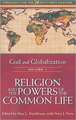
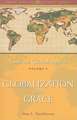
God and Globalization: Volume 4: Globalization and Grace: Theology for the 21st Century
Autor Max L. Stackhouseen Limba Engleză Hardback – 14 ian 2008
This
is
the
fourth
volume
in
the
series
God
and
Globalization,
sponsored
by
the
Center
of
Theological
Inquiry
in
Princeton,
N.J.
The
3
previous
volumes
were
multi-authored.
This
volume
is
authored
solely
by
Max
Stackhouse,
the
general
editor
of
the
series,
with
a
Foreword
by
the
distinguished
church
historian
Justo
Gonzales. This
final
interpretive
volume
argues
for
a
view
of
Christian
theology
that,
in
critical
dialogue
with
other
world
religions
and
philosophies,
is
able
to
engage
the
new
world
situation,
play
a
critical
role
in
reforming
the
"powers"
that
are
becoming
more
diverse
and
autonomous,
and
generate
a
social
ethic
for
the
21st
century.


Preț: 305.62 lei
Puncte Express: 458
Carte indisponibilă temporar
Doresc să fiu notificat când acest titlu va fi disponibil:
Se trimite...
Specificații
ISBN-13: 9780826428851
ISBN-10: 0826428851
Pagini: 288
Dimensiuni: 138 x 216 x 32 mm
Greutate: 0.49 kg
Editura: Bloomsbury Publishing
Colecția T&T Clark
Seria Theology for the 21st Century
Locul publicării:New York, United States
ISBN-10: 0826428851
Pagini: 288
Dimensiuni: 138 x 216 x 32 mm
Greutate: 0.49 kg
Editura: Bloomsbury Publishing
Colecția T&T Clark
Seria Theology for the 21st Century
Locul publicării:New York, United States
V-ar putea interesa
-
 The Moral Vision of the New TestamentRichard HaysPreț: 169.09 lei
 -
 Earth-honoring Faith: Religious Ethics in a New KeyLarry L. Rasmussen-19%Preț: 386.45 lei475.68 lei
 -
 Radical Reform: Islamic Ethics and LiberationTariq Ramadan-21%Preț: 229.94 lei291.12 lei
 -
 -31%Preț: 706.44 lei1028.39 lei
 -
 Political WorshipBernd Wannenwetsch-11%Preț: 511.43 lei574.65 lei
 -
 -31%Preț: 931.72 lei1355.08 lei
 -
 Reason in Action: Collected Essays Volume IJohn Finnis-11%Preț: 326.61 lei365.69 lei
 -
 OCR Religious Ethics for AS and A2Jill OliphantPreț: 407.13 lei
 -
 Homosexuality and Christian FaithWalter WinkPreț: 142.08 lei
 -
 Sin Bravely: A Joyful Alternative to a Purpose-Driven LifeMark Ellingsen-42%Preț: 99.31 lei170.54 lei
 -
 Preț: 397.64 lei
Caracteristici
Major
American
Protestant
theologian
on
perhaps
the
most
important
issue
facing
the
world
today.
Cuprins
Acknowlegments
Foreword by Justo González
Introduction: Faith and Globalization
A. Three Worrisome Developments
B. Defining the Terms
C. The Temptation to Imperialism
D. Some Historical Precedents
E. On Capitalism and Socialism
F. The Better Evidence
G. What Then Do We Need?
1. The Question: A Review and a Direction
A. The Purposes of This Volume
B. What We Have Done: A Brief Review
C. A Short Genealogy of Globalization
D. Religion in the World's Civilizations
E. Representative Figures
F. Must Religions also Clash?
G. A Third Option
2. The Approach: "Public Theology"
A. What Does Public Theology Do?
B. Public Theology and Modern Philosophy: An Impasse?
C. A Brief History of the Idea
D. Why a "Public" Theology?
E. Why Not a "Political" Theology?
F. The Meanings of "Theology"
G. Why a "Christian" Public Theology?
3. The First Grace: Creation
A. Toward Biblical Doctrines
B. "In the Beginning..."
C. Creation is not Nature
D. The Cultural Mandate
E. The Image and Human Capacities
F. The First Grace Betrayed
G. "Out of the Garden"
4. The Second Grace: Providence
A. Living With Sin
B. The Covenant Inspired
C. The Elements of Covenant
D. A Comment on Moral Law
E. The Third Element: Purposes
F. Vocations
G. But There Were Prophets
H. And Priests Too
I. The Question of Kings
J. A Note on Wisdom
K. The Covenant and Offices Renewed
5. The Third Grace: Salvation
A. Grace Enfleshed
B. Saving Grace
C. New Directions in Missions
D. Social Conversions
E. Where is the Kingdom Hope?
F. The Kingdom is Still Coming
G. What Difference Does It Make?
H. Toward Sanctification?
6. A Summary with Conclusions and Implications
A. Globalizing Christian Ethics
B. Globalization as "Another Fall"
C. The "Providential Grace" View
D. Thus, Globalization as Mission
Foreword by Justo González
Introduction: Faith and Globalization
A. Three Worrisome Developments
B. Defining the Terms
C. The Temptation to Imperialism
D. Some Historical Precedents
E. On Capitalism and Socialism
F. The Better Evidence
G. What Then Do We Need?
1. The Question: A Review and a Direction
A. The Purposes of This Volume
B. What We Have Done: A Brief Review
C. A Short Genealogy of Globalization
D. Religion in the World's Civilizations
E. Representative Figures
F. Must Religions also Clash?
G. A Third Option
2. The Approach: "Public Theology"
A. What Does Public Theology Do?
B. Public Theology and Modern Philosophy: An Impasse?
C. A Brief History of the Idea
D. Why a "Public" Theology?
E. Why Not a "Political" Theology?
F. The Meanings of "Theology"
G. Why a "Christian" Public Theology?
3. The First Grace: Creation
A. Toward Biblical Doctrines
B. "In the Beginning..."
C. Creation is not Nature
D. The Cultural Mandate
E. The Image and Human Capacities
F. The First Grace Betrayed
G. "Out of the Garden"
4. The Second Grace: Providence
A. Living With Sin
B. The Covenant Inspired
C. The Elements of Covenant
D. A Comment on Moral Law
E. The Third Element: Purposes
F. Vocations
G. But There Were Prophets
H. And Priests Too
I. The Question of Kings
J. A Note on Wisdom
K. The Covenant and Offices Renewed
5. The Third Grace: Salvation
A. Grace Enfleshed
B. Saving Grace
C. New Directions in Missions
D. Social Conversions
E. Where is the Kingdom Hope?
F. The Kingdom is Still Coming
G. What Difference Does It Make?
H. Toward Sanctification?
6. A Summary with Conclusions and Implications
A. Globalizing Christian Ethics
B. Globalization as "Another Fall"
C. The "Providential Grace" View
D. Thus, Globalization as Mission
Recenzii
"Combining
theology,
sociology,
social
theory,
and
ethics,
Stackhouse's
'public
theology'
offers
a
very
judicious,
and
generally
favorable,
evaluation
of
globalization
understood
not
only
in
economic
or
geopolitical
terms
but
with
particular
attention
to
cultural
dynamics...Globalization
and
Grace
is
not
light
reading,
but
it
is
the
kind
of
book
that
fifty
or
a
hundred
years
from
now,
may
be
celebrated
for
its
prescience."
-First
Things,
May
2008,
No.
183
"Stackhouse's attempt to show the indebtedness of globalization to Christianity is insightful, and supports his contention that Christianity can help guide it. Summing Up: Recommended. Lower-level undergraduates and above; general readers." -CHOICE
"In this important book the author has grasped what the Christian Faith means for globalization and what globalization means for the Christian faith." -Catholic Library World
"In his treatments of providence and salvation Stackhouse convincingly mines the biblical narrative for its capacity, especially as appropriated by public theology, to guide and morally regulate complex civilizations...I am persuaded that Stackhouse's cosmopolitan view offers more promise than does sectarian withdrawal. I am also convinced that constructive engagement with globalization is required for Christians who wish to remain committed broadly to history, God's creativity and the goodness of the created world." - Stephen Healey, The Christian Century, July 2008
"Stackhouse's Globalization and Grace significantly contributes to existing literature that examines how theology can help guide and direct the human community in this new era of complex and revolutionary global change. The fourth in a series edited by S. and sponsored by the Center of Theological Inquiry in Princeton, N. J., the volume maps out contours of a Christian public theology that can offer a social ethic capable of renewing communities around the globe and thereby help reform contemporary dominant 'powers.'... S.'s most important contribution is the rereading of central categories of Christian faith, such as creation, providence, and salvation, through the new lens of globalization. The book offers new wineskins of thought capable of holding this new social reality as we become increasingly more conscious of our interconnectedness and interdependence." -Daniel G. Groody, C.S.C., Theological Studies, March 2009
"[T]he scholars at CTI can be congratulated for launching this debate on the profound philosophical implications of a primarily economic phenomenon, globalization, that is raising living standards and eroding ethnic and class distinctions throughout the world." -Wall Street Journal online
"Stackhouse's attempt to show the indebtedness of globalization to Christianity is insightful, and supports his contention that Christianity can help guide it. Summing Up: Recommended. Lower-level undergraduates and above; general readers." -CHOICE
"In this important book the author has grasped what the Christian Faith means for globalization and what globalization means for the Christian faith." -Catholic Library World
"In his treatments of providence and salvation Stackhouse convincingly mines the biblical narrative for its capacity, especially as appropriated by public theology, to guide and morally regulate complex civilizations...I am persuaded that Stackhouse's cosmopolitan view offers more promise than does sectarian withdrawal. I am also convinced that constructive engagement with globalization is required for Christians who wish to remain committed broadly to history, God's creativity and the goodness of the created world." - Stephen Healey, The Christian Century, July 2008
"Stackhouse's Globalization and Grace significantly contributes to existing literature that examines how theology can help guide and direct the human community in this new era of complex and revolutionary global change. The fourth in a series edited by S. and sponsored by the Center of Theological Inquiry in Princeton, N. J., the volume maps out contours of a Christian public theology that can offer a social ethic capable of renewing communities around the globe and thereby help reform contemporary dominant 'powers.'... S.'s most important contribution is the rereading of central categories of Christian faith, such as creation, providence, and salvation, through the new lens of globalization. The book offers new wineskins of thought capable of holding this new social reality as we become increasingly more conscious of our interconnectedness and interdependence." -Daniel G. Groody, C.S.C., Theological Studies, March 2009
"[T]he scholars at CTI can be congratulated for launching this debate on the profound philosophical implications of a primarily economic phenomenon, globalization, that is raising living standards and eroding ethnic and class distinctions throughout the world." -Wall Street Journal online
Descriere
Descriere de la o altă ediție sau format:
This is the fourth volume in the series God and Globalization, sponsored by the Center of Theological Inquiry in Princeton, N.J. The 3 previous volumes were multi-authored. This volume is authored solely by Max Stackhouse, the general editor of the series, with a Foreword by the distinguished church historian Justo Gonzales. This final interpretive volume argues for a view of Christian theology that, in critical dialogue with other world religions and philosophies, is able to engage the new world situation, play a critical role in reforming the "powers" that are becoming more diverse and autonomous, and generate a social ethic for the 21st century.