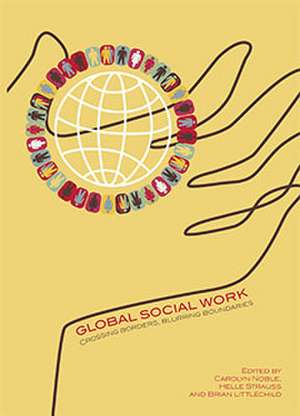
Global Social Work: Crossing Borders, Blurring Boundaries
Editat de Carolyn Noble, Helle Strauss, Brian Littlechilden Limba Engleză Paperback – 30 iun 2014
Preț: 220.76 lei
Puncte Express: 331
Carte tipărită la comandă
Livrare economică 09-16 noiembrie
Livrare prin curier în România Termenul estimat este afișat lângă disponibilitate.
Transport gratuit de la 400.00 lei Plată online sau ramburs, în funcție de opțiunile comenzii.
Retur gratuit în 14 zile Comandă securizată și suport în română.
Specificații
ISBN-13: 9781743324042
ISBN-10: 1743324049
Pagini: 392
Ilustrații: 11 b&w ill., 4 tables
Dimensiuni: 176 x 250 x 21 mm
Greutate: 0.25 kg
Editura: Sydney University Press
Colecția Sydney University Press
Locul publicării:Sydney, Australia
ISBN-10: 1743324049
Pagini: 392
Ilustrații: 11 b&w ill., 4 tables
Dimensiuni: 176 x 250 x 21 mm
Greutate: 0.25 kg
Editura: Sydney University Press
Colecția Sydney University Press
Locul publicării:Sydney, Australia
Cuprins
Preface
Part 1: theory of social work
1. Towards identifying a philosophical basis of social work by Carolyn Noble and Mark Henrickson
2. Transnational social work: a new paradigm with perspectives by Isidor Wallimann
3. Transcending disciplinary, professional and national borders in social work education by Silvia Staub-Bernasconi
4. Educating social workers without boundaries through the Intercultural Social Intervention Model (ISIM) by María-José Aguilar-Idáñez and Daniel Buraschi
5. Indigenism and Australian social work by Christine Fejo-King
Part 2: social work as a profession
6. Envisioning a professional identity: charting pathways through social work education in India by Vimla V. Nadkarni and Sandra Joseph
7. Social work education in Indonesia: challenges and reforms by Fentiny Nugroho and Kanya Eka Santi
8. Social work education in South Asia: diverse, dynamic and disjointed? by Bala Raju Nikku
9. Social work education and family in Latin America: a case study by Carolina Muñoz-Guzmán, Sandra Mancinas and Nelly Nucci
Part 3: the development of social work education courses
10. Social work education in the Caribbean: charting pathways to growth and globalisation by Letnie Rock and Cerita Buchanan
11. Social work education and training in southern and east Africa: yesterday, today and tomorrow by Rodreck Mupedziswa and Refilwe P. Sinkamba
12. The current status and future challenges of social work education in South Korea by In-young Han and Jung-won Lim
Part 4: the social work curriculum
13. Social work education in Aotearoa/New Zealand and Australia by Barbara Staniforth and Carolyn Noble
14. Social work education in the United States: beyond boundaries by Clara Shockley and Frank R. Baskind
15. Social work education in the United Kingdom by Brian Littlechild and Karen Lyons
Part 5: social work and the welfare state
16. International social work education: the Canadian context by Mehmoona Moosa-Mitha
17. Economic crises, neoliberalism, and the US welfare state: trends, outcomes and political struggle by Mimi Abramovitz
18. The Nordic welfare model, civil society and social work by Gurid Aga Askeland and Helle Strauss
Part 6: social work and social change
19. Social work education in the post-socialist and post-modern era: the case of Ukraine by Tetyana Semigina and Oksano Boyko
20. Social work education in Eastern Europe: can post-communism be followed by diversity? by Darja Zaviršek
21. Social work education as a catalyst for social change and social development: case study of a Master of Social Work Program in China by Angelina W.K. Yuen-Tsang, Ben H.B. Ku and Sibin Wang
Part 7: social work and political activism
22. Reflections of an activist social worker: challenging human rights violations by Linda Briskman
23. Contesting the neoliberal global agenda: lessons from activists by Maureen Wilson, Avery Calhoun and Elizabeth Whitmore
24. No issue, no politics: towards a New Left in social work education by Mel Gray and Stephen A. Webb
Part 8: the past and the future of social work
25. Learning from our past: climate change and disaster interventions in practice by Lena Dominelli
26. Social work education: current trends and future directions by Vishanthie Sewpaul
27. Global education for social work: old debates and future directions for international social work by Lynne M. Healy
Contributors
Part 1: theory of social work
1. Towards identifying a philosophical basis of social work by Carolyn Noble and Mark Henrickson
2. Transnational social work: a new paradigm with perspectives by Isidor Wallimann
3. Transcending disciplinary, professional and national borders in social work education by Silvia Staub-Bernasconi
4. Educating social workers without boundaries through the Intercultural Social Intervention Model (ISIM) by María-José Aguilar-Idáñez and Daniel Buraschi
5. Indigenism and Australian social work by Christine Fejo-King
Part 2: social work as a profession
6. Envisioning a professional identity: charting pathways through social work education in India by Vimla V. Nadkarni and Sandra Joseph
7. Social work education in Indonesia: challenges and reforms by Fentiny Nugroho and Kanya Eka Santi
8. Social work education in South Asia: diverse, dynamic and disjointed? by Bala Raju Nikku
9. Social work education and family in Latin America: a case study by Carolina Muñoz-Guzmán, Sandra Mancinas and Nelly Nucci
Part 3: the development of social work education courses
10. Social work education in the Caribbean: charting pathways to growth and globalisation by Letnie Rock and Cerita Buchanan
11. Social work education and training in southern and east Africa: yesterday, today and tomorrow by Rodreck Mupedziswa and Refilwe P. Sinkamba
12. The current status and future challenges of social work education in South Korea by In-young Han and Jung-won Lim
Part 4: the social work curriculum
13. Social work education in Aotearoa/New Zealand and Australia by Barbara Staniforth and Carolyn Noble
14. Social work education in the United States: beyond boundaries by Clara Shockley and Frank R. Baskind
15. Social work education in the United Kingdom by Brian Littlechild and Karen Lyons
Part 5: social work and the welfare state
16. International social work education: the Canadian context by Mehmoona Moosa-Mitha
17. Economic crises, neoliberalism, and the US welfare state: trends, outcomes and political struggle by Mimi Abramovitz
18. The Nordic welfare model, civil society and social work by Gurid Aga Askeland and Helle Strauss
Part 6: social work and social change
19. Social work education in the post-socialist and post-modern era: the case of Ukraine by Tetyana Semigina and Oksano Boyko
20. Social work education in Eastern Europe: can post-communism be followed by diversity? by Darja Zaviršek
21. Social work education as a catalyst for social change and social development: case study of a Master of Social Work Program in China by Angelina W.K. Yuen-Tsang, Ben H.B. Ku and Sibin Wang
Part 7: social work and political activism
22. Reflections of an activist social worker: challenging human rights violations by Linda Briskman
23. Contesting the neoliberal global agenda: lessons from activists by Maureen Wilson, Avery Calhoun and Elizabeth Whitmore
24. No issue, no politics: towards a New Left in social work education by Mel Gray and Stephen A. Webb
Part 8: the past and the future of social work
25. Learning from our past: climate change and disaster interventions in practice by Lena Dominelli
26. Social work education: current trends and future directions by Vishanthie Sewpaul
27. Global education for social work: old debates and future directions for international social work by Lynne M. Healy
Contributors
Recenzii
'Besides benefitting those interested and involved in international
social work, it also serves as a stepping stone for those seeking to
engage in the relevant discourses about international social work and
social work education from a global perspective.'
'this book is an attempt to reshape the current debate about global
social work, and it offers a considerable contribution from senior social work academics from some 24 countries. ... This is not yet a programme of action, but there does seem to be a new consistency from these academics, who are well placed to move things forward.'
social work, it also serves as a stepping stone for those seeking to
engage in the relevant discourses about international social work and
social work education from a global perspective.'
'this book is an attempt to reshape the current debate about global
social work, and it offers a considerable contribution from senior social work academics from some 24 countries. ... This is not yet a programme of action, but there does seem to be a new consistency from these academics, who are well placed to move things forward.'