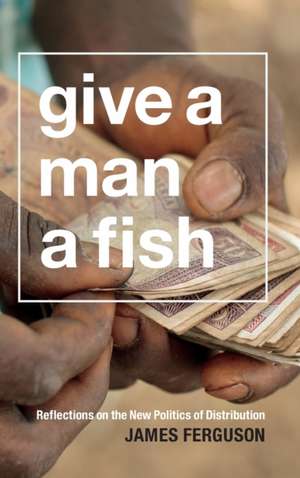
Give a Man a Fish
Autor James Fergusonen Limba Engleză Hardback – 20 mai 2015
Remarcăm în deschiderea volumului Give a Man a Fish o temă centrală care provoacă fundamentele economiei politice clasice: tranziția de la „producționismul patriarhal” la o revalorizare a distribuției. James Ferguson investighează un fenomen surprinzător în sudul Africii, unde, contrar discursului global despre moartea statului bunăstării, programele de transfer de numerar s-au extins masiv, acoperind peste o treime din populația Africii de Sud. Considerăm că această lucrare reprezintă o evoluție conceptuală majoră față de studiile sale anterioare, precum Presence and Social Obligation, mutând accentul de la mecanismele birocratice de dezvoltare către o nouă politică a distribuției. Structura cărții este organizată riguros, pornind de la o contextualizare istorică a protecției sociale în Africa în capitolul al doilea, pentru a ajunge la o discuție provocatoare despre „declarația de dependență” în capitolul al cincilea. James Ferguson nu se limitează la o analiză tehnică, ci explorează „viața socială” a plăților în numerar, demonstrând cum acestea creează noi forme de sociabilitate și obligație morală în interiorul comunităților afectate de șomaj cronic. Această perspectivă transformă subiecții pasivi ai asistenței sociale în actori ai unei noi ordini politice. Apreciem Give a Man a Fish ca o alternativă teoretică solidă la Politics, Public Policy and Social Protection in Africa de Nicholas Awortwi pentru cursurile de sociologia dezvoltării sau antropologie politică. În timp ce Nicholas Awortwi se concentrează pe eficiența politicilor publice și a implementării, lucrarea lui James Ferguson aduce noutatea unei regândiri ontologice a capitalismului contemporan, propunând distribuția ca drept fundamental, dincolo de logica darului sau a pieței.
Preț: 582.57 lei
Preț vechi: 685.38 lei
-15%
Carte tipărită la comandă
Livrare economică 04-18 iunie
Specificații
ISBN-10: 0822358956
Pagini: 280
Dimensiuni: 155 x 236 x 20 mm
Greutate: 0.5 kg
Editura: Duke University Press
De ce să citești această carte
Recomandăm această lucrare cercetătorilor și studenților interesați de modele economice alternative și politici de protecție socială. Cititorul va obține o înțelegere profundă a modului în care venitul de bază și transferurile de numerar pot funcționa ca instrumente de mobilizare politică, nu doar de subzistență. Este un argument esențial pentru oricine dorește să înțeleagă viitorul statului bunăstării într-o lume în care munca formală devine tot mai rară.
Despre autor
James Ferguson este profesor de antropologie la Universitatea din California, Irvine, fiind recunoscut la nivel internațional pentru analizele sale critice asupra dezvoltării și puterii birocratice. Lucrarea sa de referință, The Anti-Politics Machine, a redefinit modul în care mediul academic privește intervențiile internaționale în Africa. În Give a Man a Fish, autorul își continuă explorarea sistemelor de suport social, corelând cercetarea etnografică din Africa de Sud cu dezbaterile globale despre venitul minim garantat și etica distribuției, teme prezente și în contribuțiile sale din Presence and Social Obligation.
Descriere scurtă
Cuprins
Preface and Acknowledgments xi
Introduction. Cash Transfers and the New Welfare States: From Neoliberalism to the Politics of Distribution 1
1. Give a Man a Fish: From Patriarchal Productionism to the Revalorization of Distribution 35
2. What Comes after the Social? Historicizing the Future of Social Protection in Africa 63
3. Distributed Livelihoods: Dependence and the Labor of Distribution in the Lives of the Southern African Poor (and Not-So-Poor) 89
4. The Social Life of Cash Payments: Money, Markets, and the Mutualities of Poverty 119
5. Declaration of Dependence: Labor, Pesonhood, and Welfare in Southern Africa 141
6. A Rightful Share: Distribution beyond Gift and Market 165
Conclusion. What Next for Distributive Politics? 191
Notes 217
References 237
Index 259