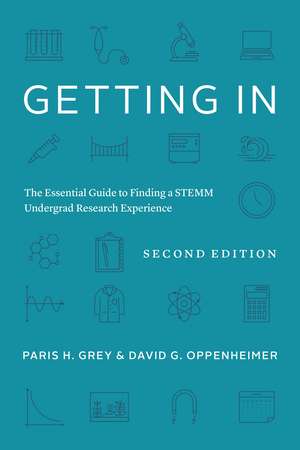
Getting In: The Essential Guide to Finding a STEMM Undergrad Research Experience: Chicago Guides to Academic Life
Autor Paris H. Grey, David G. Oppenheimeren Limba Engleză Paperback – 26 mai 2023
Subliniem natura interdisciplinară a acestui volum, care depășește granițele unei simple discipline pentru a oferi un ghid aplicabil în toate domeniile STEMM — știință, tehnologie, inginerie, matematică și medicină. Getting In, aflat acum la a doua ediție, nu este doar un manual de proceduri, ci o hartă a mediului academic, concepută pentru a democratiza accesul la experiențe de cercetare valoroase. Ne-a atras atenția modul în care autorii, un manager de laborator și un profesor universitar, reușesc să demistifice ceea ce ei numesc „curriculumul ascuns”: acele reguli nescrise care pot bloca accesul studenților din medii defavorizate sau aflați la prima generație în mediul universitar.
Cititorii familiarizați cu Success in Navigating Your Student Research Experience de Aaron M. Ellison vor aprecia Getting In pentru accentul său pus pe pragmatismul imediat. În timp ce volumul lui Ellison se concentrează pe planificarea strategică pe termen lung, lucrarea de față oferă instrumente tactice brute: șabloane de e-mailuri care captează atenția profesorilor ocupați și tehnici de abordare în timpul orelor de consultații. Structura cărții este gândită progresiv, pornind de la fundamentele culturii de laborator și evoluând spre gestionarea așteptărilor și a timpului, astfel încât cercetarea să nu afecteze media generală (GPA).
În contextul operei autorilor, această carte reprezintă un precursor logic pentru Life and Research, unde Paris H. Grey și David G. Oppenheimer explorează provocările ulterioare ale carierei de cercetător. Dacă lucrarea lor anterioară se adresa celor deja aflați în sistem, Getting In acționează ca un punct de intrare esențial. Merită menționat că textul nu evită subiectele dificile, precum gestionarea eșecului în experimente sau paradoxul experienței, oferind o perspectivă onestă asupra vieții într-un „wet lab” sau într-un grup de cercetare teoretică.


Preț: 173.38 lei
Carte disponibilă
Livrare economică 10-24 noiembrie
Specificații
ISBN-10: 0226825418
Pagini: 240
Dimensiuni: 152 x 229 x 25 mm
Greutate: 0.34 kg
Ediția:Second Edition
Editura: University of Chicago Press
Colecția University of Chicago Press
Seria Chicago Guides to Academic Life
De ce să citești această carte
Recomandăm această carte oricărui student la licență care dorește să facă pasul de la consumator de cunoștințe la creator de știință. Este un ghid practic care elimină anxietatea primilor pași în cercetare, oferind soluții concrete pentru obținerea unui post competitiv. Cititorul câștigă nu doar acces într-un laborator, ci și abilități de comunicare profesională și o înțelegere profundă a modului în care funcționează ierarhiile academice moderne.
Despre autor
Paris H. Grey și David G. Oppenheimer formează o echipă editorială cu o vastă experiență în mentorat și managementul cercetării la nivel universitar. Paris H. Grey aduce perspectiva practică a unui manager de laborator experimentat, fiind direct implicată în coordonarea activităților zilnice și a studenților. David G. Oppenheimer contribuie din postura de investigator principal (PI), oferind viziunea celui care decide selecția membrilor în echipele de cercetare. Împreună, aceștia au publicat lucrări de referință în seria Chicago Guides to Academic Life, concentrându-se pe sprijinirea tinerilor cercetători în navigarea provocărilor profesionale și personale din mediul științific.
Descriere scurtă
Conducting research is an important foundation for many undergraduates on STEMM career paths. But landing an extremely competitive research spot that is also an enriching experience involves knowing how to present yourself effectively and an awareness of your goals and expectations. In this book, an expert lab manager and a longtime principal investigator share their secrets for obtaining these coveted positions.
Offering advice to students in a wide variety of STEMM fields at both research-intensive universities and primarily undergraduate institutions, Getting In helps students navigate the hidden curriculum of academia, unofficial rules that disproportionately affect first-generation college students and those from low-income backgrounds and communities historically underrepresented in science. The authors provide not only an overview of STEMM research and lab opportunities but also specific strategies for the entire application process—including how to write emails that get noticed by busy professors, how to ask for a research position during office hours, and interview questions to prepare for—so students can claim their place in research settings.
With its emphasis on the many interpersonal and professional benefits of research experiences, Getting In equips all STEMM undergrads with the tools they need both to secure these valued positions and to develop habits that will build productive relationships with their future research mentors.
As an undergrad, Getting In will help you:
- determine how much time you can spend on research by evaluating your current activity level and goals.
- find the time to do research without giving up your social life or risking your GPA.
- avoid common mistakes in the search, application, or interview that make it harder to find a research experience.
- write emails that get you noticed by busy professors by customizing the included templates.
- prepare for tough interview questions so you’ll impress the interviewer with your answers, and be able to determine if the position is right for you.
As a research mentor, Getting In will help your students:
- navigate the hidden curriculum of finding a research experience in science, technology, engineering, math, and medicine (STEMM).
- set realistic expectations for their research experience.
- understand why conducting research requires effort and will include some failure and other challenges.
- be active participants in their success in the lab.
Notă biografică
Cuprins
Part One
1: Why Choose Research?
What’s in It for You?
Professional Development Opportunities
Interpersonal Development Opportunities
Academic Advantages
Connections—Professional, Personal, and More
Potential Financial Rewards
Recommendation and Reference Letters
2: An Introduction to STEMM Research, Research Groups, and Lab Cultures
What Is Scientific Research?
Nine Parts to a Research Project, Simplified
The Research Team and Work Environment
Your Mentors
Lab Culture
3: Will I Like Conducting Research?
Understanding and Managing Your Expectations—Your Strategy for Happiness and Success
Qualifications for Participation in Undergrad Research
The Ideal Time to Start Undergrad Research
The Time Commitment
The Experience Paradox
Using Lab Classes to Prepare for Undergrad Research
Wet Lab Positions for Undergrads
Projects for Undergrad Researchers
Deciding Whether to Register for Course Credit for Research
Summer Undergrad Research Programs (SURPs)
Why Research Positions Are Competitive (and What You Can or Can’t Do about It)
Part Two
4: Your Search Strategy
Ten Search Mistakes to Avoid
Getting Started Is the Hardest Part
Step 1: Schedule and Prioritize Your Time
Step 2: Identify Potential Meaningful Research Experiences
More Methods to Identify Undergrad Research Opportunities
Tips on Selecting and Reading a Scientific Paper before Applying for a Research Position
Maintaining Your Academic and Life Balance in Future Semesters
5: Your Application Strategy
Ten Application Mistakes to Avoid
Application Procedure
Step 1: Craft Your CV and Obtain Your Transcript
Step 2: Make First Contact
Step 3: Complete Online Applications for SURPs and Other Opportunities (When Applicable)
6: Your Interview Strategy
Ten Interview Mistakes to Avoid
Tips Specific to Virtual Interviews
To Seize Your Undergrad Research Interview, Ask the Questions That Matter
Mentors’ Interviewing Styles
Preparing for the Interview
At the Interview
After the Interview
Congratulations, You’re Now an Undergrad in the Lab!
Ten Tips to Prepare for Your First Day of Your Undergrad Research Experience
Acknowledgments
Index