Cărți de George Gordon Byron
George Gordon Byron, 6th Baron Byron, (Greek: Λόρδος Βύρωνας, romanized:Lórdos Výronas; 22 January 1788 – 19 April 1824), simply known as Lord Byron, was an English poet and peer. One of the leading figures of the Romantic movement, Byron is regarded as one of the greatest English poets. He remains widely read and influential. Among his best-known works are the lengthy narrative poems Don Juan and Childe Harold's Pilgrimage; many of his shorter lyrics in Hebrew Melodies also became popular.
He travelled extensively across Europe, especially in Italy, where he lived for seven years in the cities of Venice, Ravenna, and Pisa. During his stay in Italy he frequently visited his friend and fellow poet Percy Bysshe Shelley. Later in life Byron joined the Greek War of Independence fighting the Ottoman Empire and died leading a campaign during that war, for which Greeks revere him as a folk hero. He died in 1824 at the age of 36 from a fever contracted after the First and Second Siege of Missolonghi.
His only marital child, Ada Lovelace, is regarded as a foundational figure in the field of computer programming based on her notes for Charles Babbage's Analytical Engine. Byron's extramarital children include Allegra Byron, who died in childhood, and possibly Elizabeth Medora Leigh, daughter of his half-sister Augusta Leigh.
Selected Poems of Lord Byron
The Romantic Poets

Sardanapale : opéra en trois actes
Dramatic Works of Lord Byron; Including Manfred, Cain, Doge of Venice, Sardanapalus, and The Two Foscari, Together With His Hebrew Melodies and Other Poems
Byron's Poetry and Prose
The Letters and Journals of Lord Byron
Correspondence of Lord Byron: With a Friend, Including Letters to his Mother
Lord Byron's Correspondence: Chiefly with Lady Melbourne, Mr. Hobhouse, the Hon. Douglas Kinnaird, and P. B. Shelley
Lord Byron's Correspondence: Volume 2: Chiefly with Lady Melbourne, Mr. Hobhouse, the Hon. Douglas Kinnaird, and P.B. Shelley
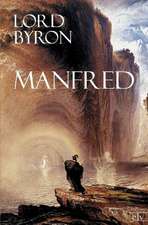
Manfred
Brother Moses Tells the Story of Jesus
The Prisoner of Chillon
The Deformed Transformed
Kain
Sardanapal
Die beiden Foscari
Werner oder Das Erbe
Childe Harold's Pilgrimage
Beppo
Selections from the Poetry of Lord Byron (1900)
A Vision of Judgment
Hebrew Melodies of Lord Byron (1890)
Monody on the Death of R. B. Sheridan (1816)
The Beauties of Byron
The Giaour and the Bride of Abydos (1844)
Le Pelerinage de Childe Harold (1869)
Il Pellegrinaggio D'Aroldo
Il Pellegrinaggio Di Childe-Harold
Oeuvres Completes de Lord Byron V1 (1871)
Il Pellegrinaggio del Giovine Aroldo
Selections from the Poems of Lord Byron (1898)
Sardanapalus
Lord Byron's Sammtliche Werke (1831)
Poetry of Byron (1881)
The Bride of Abydos, the Corsair, Lara (1832)
Tales and Poems (1848)
The Giaour - A Fragment of a Turkish Tale
Byroniana - The Opinions of Lord Byron on Men, Manners, and Things; With the Parish Clerk's Album, Kept at His Burial Place, Hucknall Torkard
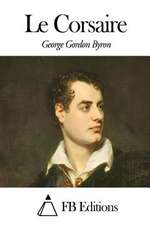
Le Corsaire
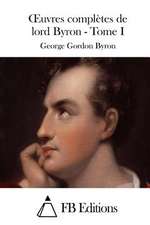
Oeuvres Completes de Lord Byron - Tome I
Oeuvres Completes de Lord Byron - Tome II
Oeuvres Completes de Lord Byron - Tome III
Oeuvres Completes de Lord Byron - Tome IV
Oeuvres Completes de Lord Byron - Tome IX
Oeuvres Completes de Lord Byron - Tome V
Oeuvres Completes de Lord Byron - Tome VI
Oeuvres Completes de Lord Byron - Tome VII
Oeuvres Completes de Lord Byron - Tome VIII
Oeuvres Completes de Lord Byron - Tome X
Oeuvres Completes de Lord Byron - Tome XI
Oeuvres Completes de Lord Byron - Tome XII
Oeuvres Completes de Lord Byron - Tome XIII
Der Giaur
Il Corsaro
Il Giaurro

Manfred

Marino Faliero, Doge de Venise
The Works of Lord Byron - Volume I: The 1844 Theatrical Adaptation
Don Juan
Der Vampyr
Manfredo (Spanish Edition)
Lord Byron - Childe Harold's Pilgrimage: "The great object of life is sensation- to feel that we exist, even though in pain."
Lord Byron - Don Juan: "The heart will break, but broken live on."
Lord Byron - Manfred: A Dramatic Poem: "Death, so called, is a thing which makes men weep, And yet a third of life is passed in sleep."
Lord Byron - The Bride of Abydos: A Turkish Tale: "If I do not write to empty my mind, I go mad."
Lord Byron - The Corsair: A Tale: "I have great hopes that we shall love each other all our lives as much as if we had never married at all."
Lord Byron - The Island or, Christian and His Comrades: "Always laugh when you can. It is cheap medicine."
Lord Byron - The Two Foscari: "Those who will not reason, are bigots, those who cannot, are fools, and those who dare not, are slaves."
Lord Byron - Cain: A Mystery: "There is no instinct like that of the heart."
Lord Byron - Heaven and Earth: A Mystery. Part I: "They never fail who die in a great cause."
Lord Byron - Sardanapalus: "Adversity is the first path to truth."
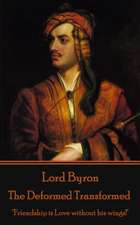
Lord Byron - The Deformed Transformed: "Friendship is Love without his wings!"
Lord Byron - Werner, or, The Inheritance: "A drop of ink may make a million think."
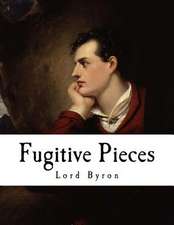
Fugitive Pieces
Childe Harold's Pilgrimage Canto IV
Manfredo
Hebrew Melodies of Lord Byron

The Byron and Moore Gallery
The works of Lord Byron
Marino Faliero, Doge von Venedig
Ritter Harolds Pilgerfahrt
The poetical works of Lord Byron
English Bards, and Scotch Reviewers: A Satire
Marino Faliero, Doge of Venice: An Historical Tragedy, in Five Acts, with Notes; The Prophecy of Dante: A Poem
The Gallery of Byron Beauties; Portraits of the Principal Female Characters in Lord Byron's Poems
The Poetical Works of Lord Byron, Vol. III
Selections from the Works of Lord Byron
Childe Harold's Pilgrimage: A Romaunt
Childe Harold's Pilgrimage: A Romaunt. Vol. II; Pp. 1-235
Selections from the Poems of Lord Byron
Don Juan, Cantos XV and XVI
Don Juan. Cantos XII. - XIII. - And XIV
Don Juan; Cantos XII.-XIII.-And XIV
Life of Lord Byron: With His Letters and Journals
Marino Faliero, Doge of Venice: An Historical Tragedy, in Five Acts. with ...
- 1
- 2