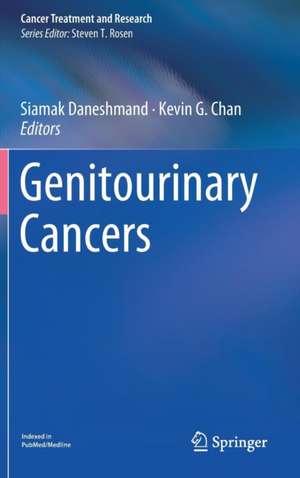
Genitourinary Cancers: Cancer Treatment and Research, cartea 175
Editat de Siamak Daneshmand, Kevin G. Chanen Limba Engleză Hardback – 14 sep 2018
Observăm în Genitourinary Cancers o abordare clinică riguroasă care debutează prin prioritizarea algoritmilor de decizie în patologii complexe. Un exemplu elocvent inclus în manual este algoritmul pentru tratamentul cancerului de vezică urinară de grad înalt, non-invaziv muscular, care evaluează critic momentele în care chirurgia radicală trebuie devansată pentru a optimiza prognosticul pacientului. Această primă ediție, publicată în seria Cancer Treatment and Research, reușește să ancoreze progresele rapide din imagistică și markerii moleculari direct în practica oncologică cotidiană. Structura volumului este organizată pe grupuri de patologii — prostată, rinichi, vezică și testicul — evoluând de la tehnici noi de imagistică și terapii ablative țintite către managementul bolilor metastatice. Apreciem în mod deosebit secțiunile dedicate imunoterapiei, unde este examinat rolul inhibitorilor punctelor de control, oferind o perspectivă clară asupra modului în care aceste terapii modifică standardele de îngrijire. Editorul Siamak Daneshmand continuă aici expertiza demonstrată în lucrări precum Modern Management of Testicular Cancer sau Urinary Diversion, extinzând analiza de la tehnica chirurgicală pură către protocoalele de recuperare postoperatorie (ERAS) și coordonarea multidisciplinară. Clinicienii care folosesc Urologic Oncology de Kelly L. Stratton ca referință vor găsi în acest volum o completare esențială privind integrarea datelor genomice (precum Cancer Genome Atlas) și a celulelor tumorale circulante (CTC) în stabilirea prognosticului. Față de abordările generale, Genitourinary Cancers se distinge prin focalizarea pe medicina de precizie și pe optimizarea fluxului de îngrijire a pacientului chirurgical, fiind un instrument indispensabil în oncologia urologică modernă.
Din seria Cancer Treatment and Research
- 5%
 Preț: 1138.53 lei
 - 5%
 Preț: 748.15 lei
 - 5%
 Preț: 819.93 lei
 - 5%
 Preț: 1080.32 lei
 - 5%
 Preț: 1069.81 lei
 - 5%
 Preț: 1079.72 lei
 - 5%
 Preț: 949.98 lei
 - 5%
 Preț: 741.54 lei
 - 5%
 Preț: 936.33 lei
 - 5%
 Preț: 1079.18 lei
 - 5%
 Preț: 1086.61 lei
 - 5%
 Preț: 693.36 lei
 - 5%
 Preț: 359.27 lei
 - 5%
 Preț: 1352.40 lei
 - 5%
 Preț: 1362.05 lei
 - 5%
 Preț: 1056.88 lei
 - 5%
 Preț: 694.80 lei
 - 5%
 Preț: 1053.70 lei
 - 5%
 Preț: 1051.96 lei
 - 5%
 Preț: 1053.89 lei
 - 5%
 Preț: 702.84 lei
 - 5%
 Preț: 1352.40 lei
 - 5%
 Preț: 1056.52 lei
 - 5%
 Preț: 1055.49 lei
 - 5%
 Preț: 1049.83 lei
 - 5%
 Preț: 1056.88 lei
 - 5%
 Preț: 1055.64 lei
 - 5%
 Preț: 1054.24 lei
 - 5%
 Preț: 356.17 lei
 - 5%
 Preț: 1360.84 lei
 - 5%
 Preț: 1047.20 lei
 - 5%
 Preț: 1057.04 lei
 - 5%
 Preț: 721.61 lei
 - 5%
 Preț: 1054.94 lei
 - 5%
 Preț: 1364.48 lei
 - 5%
 Preț: 352.29 lei
 - 5%
 Preț: 1707.68 lei
 - 5%
 Preț: 746.77 lei
 - 5%
 Preț: 1245.59 lei
 - 5%
 Preț: 1479.19 lei
 - 5%
 Preț: 748.40 lei
 - 5%
 Preț: 1154.98 lei
 - 5%
 Preț: 1071.66 lei
 - 5%
 Preț: 735.53 lei
Preț: 746.53 lei
Preț vechi: 785.82 lei
-5%
Carte tipărită la comandă
Livrare economică 07-21 decembrie
Specificații
ISBN-10: 3319933388
Pagini: 316
Ilustrații: VI, 308 p. 39 illus., 38 illus. in color.
Dimensiuni: 160 x 241 x 23 mm
Greutate: 0.59 kg
Ediția:1st ed. 2018
Editura: Springer
Colecția Cancer Treatment and Research
Seria Cancer Treatment and Research
Locul publicării:Cham, Switzerland
V-ar putea interesa
-
 The Way Forward for Chinese MedicineKevin Chan-5%Preț: 1109.51 lei1167.91 lei
 -
 Cancer MetastasisDavid Lyden-26%Preț: 1058.20 lei1421.47 lei
 -
 Environment and Breast CancerJose Russo-5%Preț: 1138.24 lei1198.15 lei
 -
 Innate Immune Regulation and Cancer ImmunotherapyRong-Fu Wang-5%Preț: 1152.46 lei1213.11 lei
 -
 Principles of Research MethodologyPhyllis G. Supino-5%Preț: 1080.85 lei1137.74 lei
 -
 Therapy Dogs in Cancer CareDawn A. Marcus-5%Preț: 355.51 lei374.23 lei
 -
 Experimental and Clinical MetastasisJulia V. Burnier-5%Preț: 1479.95 lei1557.84 lei
 -
 Discoidin Domain Receptors in Health and DiseaseRafael Fridman-5%Preț: 1145.64 lei1205.94 lei
 -
 New Approaches in the Treatment of CancerDra Ma Del Camen Mejia Vazquez-23%Preț: 1531.81 lei1999.55 lei
 -
 Targeted Therapy for Solid Tumors & Hematologic MalignanciesAlfonso Quintas-Cardama-23%Preț: 1909.10 lei2492.02 lei
 -
 BiosimilarsJean-Louis Prugnaud-27%Preț: 698.73 lei951.81 lei
 -
 Urinary DiversionSiamak Daneshmand-5%Preț: 670.68 lei705.98 lei
 -
 -18%Preț: 789.27 lei962.53 lei
De ce să citești această carte
Recomandăm această lucrare urologilor și oncologilor care doresc să integreze rapid protocoalele de imunoterapie și noii markeri moleculari în practica lor. Cititorul câștigă acces la algoritmi decizionali clari pentru cazurile dificile de cancer de vezică și testicul, beneficiind de expertiza editorilor în optimizarea recuperării postoperatorii. Este o resursă esențială pentru tranziția de la chirurgia clasică la managementul multidisciplinar bazat pe dovezi genetice și imunologice.
Despre autor
Siamak Daneshmand este un expert recunoscut în oncologie urologică, cu un interes particular pentru cancerul de vezică și cel testicular. În calitate de editor, el a coordonat volume de referință precum Modern Management of Testicular Cancer, publicat sub egida Urologic Clinics, unde a pus accent pe modalitățile de diagnostic și tehnicile chirurgicale avansate. Lucrările sale, inclusiv Urinary Diversion, reflectă o preocupare constantă pentru reconstrucția chirurgicală și managementul complicațiilor, consolidându-i reputația de lider în dezvoltarea protocoalelor clinice pentru malignitățile genitourinare complexe.
Descriere scurtă
Cuprins
Notă biografică
Dr. Kevin Chan earned his medical degree at the University of Southern California and completed his urology training at the University of Southern California. Following his training, he joined the urology faculty at City of Hope Cancer Center in Duarte, California. He is currently a Clinical Associate Professor of Surgery in the Division of Urology and the Head of Reconstructive Urology at City of Hope Cancer Center.
At City of Hope, Dr. Chan has established one of the largest programs in continent urinary diversion using robot-assisted laparoscopic radical cystectomy for the treatment of bladder cancer. In addition to his clinical practice, Dr. Chan conducts research in surgical techniques and postoperative pathways that will help minimize complications and improve outcomes in the treatment of bladder cancer. He has vast experience in the surgical treatment of male urinary incontinence and has created a database at City of Hope with the goal of improving surgical techniques used to treat male urinary incontinence. Dr. Chan's research interests also include the development of novel diagnostic techniques to improve the detection and progression of prostate cancer.