Cantitate/Preț
Produs

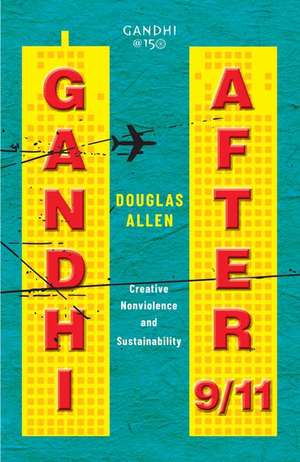
Gandhi after 9/11: Creative Nonviolence and Sustainability

Autor Douglas Allen
en Limba Engleză Hardback – 7 mar 2019

Prin eseuri aplicate care analizează impactul tehnologiei, terorismul de tip 9/11 și 26/11, dar și structurile opresive de castă și rasă, Douglas Allen propune în Gandhi after 9/11 o foaie de parcurs pentru o lume nesustenabilă. Remarcăm modul în care autorul nu se limitează la o hagiografie, ci utilizează critic conceptele de ahimsa (nonviolență) și swaraj (auto-guvernare) pentru a schița o globalizare mai egalitară, de tip bottom-up. Structura volumului pune sub lupă texte fundamentale, precum Bhagavad-Gita, oferind o perspectivă asupra modului în care adevărul absolut și cel relativ pot coexista în soluționarea conflictelor contemporane.

Credem că forța acestui titlu rezidă în capacitatea de a reformula „tehnologia swaraj” ca un instrument uman limitat, dar valoros, opus unipolarismului tehnologic actual. Această lucrare extinde cadrul propus de Gandhi and the Contemporary World de Sanjeev Kumar cu date noi din realitatea geopolitică a ultimelor decenii, punând un accent mai mare pe intersecția dintre spiritualitate și sustenabilitatea economică. În contextul operei sale, Douglas Allen continuă cercetarea structurilor mitice și religioase începută în Myth and Religion in Mircea Eliade, însă face tranziția de la analiza teoretică a sacrului către o etică a angajării politice directe, similară cu rigoarea documentară din Coming To Terms.

În paginile acestui volum de la OUP INDIA, cititorul va găsi o analiză critică a modernității, unde nonviolența nu este o stare pasivă, ci un catalizator creativ. Este un demers care recontextualizează moștenirea indiană pentru a răspunde crizelor de mediu și politice care definesc secolul XXI.

Citește tot Restrânge

Preț: 22864 lei

Preț vechi: 29029 lei
-21%

Puncte Express: 343

Carte disponibilă

Livrare economică 21-26 mai


Specificații

ISBN-13: 9780199491490
ISBN-10: 0199491496
Pagini: 288
Dimensiuni: 148 x 225 x 26 mm
Greutate: 0.49 kg
Editura: OUP INDIA
Colecția OUP India
Locul publicării:Delhi, India

De ce să citești această carte

Această carte se adresează cercetătorilor în științe politice și etică dornici să înțeleagă cum principiile lui Gandhi pot fi aplicate practic pentru a combate violența sistemică și degradarea mediului. Cititorul câștigă o perspectivă clară asupra modului în care nonviolența poate deveni o strategie politică viabilă într-un peisaj global fragmentat. Este o resursă esențială pentru cei care caută alternative la modelele de dezvoltare centralizate și nesustenabile ale prezentului.


Despre autor

Douglas Allen este un profesor și filosof recunoscut pentru expertiza sa în gândirea fenomenologică și istoria religiilor. O figură proeminentă în studiile dedicate lui Gandhi, Allen a explorat anterior mecanismele mitului în lucrarea sa despre Mircea Eliade și a analizat traumele istorice în studii despre experiența războiului din Vietnam. În Gandhi after 9/11, el își folosește vasta experiență interdisciplinară pentru a demonstra relevanța filosofiei indiene în fața provocărilor globale contemporane, consolidându-și reputația de teoretician al nonviolenței creative.


Descriere

Douglas Allen argues that Gandhi offers to us the most profound and influential theory, philosophy, and engaged practices of ahimsa or nonviolence. Embracing Gandhi's insightful critiques of modernity, the book sees his approach as a creative and challenging catalyst to rethink our positions today. We live in a post-9/11 world that is defined by widespread physical, psychological, economic, political, cultural, religious, technological, and environmental violence and that is increasingly unsustainable. The author's central claim is Gandhi, when selectively appropriated and creatively reformulated and applied, is essential for formulating new positions that are more nonviolent and more sustainable. These provide resources and hope for dealing with our contemporary crises. The author analyzes what a Gandhi-informed, valuable but humanly limited swaraj technology looks like and what a Gandhi-informed, more egalitarian, interconnected, bottom-up, decentralized world of globalization looks like. The book focuses on key themes in Gandhi's thought, such as violence and nonviolence, Absolute Truth and relative truth, ethical and spiritual living. Challenging us to consider nonviolent, moral, and truthful transformative alternatives today, the author moves through essays on Gandhi in the age of technology; Gandhi after 9/11 and 26/11 terrorism; Gandhi's controversial views on the Bhagavad-Gita and Hind Swaraj; Gandhi and Vedanta; Gandhi on socialism; Gandhi and marginality, caste, class, race, and oppressed others.

Recenzii

This thought-provoking book, full of nuanced understanding of Gandhi's philosophy and practice, makes an exce llent contribution to the relevance of Gandhi for the 21st century. The book succeeds in providing the argument that Gandhi offers to us the most profound and infl uential theory, philosophy, and eng aged practices of ahimsa or non- violence to deal with the contemporary crisis of marginality, as well as other multifarious challenges that confront humanity today. In many ways, regardless of one's own personal take on the man or the doctrine, this book is a fascinating read because it brings together effectively for the reader how a Gandhi-informed, non-violent response is creative sustainable, and relevant today. Overall, this outstanding collection will be valuable to Gandhian scholars, students, and activists.

Notă biografică

Douglas Allen is Professor and former Chairperson of Philosophy at the University of Maine, U.S.A. He served as President of the Society for Asian and Comparative Philosophy and is Series Editor of Lexington's Studies in Comparative Philosophy and Religion. Author and editor of 15 books and 150 book chapters and scholarly journal articles, he has been awarded Fulbright and Smithsonian grants to India. His Gandhi books include Comparative Philosophy and Religion in Times of Terror; The Philosophy of Mahatma Gandhi for the Twenty-First Century; and Mahatma Gandhi. Allen has been a peace and justice scholar-activist, starting with the Civil Rights Movement and the Vietnam Antiwar Movement; he has been deeply involved in many of the struggles central to Gandhi after 9/11. He had the honor of addressing the General Assembly on the United Nations International Day of Nonviolence, 2 October 2017. He may be reached at dallen@maine.edu.