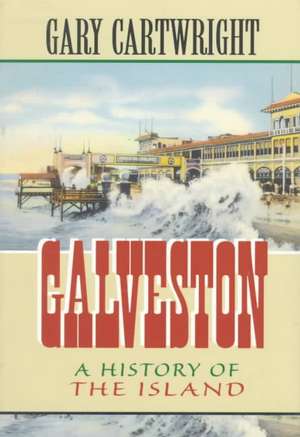
Galveston
Autor Gary Cartwrighten Limba Engleză Paperback – aug 1998
Bazându-ne pe arhivele istorice și pe documentația extinsă oferită de Texas Christian University Press, analizăm lucrarea Galveston, o cronică densă a unei insule care a definit spiritul texan. Reținem că această ediție aduce un plus de valoare prin includerea unui epilog inedit, în care Gary Cartwright revizitează subiectul cu umorul său caracteristic, oferind o perspectivă actualizată asupra eforturilor de restaurare a celor peste 500 de clădiri de patrimoniu. Premisa cărții nu se rezumă doar la evenimente, ci urmărește transformarea socială: de la tabăra piratului Jean Lafitte și bătăliile din Războiul Civil, la strălucirea victoriană a primului oraș din Texas iluminat electric. Abordarea lui Cartwright este una narativă, dar riguros ancorată în date, evitând capcanele unei istorii aride. O atenție deosebită este acordată uraganului din 1900, momentul de cotitură care a transformat „Octopus of the Gulf” într-un peisaj al ruinei. Alternativă la The Galveston Era de Earl Wesley Fornell pentru cursurile de istorie regională sau studii americane, Galveston are avantajul de a acoperi o perioadă mult mai extinsă, mergând dincolo de anul 1860 până în prezentul marcat de festivalul „Dickens on the Strand”. În timp ce alte lucrări, precum The Great Storm de Lisa Waller Rogers, se concentrează strict pe dezastrul natural din perspectivă ficțională, Cartwright oferă o analiză factuală a modului în care orașul s-a reinventat ca un centru al viciului în timpul Prohibiției și, ulterior, ca model de conservare istorică.
Preț: 131.95 lei
Carte disponibilă
Livrare economică 06-20 noiembrie
Specificații
ISBN-10: 0875651909
Pagini: 344
Dimensiuni: 154 x 230 x 28 mm
Greutate: 0.51 kg
Editura: Texas Christian University Press
De ce să citești această carte
Recomandăm această carte cititorilor pasionați de istorie urbană și transformări sociale. Veți câștiga o înțelegere profundă a modului în care un centru comercial major poate supraviețui celui mai mare dezastru natural din istoria SUA. Este o lectură esențială pentru cei care doresc să descopere evoluția Texasului dincolo de miturile populare, oferind un studiu de caz fascinant despre reziliență și conservarea patrimoniului arhitectural într-un context geografic dificil.
Despre autor
Gary Cartwright este un scriitor independent și jurnalist veteran, format la [Texas Christian University](university). Cariera sa este strâns legată de publicația Texas Monthly, unde, timp de peste 25 de ani, a documentat realitățile brute ale statului Texas. În lucrări precum Blood Will Tell sau Dirty Dealing, Cartwright a explorat teme legate de crimă, corupție și justiție, demonstrând o capacitate remarcabilă de a pătrunde în psihologia personajelor controversate. În Galveston, el își folosește experiența de reporter de investigație pentru a reconstrui istoria insulei, combinând rigoarea cercetării cu stilul său narativ direct și onest.
Descriere scurtă
Captured by both sides during the Civil War and the scene of a devastating sea battle, the city flourished during Reconstruction and became a leading port, an exporter of grain and cotton, a terminal for two major railroads, and site of fabulous Victorian buildings--homes, hotels, the Grand Opera House, the Galveston Pavilion (first building in Texas to have electric lights). It was, writes Cartwright, "the largest, bawdiest, and most important city between New Orleans and San Francisco."
This country's worst natural disaster--the Galveston hurricane of 1900--left the city in shambles, with one sixth of its population dead. But Galveston recovered. During Prohibition rum-running and bootlegging flourished; after the repeal, a variety of shady activities earned the city the nickname "The Free State of Galveston."
In recent years Galveston has focused on civic reform and restoration of its valuable architectural and cultural heritage. Over 500 buildings are listed on the National Register of Historic Places, and an annual "Dickens on the Strand" festival brings thousands of tourists to the island city each December. Yet Galveston still witnesses colorful incidents and tells stories of descendants of the ruling families, as Cartwright demonstrates with wry humor in a new epilogue written specially for this edition of "Galveston." First published in 1991 by Atheneum.