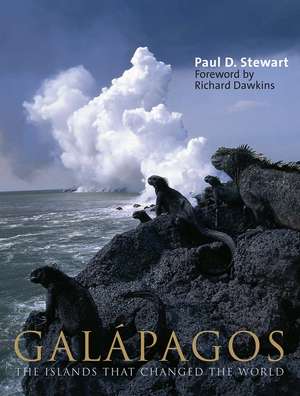
Galápagos: The Islands That Changed the World
Autor Paul D. Stewarten Limba Engleză Paperback – 28 feb 2007
Structura acestui volum este concepută ca o sinteză interdisciplinară, reușind să integreze rigoarea științifică a unui tratat de istorie naturală cu narativul captivant al unei cronici de explorare. Remarcăm modul în care metodologia autorului, Paul D. Stewart, depășește simpla clasificare a speciilor, propunând o perspectivă sistemică: de la geneza geologică a insulelor vulcanice, până la impactul social și științific declanșat de vizita lui Darwin. Subliniem că ediția a doua beneficiază de o selecție impresionantă de 152 de ilustrații color, care documentează habitatele marine și terestre cu o precizie vizuală necesară înțelegerii izolării biologice a arhipelagului.
Informația este organizată progresiv, începând cu dinamica plăcilor tectonice și continuând cu istoria umană marcată de pirați și colonizări timpurii, elemente care au modelat ecosistemul actual. Cartea acoperă aceeași arie ca The Galapagos de Henry Nicholls, dar cu o abordare mai orientată către experiența directă și utilitatea practică. În timp ce Nicholls se concentrează pe parcursul ecologic transformator, lucrarea de față publicată de Yale University Press adaugă un strat pragmatic prin includerea unui gazetteer detaliat. Acesta transformă volumul dintr-o lectură de cabinet într-un instrument de teren esențial, oferind liste de verificare ale speciilor endemice și recomandări logistice pentru cei care doresc să exploreze activ insulele. Tonul este precis și informativ, evitând speculațiile și ancorând fiecare observație în datele colectate de echipa de producție a unității de istorie naturală a BBC.
Preț: 288.29 lei
Carte disponibilă
Livrare economică 07-21 noiembrie
Specificații
ISBN-10: 0300122306
Pagini: 240
Ilustrații: 152 color, 2 b-w
Dimensiuni: 187 x 246 x 17 mm
Greutate: 0.78 kg
Ediția:Second Edition
Editura: Yale University Press
Colecția Yale University Press
V-ar putea interesa
-
 Global Warming and Biological DiversityRobert L. PetersPreț: 474.11 lei
 -
 The Wired NeighborhoodStephen Doheny-FarinaPreț: 302.99 lei
 -
 Investigative Pathways: Patterns and Stages in the Careers of Experimental ScientistsFrederic Lawrence Holmes-23%Preț: 453.36 lei588.78 lei
 -
 Lorsque Le Brouillard a Cesse de Nous Ecouter: Hugo BallGeremia ComettiPreț: 436.47 lei
 -
 Wie man in eine Seifenblase schlüpftAlbrecht BeutelspacherPreț: 141.21 lei
 -
 Die Physik des BewusstseinsMichio KakuPreț: 175.14 lei
 -
 Von Pi nach PisaGert MittringPreț: 94.23 lei
 -
 Le Meduse - Come allevarle e gestirle in acquarioEnzo AlibrandiPreț: 233.83 lei
 -
 Il gioco e i suoi segnali in una colonia di Canis lupusChiara StefaniPreț: 332.16 lei
 -
 Preț: 49.21 lei
 -
 Die Kultur des weiblichen Körpers als Grundlage der FrauenkleidungPaul Schultze-NaumburgPreț: 167.24 lei
 -
 The World of SoundWilliam BraggPreț: 330.91 lei
 -
 Schweißen im MetallbauJörg Dombrowski-11%Preț: 572.19 lei642.91 lei
De ce să citești această carte
Această lucrare este ideală pentru cititorii care caută un echilibru între rigoarea academică și ghidul de călătorie ilustrat. Câștigați o înțelegere profundă a mecanismelor evoluției într-un context geografic specific, beneficiind în același timp de sfaturi practice pentru explorarea arhipelagului. Este resursa definitivă pentru a înțelege de ce aceste insule rămân un laborator viu al biodiversității globale.
Despre autor
Paul D. Stewart este un autor și realizator de documentare recunoscut, cu o activitate publicistică vastă în jurnale de știință și conservare. Expertiza sa este dublată de experiența practică dobândită în cadrul prestigioasei unități de istorie naturală a BBC (Natural History Unit), unde a produs și filmat numeroase documentare premiate. Colaborarea sa pentru acest volum cu rezidenți de lungă durată ai insulelor, precum Godfrey Merlen, și cu producători specializați în viața sălbatică, asigură o perspectivă autentică și documentată asupra arhipelagului Galápagos.
Descriere scurtă
Rocky, fragile, beautiful, strange—the Galápagos archipelago is unlike any other place on earth. Its geology, its unique flora and fauna, and its striking role in human history intersect in surprising and dynamic ways. This book is the most wide-ranging and beautifully illustrated book available on the famous islands. Not since Darwin’s Naturalist’s Voyage has a book combined so much scientific and historic information with firsthand accounts that bring the Galápagos to life.
Galápagos: The Islands That Changed the World describes how tragedy and murderous pirates curtailed settlement of the islands and how the islands’ pristine nature, spectacular geology, and defining isolation inspired Darwin’s ideas about evolution. The book explores the diverse land and marine habitats that shelter Galápagos species and considers the islands’ importance today as a frontier for science and a refuge for true wilderness. The book’s extensive gazetteer provides details about endemic plants and animals as well as travel advice about visitors’ sites, diving, photography, when to go, and what to take. Vividly illustrated throughout, this guide is an indispensable reference for natural history enthusiasts, armchair travelers, and island visitors alike.
Recenzii
"Want to visit the Galapagos Island, but haven't managed it yet? This book, with its beautiful pictures and interesting text, will either make you think you've been there or make you arrange your plane tickets."—Ecology
Selected as a 2008 AAUP University Press Book for Public and Secondary School Libraries
"I have been to the Galapagos and as I read this book I found myself 'walking the paths' again. Stewart offers an enjoyable and complete overview of the islands."—Noble Proctor, author of A Field Guide to North Atlantic Wildlife
"The definitive single volume on the Galapagos that ecotourists and readers from all walks of life have been awaiting."—Margaret Lowman, author of Life in the Treetops and co-author of It's a Jungle Up There: More Tales from the Treetops
"To anyone contemplating a visit to Las Encantadas (Galapagos), the Gazetteer alone is worth the price of this book. Paul Stewart's Galapagos will be my treasured companion on my next visit, and I shall take along an extra copy to present to the boat's library. If you are not able to go in person, reading this book and savouring its pictures is, if not a substitute, a delight to be going on with."—Richard Dawkins (from the foreword)