
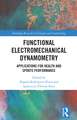
Functional Electromechanical Dynamometry: Applications for Health and Sports Performance: Routledge Research in Strength and Conditioning
Editat de Ángela Rodríguez-Perea, Ignacio J. Chirosa Riosen Limba Engleză Hardback – 28 apr 2025
Many of the current testing and training protocols are empirically based, with their roots in clinical medicine. They have been developed based on what the technology of the time allowed. With the application of new technologies, functional electromechanical dynamometry (FEMD), inertial devices and mobile apps, etc. has seen the introduction of new testing protocols that outline how to assess strength in performance and the importance of muscle quality in injury prevention and treatment. Knowing how FEMDs work allows coaches, researchers and health personnel to improve diagnoses and treatments for athletes and non-athletes and be able to better measure the stresses of the tasks that occur in everyday life, whether in daily activities or sports performance.
This new research book is key reading for sports science students, researchers and academics and of specific relevance to those in the strength and conditioning or physiology fields as well as to anyone who wants to assess and improve musculoskeletal strength and muscle quality in humans.
Preț: 1293.16 lei
Preț vechi: 1361.23 lei
-5%
Puncte Express: 1940
Carte tipărită la comandă
Livrare economică 09-23 noiembrie
Livrare prin curier în România Termenul estimat este afișat lângă disponibilitate.
Transport gratuit pentru acest produs Plată online sau ramburs, în funcție de opțiunile comenzii.
Retur gratuit în 14 zile Comandă securizată și suport în română.
Specificații
ISBN-13: 9781032544984
ISBN-10: 1032544988
Pagini: 216
Ilustrații: 36
Dimensiuni: 138 x 216 x 15 mm
Greutate: 0.56 kg
Ediția:1
Editura: Taylor & Francis
Colecția Routledge
Seria Routledge Research in Strength and Conditioning
Locul publicării:Oxford, United Kingdom
ISBN-10: 1032544988
Pagini: 216
Ilustrații: 36
Dimensiuni: 138 x 216 x 15 mm
Greutate: 0.56 kg
Ediția:1
Editura: Taylor & Francis
Colecția Routledge
Seria Routledge Research in Strength and Conditioning
Locul publicării:Oxford, United Kingdom
Public țintă
Academic, Postgraduate, and Undergraduate AdvancedCuprins
Section 1: Fundamentals of Strength Training
1. Introduction to Muscle Strength and Force in Sports Science.
2. Expressions of Force
3. Validity and Reliability of Evaluation with FEMD
4. Methodology of Training with FEMD
Section 2: Assessing Strength in Sport Specific Tasks
5. Dynamometric Technology: Revolutionizing Evaluation and Training in Team Sports
6. Assessment of Strength in Sports Tasks
7. Training Proposal to Improve Strength in Sports Tasks
Section 3: Strength Assessment for Health and Well-being
8. Relevant Variables in the Assessment of Strength in Health
9. Evaluation of Muscle Quality
10. Training Programmes for Health and Quality of Life
11. Musculoskeletal Injuries and Muscle Quality
1. Introduction to Muscle Strength and Force in Sports Science.
2. Expressions of Force
3. Validity and Reliability of Evaluation with FEMD
4. Methodology of Training with FEMD
Section 2: Assessing Strength in Sport Specific Tasks
5. Dynamometric Technology: Revolutionizing Evaluation and Training in Team Sports
6. Assessment of Strength in Sports Tasks
7. Training Proposal to Improve Strength in Sports Tasks
Section 3: Strength Assessment for Health and Well-being
8. Relevant Variables in the Assessment of Strength in Health
9. Evaluation of Muscle Quality
10. Training Programmes for Health and Quality of Life
11. Musculoskeletal Injuries and Muscle Quality
Notă biografică
Ángela Rodríguez-Perea is a Doctor in Biomedicine from the University of Granada, Spain and she holds a bachelor’s degree in physical activity and sports sciences, an MSc in physical activity and sports research, and an MSc in secondary education with a specialization in physical education. Her research specialty interests are strength assessment, low back pain, core strength training, sports performance, and handball. Currently, she is a professor of Physical Education and Sports at the University of León, Spain. She is a member of the Pleokinetic Research Network and the IDAFISAD CTS-642 research group at the University of Granada, Spain.
Ignacio J. Chirosa Rios is a tenured professor in physical education and sports at the University of Granada, Spain. His research focuses on the evaluation and development of muscular strength and functional electromechanical dynamometry. Ignacio has published over 110 peer-reviewed journal articles, 14 Ph.D. theses, and contributed to several research projects, about strength training applied to different populations from elite athletes to the elderly, including two as the principal investigator. He is actively involved in technology transfer, with multiple patents related to sports performance assessment tools, including a platform for FEMD. Ignacio also plays a significant role in academic leadership, coordinating doctoral programs and official master’s programs at the University of Granada. He has been instrumental in creating international dynamometry laboratories across various countries, enhancing global research collaboration.
Ignacio J. Chirosa Rios is a tenured professor in physical education and sports at the University of Granada, Spain. His research focuses on the evaluation and development of muscular strength and functional electromechanical dynamometry. Ignacio has published over 110 peer-reviewed journal articles, 14 Ph.D. theses, and contributed to several research projects, about strength training applied to different populations from elite athletes to the elderly, including two as the principal investigator. He is actively involved in technology transfer, with multiple patents related to sports performance assessment tools, including a platform for FEMD. Ignacio also plays a significant role in academic leadership, coordinating doctoral programs and official master’s programs at the University of Granada. He has been instrumental in creating international dynamometry laboratories across various countries, enhancing global research collaboration.
Descriere
Human strength testing has advanced as technology has evolved. This book continues this evolution by developing and presenting applications in the assessment and training of strength in humans, broadening the scope of information available to physical therapists, coaches, and physical trainers specializing in strength training.