
From Street to Screen: Studies in the Cinema of the Black Diaspora
Editat de David C. Wall, Michael T. Martinen Limba Engleză Paperback – dec 2020



Preț: 295.42 lei
Carte tipărită la comandă
Livrare economică 21 decembrie 26 - 04 ianuarie 27
Specificații
ISBN-10: 0253049547
Pagini: 290
Ilustrații: 48 Illustrations, color
Dimensiuni: 152 x 229 x 18 mm
Greutate: 0.63 kg
Editura: Indiana University Press
Colecția Studies in the Cinema of the Black Diaspora
Seria Studies in the Cinema of the Black Diaspora
V-ar putea interesa
-
 Questions of CinemaStephen HeathPreț: 237.81 lei
-
 Alice Doesn`t – Feminism, Semiotics, CinemaTeresa De LauretisPreț: 156.38 lei
-
 Indiscretions – Avant–Garde Film, Video, and FeminismPatricia MellencampPreț: 192.76 lei
-
 Preț: 156.58 lei
-
 The Analysis of FilmRaymond BellourPreț: 204.98 lei
-
 Preț: 191.92 lei
-
 Sounds of Early CinemaRichard AbelPreț: 208.46 lei
-
 Ian Fleming and James BondEdward P ComentalePreț: 183.59 lei
-
 Unsettling ScoresRoger HillmanPreț: 128.32 lei
-
 Preț: 206.67 lei
-
 Fantasy Fiction Into Film: EssaysLeslie StratynerPreț: 223.78 lei
-
 Balboa Films: "A History and Filmography of the Silent Film Studio"Jean-Jacques JuraPreț: 305.59 lei
-
 The Mummy in Fact Fiction and Film: ""Susan D. CowiePreț: 227.85 lei
-
 Superman on Film, Television, Radio and BroadwayBruce ScivallyPreț: 331.43 lei
-
 Preț: 385.35 lei
-
 Preț: 471.58 lei
-
 Austrian Cinema: A HistoryRobert von Dassanowsky-23%Preț: 432.20 lei561.29 lei
-
 The Mummy Unwrapped: Scenes Left on Universal's Cutting Room FloorThomas M. FeramoscoPreț: 266.63 lei
-
 The Films of Randolph ScottRobert NottPreț: 241.65 lei
-
 Preț: 382.97 lei
-
 Preț: 166.21 lei
-
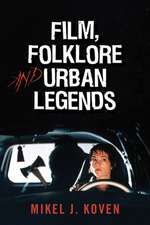 Film, Folklore and Urban LegendsMikel J. Koven-32%Preț: 404.16 lei596.49 lei
-
 Before the FallAnna LawtonPreț: 174.46 lei
-
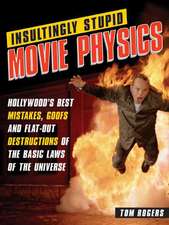 Insultingly Stupid Movie PhysicsTom RogersPreț: 114.84 lei
-
 Revenge of the PhilistinesHilton KramerPreț: 174.08 lei
-
 Preț: 95.47 lei
-
 Ways of Seeing, Ways of SpeakingLinda T. CalendrilloPreț: 213.77 lei
Notă biografică
Michael T. Martin is Professor of Cinema and Media Studies in the Media School at Indiana University Bloomington. He is editor or coeditor of seven anthologies, and (with David C. Wall) The Politics and Poetics of Black Film: Nothing But a Man and Race and the Revolutionary Impulse in The Spook Who Sat by the Door. He also directed and coproduced the award-winning feature documentary on Nicaragua In the Absence of Peace, distributed by Third World Newsreel.
David C. Wall is Assistant Professor of Visual and Media Studies at Utah State University. He edited (with Michael T. Martin) The Politics and Poetics of Black Film: Nothing But a Man and Race and the Revolutionary Impulse in The Spook Who Sat by the Door. Other recent work can be found in Nineteenth-Century Studies and A Companion to the Historical Film.
Cuprins
Acknowledgements
Killer of Sheep: Charles Burnett and the Poetry of Oppression
David C. Wall and Michael T. Martin
PART ONE: Situating Killer of Sheep: Time/Place/Circumstance
Cinema and Black Liberation (David E. James)
Struggles for the Sign in the Black Atlantic: Los Angeles Collective of Black Filmmakers (Michael T. Martin)
Charles Burnett: A Reconsideration of Third Cinema (Amy Ongiri)
Charles Burnett-Consummate Cineaste (Michael T. Martin)
PART TWO: Reading Killer of Sheep
Toward a Geo-Cinematic Hermeneutics: Representations of Los Angeles in Non-Industrial Cinema - [Charles Burnett's] Killer of Sheep (David E. James)
An Aesthetic Appropriate to Conditions: Killer of Sheep, (Neo) Realism, and the Documentary
Impulse (Paula J. Massood)
Neo-Realism Meets the Blues in Charles Burnett's Killer of Sheep (Keith Mehlinger)
Killer of Sheep (James Naremore)
Killer of Sheep (Jeffrey Skoller)
Nous revenons à nos moutons: Regarding Animals in Charles Burnett's Killer of Sheep (Sarah O'Brien)
PART THREE
Screenplay
Biography and Filmography
Index