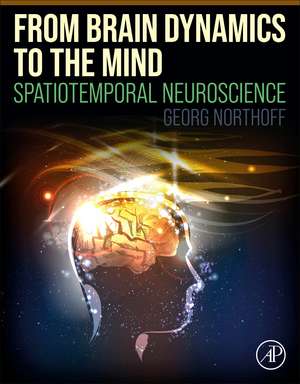
From Brain Dynamics to the Mind: Spatiotemporal Neuroscience
Autor Georg Northoffen Limba Engleză Paperback – 28 mar 2024
Pulling concepts from neuroscience, psychology and philosophy, the book presents a modern and complete look at what we know, what we can surmise, and what we may never know about the distinction between brain and mind.
- Reviews models of understanding the mind/brain problem
- Identifies neural processes involved in consciousness, sense of self and brain function
- Includes concepts and research from neuroscience, psychology, cognitive science and philosophy
- Discusses implications for AI, novel therapies for psychiatric disorders and issues of ethics
- Suggests experimental designs and data analyses for future research on the mind/brain issue
Preț: 804.10 lei
Preț vechi: 1140.09 lei
-29%
Puncte Express: 1206
Carte tipărită la comandă
Livrare economică 14-28 noiembrie
Livrare express 20-24 octombrie pentru 159.45 lei
Livrare prin curier în România Termenul estimat este afișat lângă disponibilitate.
Transport gratuit pentru acest produs Plată online sau ramburs, în funcție de opțiunile comenzii.
Retur gratuit în 14 zile Comandă securizată și suport în română.
Specificații
ISBN-13: 9780128219355
ISBN-10: 0128219351
Pagini: 690
Dimensiuni: 216 x 276 x 35 mm
Greutate: 1.86 kg
Editura: ELSEVIER SCIENCE
ISBN-10: 0128219351
Pagini: 690
Dimensiuni: 216 x 276 x 35 mm
Greutate: 1.86 kg
Editura: ELSEVIER SCIENCE
Public țintă
Graduate and postgraduate students, neuroscientists, neurologists, psychologists, psychiatrists, biologists.Cuprins
PART I Brain dynamics
Section 1 Variability of the brain
1. The fluctuating brain-essentials of neural variability
2. Neural variability in rest and task states
3. Neural variability shapes perception and cognition
4. Neurodynamic mechanisms of neural variability
Section 2 Scale-freeness of the brain
5. From broccoli to the brain - Scale-free activity
6. From scale-free activity to temporo-spatial nestedness
7. Scale-free dynamic shapes perception and cognition
8. Scale-free activity – bridge between environment and brain
Section 3 Timescales of the brain
9. The brain’s inner time – intrinsic neural timescales
10. Intrinsic neural timescales mediate input processing
11. From Chronos and Kairos to the brain’s temporal receptive windows
12. Lessons from geology – from the human brain to artificial agents
Section 4 Synchrony of the brain
13. Synchrony in nature and brain
14. Entrainment – How the brain synchronizes with its environment
15. Global synchronization in the brain
16. Neural synchronization in fMRI and EEG/MEG - a methodological guide
Part II Dynamic layer model of brain
Section 1 Dynamic layers and the brain
17. Layers of the brain - An introduction
18. Background and foreground layers I: Scale-free stability versus oscillatory flexibility
19. Background and foreground layers II - nonlinear and asymmetric relationship
Section 2 From dynamic layers to cognition
20. Baseline model of cognition I: Distinction from dual model of cognition
21. Baseline model of cognition II: Spatiotemporal shaping of cognition and input processing
22. Dynamic capacities and cognition
Section 3 Dynamic layer model of brain vs other models of brain
23. Cognitive model and predictive coding
24. Intrinsic and inside-out models of brain
25. Brain and world - converging free energy principle and dynamic layer theory of brain
Part III Mind dynamics
Section 1 The self
26. The self and its intrinsic topography
27. The dynamic of self and its semantics
28. The self - psychological baseline or default
29. From icebergs to the self – point of view
Section 2 Meditation
30. Topographic reorganization model of meditation
31. Topographic reorganization of the self
32. Dynamic reorganization of the brain
Section 3 Dreams
33. From Salvador Dali to dreams - topographic reorganization model of dreams
34. From falling keys to dreams - Dynamic reorganization
Section 4 Thoughts
35. How dynamics shape our thoughts
36. Baseline model of thought
Section 5 Consciousness
37. The jungle of consciousness – current neuroscientific theories
38. Order in the jungle of consciousness – convergence of theories
39. Temporo-spatial theory of consciousness I – form and level/state
40. Temporo-spatial theory of consciousness (TTC) II: Contents
41. From brain to consciousness - “common currency hypothesis
Section 6 Autism
42. Dynamic shapes perception and behavior in autism
43. Hierarchical model of autistic self
Section 1 Variability of the brain
1. The fluctuating brain-essentials of neural variability
2. Neural variability in rest and task states
3. Neural variability shapes perception and cognition
4. Neurodynamic mechanisms of neural variability
Section 2 Scale-freeness of the brain
5. From broccoli to the brain - Scale-free activity
6. From scale-free activity to temporo-spatial nestedness
7. Scale-free dynamic shapes perception and cognition
8. Scale-free activity – bridge between environment and brain
Section 3 Timescales of the brain
9. The brain’s inner time – intrinsic neural timescales
10. Intrinsic neural timescales mediate input processing
11. From Chronos and Kairos to the brain’s temporal receptive windows
12. Lessons from geology – from the human brain to artificial agents
Section 4 Synchrony of the brain
13. Synchrony in nature and brain
14. Entrainment – How the brain synchronizes with its environment
15. Global synchronization in the brain
16. Neural synchronization in fMRI and EEG/MEG - a methodological guide
Part II Dynamic layer model of brain
Section 1 Dynamic layers and the brain
17. Layers of the brain - An introduction
18. Background and foreground layers I: Scale-free stability versus oscillatory flexibility
19. Background and foreground layers II - nonlinear and asymmetric relationship
Section 2 From dynamic layers to cognition
20. Baseline model of cognition I: Distinction from dual model of cognition
21. Baseline model of cognition II: Spatiotemporal shaping of cognition and input processing
22. Dynamic capacities and cognition
Section 3 Dynamic layer model of brain vs other models of brain
23. Cognitive model and predictive coding
24. Intrinsic and inside-out models of brain
25. Brain and world - converging free energy principle and dynamic layer theory of brain
Part III Mind dynamics
Section 1 The self
26. The self and its intrinsic topography
27. The dynamic of self and its semantics
28. The self - psychological baseline or default
29. From icebergs to the self – point of view
Section 2 Meditation
30. Topographic reorganization model of meditation
31. Topographic reorganization of the self
32. Dynamic reorganization of the brain
Section 3 Dreams
33. From Salvador Dali to dreams - topographic reorganization model of dreams
34. From falling keys to dreams - Dynamic reorganization
Section 4 Thoughts
35. How dynamics shape our thoughts
36. Baseline model of thought
Section 5 Consciousness
37. The jungle of consciousness – current neuroscientific theories
38. Order in the jungle of consciousness – convergence of theories
39. Temporo-spatial theory of consciousness I – form and level/state
40. Temporo-spatial theory of consciousness (TTC) II: Contents
41. From brain to consciousness - “common currency hypothesis
Section 6 Autism
42. Dynamic shapes perception and behavior in autism
43. Hierarchical model of autistic self