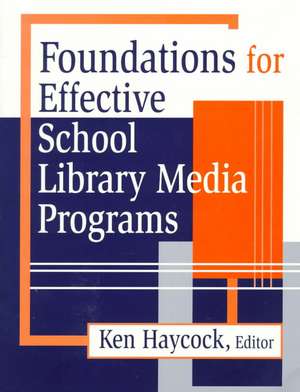
Foundations for Effective School Library Media Programs
Autor Ken Haycocken Limba Engleză Paperback – 15 apr 1999
Preț: 354.06 lei
Preț vechi: 441.09 lei
-20%
Puncte Express: 531
Carte tipărită la comandă
Livrare economică 21 noiembrie-05 decembrie
Livrare prin curier în România Termenul estimat este afișat lângă disponibilitate.
Transport gratuit de la 400.00 lei Plată online sau ramburs, în funcție de opțiunile comenzii.
Retur gratuit în 14 zile Comandă securizată și suport în română.
Specificații
ISBN-13: 9781563083686
ISBN-10: 156308368X
Pagini: 331
Dimensiuni: 216 x 279 x 18 mm
Greutate: 0.8 kg
Ediția:New.
Editura: Bloomsbury Publishing
Colecția Libraries Unlimited
Locul publicării:New York, United States
ISBN-10: 156308368X
Pagini: 331
Dimensiuni: 216 x 279 x 18 mm
Greutate: 0.8 kg
Ediția:New.
Editura: Bloomsbury Publishing
Colecția Libraries Unlimited
Locul publicării:New York, United States
V-ar putea interesa
-
 -21%Preț: 283.48 lei357.64 lei
 -
 -26%Preț: 265.87 lei358.27 lei
 -
 -19%Preț: 595.52 lei735.20 lei
 -
 Moys Classification and Thesaurus for Legal MaterialsElizabeth M. Moys-23%Preț: 2261.24 lei2936.67 lei
Cuprins
Contributors
Introduction
Part One: The Foundations
Chapter 1: Strengthening the Foundations for Teacher-Librarianship
Chapter 2: Research in Teacher-Librarianship and the Institutionalization of Change
Part Two: The School Context
Chapter 3: Leadership for School Improvement
Chapter 4: The School Library Program and the Culture of the School
Chapter 5: Libraries, Learning and the Whole School
Part Three: Role Clarification
Chapter 6: The School Librarian as a Professional Teacher
Chapter 7: Navigating the '90's - The Teacher-Librarian as Change Agent
Chapter 8: Developing Information Literacy Through the Information Intermediary Process
Chapter 9: Teacher-Librarians: Mirror Images and the Spark
Chapter 10: Students' Information Literacy Needs: Competencies for Teacher-Librarians in the Twenty-First Century
Part Four: Informaton Literacy
Chapter 11: Information Literacy in an Information Society
Chapter 12: Media Literacy: The New Basic-Will the Real Curriculum Please Stand Up?
Chapter 13: Student Access to the Internet: Librarians and Teachers Working Together to Teach Higher Level Survival Skills
Chapter 14: Misinformation on the Internet: Applying Evaluation Skills to Online Information
Chapter 15: Information Skills in the Curriculum: Developing a School-Based Curriculum
Chapter 16: Developing a School-Based Research Strategy K-7
Chapter 17: Computer Literacy and Information Literacy: A Natural Combination
Chapter 18: All That Glitters May Not Be Gold
Part Five: Collaborative Planning and Teaching
Chapter 19: Curriculum Encounters of the Third Kind: Teachers and Teacher-Librarians Exploring Curriculum Potential
Chapter 20: The School Librarian and the Classroom Teacher: Partners in Curriculum Planning
Chapter 21: Changing Teaching Practice to Meet Current Expectations: Implications for Teacher-Librarians
Chapter 22: Expanding the Collaborative Planning Model
Chapter 23: Collaborative Planning: A Model That Works
Part Six: Program Development: A Systemic Approach
Chapter 24: Developing the School Resource Center Program: A Developmental Approach
Chapter 25: From Library Program to Learning Resources Program: Cooperative Program Planning and Teaching
Chapter 26: Prerequisites to Flexible Scheduling
Chapter 27: Secondary School Assignments: Cooperatively Planned and Taught
Chapter 28: A Stations Approach to Learning: The Conversation of a Secondary School Skeptic
Chapter 29: Connecting Writing and Research Through the I-Search Paper: A Teaching Partnership Between the Library Program and Classroom
Chapter 30: Designing Thematic Literature Units
Chapter 31: What Do You Believe About How Culturally Diverse Students Learn?
Chapter 32: Principals and Teacher-Librarians: A Study and a Plan for Partnership
Chapter 33: Communication Skills and Strategies for Teacher-Librarians
Part Seven: Accountability
Chapter 34: School Libraries - Definitely Worth Their Keep
Chapter 35: Using Evaluation to Bring School Library Resrouce Center Programs into Closer Alliance with Information Power
Chapter 36: Evaluation: The Key to Growth
Chapter 37: Evaluation of the Teacher-Librarian: A Discussion Guide
Chapter 38: Theory - Where is My Reality?
Introduction
Part One: The Foundations
Chapter 1: Strengthening the Foundations for Teacher-Librarianship
Chapter 2: Research in Teacher-Librarianship and the Institutionalization of Change
Part Two: The School Context
Chapter 3: Leadership for School Improvement
Chapter 4: The School Library Program and the Culture of the School
Chapter 5: Libraries, Learning and the Whole School
Part Three: Role Clarification
Chapter 6: The School Librarian as a Professional Teacher
Chapter 7: Navigating the '90's - The Teacher-Librarian as Change Agent
Chapter 8: Developing Information Literacy Through the Information Intermediary Process
Chapter 9: Teacher-Librarians: Mirror Images and the Spark
Chapter 10: Students' Information Literacy Needs: Competencies for Teacher-Librarians in the Twenty-First Century
Part Four: Informaton Literacy
Chapter 11: Information Literacy in an Information Society
Chapter 12: Media Literacy: The New Basic-Will the Real Curriculum Please Stand Up?
Chapter 13: Student Access to the Internet: Librarians and Teachers Working Together to Teach Higher Level Survival Skills
Chapter 14: Misinformation on the Internet: Applying Evaluation Skills to Online Information
Chapter 15: Information Skills in the Curriculum: Developing a School-Based Curriculum
Chapter 16: Developing a School-Based Research Strategy K-7
Chapter 17: Computer Literacy and Information Literacy: A Natural Combination
Chapter 18: All That Glitters May Not Be Gold
Part Five: Collaborative Planning and Teaching
Chapter 19: Curriculum Encounters of the Third Kind: Teachers and Teacher-Librarians Exploring Curriculum Potential
Chapter 20: The School Librarian and the Classroom Teacher: Partners in Curriculum Planning
Chapter 21: Changing Teaching Practice to Meet Current Expectations: Implications for Teacher-Librarians
Chapter 22: Expanding the Collaborative Planning Model
Chapter 23: Collaborative Planning: A Model That Works
Part Six: Program Development: A Systemic Approach
Chapter 24: Developing the School Resource Center Program: A Developmental Approach
Chapter 25: From Library Program to Learning Resources Program: Cooperative Program Planning and Teaching
Chapter 26: Prerequisites to Flexible Scheduling
Chapter 27: Secondary School Assignments: Cooperatively Planned and Taught
Chapter 28: A Stations Approach to Learning: The Conversation of a Secondary School Skeptic
Chapter 29: Connecting Writing and Research Through the I-Search Paper: A Teaching Partnership Between the Library Program and Classroom
Chapter 30: Designing Thematic Literature Units
Chapter 31: What Do You Believe About How Culturally Diverse Students Learn?
Chapter 32: Principals and Teacher-Librarians: A Study and a Plan for Partnership
Chapter 33: Communication Skills and Strategies for Teacher-Librarians
Part Seven: Accountability
Chapter 34: School Libraries - Definitely Worth Their Keep
Chapter 35: Using Evaluation to Bring School Library Resrouce Center Programs into Closer Alliance with Information Power
Chapter 36: Evaluation: The Key to Growth
Chapter 37: Evaluation of the Teacher-Librarian: A Discussion Guide
Chapter 38: Theory - Where is My Reality?