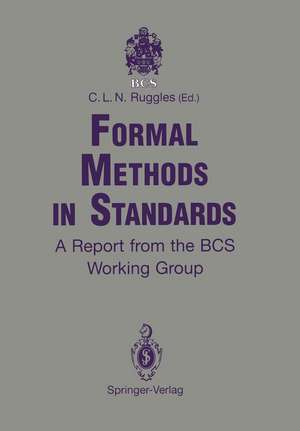
Formal Methods in Standards: A Report from the BCS Working Group
Editat de Clive L.N. Ruggles Contribuţii de Derek Andrews, David Blyth, Cornelia Boldyreff, David Duce, Patrick Hall, Robert Neely, Clive Ruggles, Nik Tetteh-Lartey, Rick Thomas, Ann Wrightsonen Limba Engleză Paperback – 29 iul 1990
Preț: 313.87 lei
Preț vechi: 392.34 lei
-20%
Puncte Express: 471
Carte tipărită la comandă
Livrare economică 21 noiembrie-05 decembrie
Livrare prin curier în România Termenul estimat este afișat lângă disponibilitate.
Transport gratuit de la 400.00 lei Plată online sau ramburs, în funcție de opțiunile comenzii.
Retur gratuit în 14 zile Comandă securizată și suport în română.
Specificații
ISBN-13: 9783540195771
ISBN-10: 3540195777
Pagini: 148
Ilustrații: XI, 135 p.
Dimensiuni: 170 x 244 x 8 mm
Greutate: 0.25 kg
Ediția:Softcover reprint of the original 1st ed. 1990
Editura: SPRINGER LONDON
Colecția Springer
Locul publicării:London, United Kingdom
ISBN-10: 3540195777
Pagini: 148
Ilustrații: XI, 135 p.
Dimensiuni: 170 x 244 x 8 mm
Greutate: 0.25 kg
Ediția:Softcover reprint of the original 1st ed. 1990
Editura: SPRINGER LONDON
Colecția Springer
Locul publicării:London, United Kingdom
V-ar putea interesa
-
 Usability EngineeringXris Faulkner-20%Preț: 429.19 lei536.49 lei
 -
 Software Engineering EducationNorman E. Gibbs-20%Preț: 323.39 lei404.23 lei
 -
 Software Engineering EducationLionel E. Deimel-20%Preț: 315.82 lei394.77 lei
 -
 The Elements of UML 2.0 StyleScott W. Ambler-20%Preț: 185.17 lei231.46 lei
 -
 The Pirate Ship, and Other PoemsDavid BlythPreț: 131.89 lei
 -
 -20%Preț: 336.01 lei420.01 lei
 -
 Introduction to ChoreographiesFabrizio Montesi-20%Preț: 378.13 lei472.66 lei
 -
 Rising WatersRick ThomasPreț: 53.71 lei
 -
 Whiteout!Rick ThomasPreț: 53.27 lei
 -
 South PasadenaRick ThomasPreț: 182.60 lei
 -
 South Pasadena's Ostrich FarmRick ThomasPreț: 182.60 lei
 -
 Arroyo SecoRick ThomasPreț: 174.94 lei
 -
 South Pasadena's Raymond HotelRick ThomasPreț: 182.60 lei
 -
 Development of Safety-Critical SystemsGopinath Karmakar-20%Preț: 491.43 lei614.29 lei
 -
 An Introduction to Software DesignChenglie Hu-20%Preț: 392.94 lei491.18 lei
 -
 Agile Processes in Software Engineering and Extreme ProgrammingChristoph J. Stettina-20%Preț: 301.59 lei376.99 lei
 -
 The French School of ProgrammingBertrand Meyer-20%Preț: 1242.29 lei1552.86 lei
 -
 Formal Methods for Industrial ApplicationsJean-Raymond Abrial-20%Preț: 635.35 lei794.19 lei
 -
 Software-Entwicklung für Ingenieure und IngenieurinnenNorbert Drescher-20%Preț: 345.52 lei431.90 lei
 -
 The Ignite ProjectNiyousha Raeesinejad-20%Preț: 304.07 lei380.10 lei
 -
 SOFTWARE MAINTENANCE (SECOND ED)Grubb Penny-20%Preț: 463.58 lei579.48 lei
 -
 Intelligent Software Defect PredictionXiao-Yuan Jing-20%Preț: 1164.21 lei1455.27 lei
Public țintă
ResearchDescriere
3. 1 What are formal methods? . . . . . . . . . . . . . . . . . . . . . . . . . . . . . . . . . . . . . . . . . . . . . . . . . . . . . . . . . 17 3. 2 A survey of formal methods . . . . . . . . . . . . . . . . . . . . . . . . . . . . . . . . . . . . . . . . . . . . . . . . . . . . . . . 18 3. 2. 1 FDTs and FSLs for sequential software . . . . . . . . . . . . . . . . . . . . . . . . . . . . . . 18 3. 2. 1. 1 VDM (Vienna Development Method). . . . . . . . . . . . . . . . . . . . . 19 3. 2. 1. 2 Z. . . . . . . . . . . . . . . . . . . . . . . . . . . . . . . . . . . . . . . . . . . . . . . . . . . . . . . . . . . . . . . . . . . . . . . 20 3. 2. 1. 3 me too . . . . . . . . . . . . . . . . . . . . . . . . . . . . . . . . . . . . . . . . . . . . . . . . . . . . . . . . . . . . . . . 20 3. 2. 1. 4 HOS and AXES. . . . . . . . . . . . . . . . . . . . . . . . . . . . . . . . . . . . . . . . . . . . . . . . . . . 20 3. 2. 1. 5 Gist. . . . . . . . . . . . . . . . . . . . . . . . . . . . . . . . . . . . . . . . . . . . . . . . . . . . . . . . . . . . . . . . . . . 20 3. 2. 1. 6 Clear . . . . . . . . . . . . . . . . . . . . . . . . . . . . . . . . . . . . . . . . . . . . . . . . . . . . . . . . . . . . . . . . . 21 3. 2. 1. 7 OBJ. . . . . . . . . . . . . . . . . . . . . . . . . . . . . . . . . . . . . . . . . . . . . . . . . . . . . . . . . . . . . . . . . . . 21 3. 2. 1. 8 ACT ONE and ACT TWO. . . . . . . . . . . . . . . . . . . . . . . . . . . . . . . . . . . . 21 3. 2. 1. 9 CIP-L. . . . . . . . . . . . . . . . . . . . . . . . . . . . . . . . . . . . . . . . . . . . . . . . . . . . . . . . . . . . . . . . 21 3. 2. 1. 10 LPG. . . . . . . . . . . . . . . . . . . . . . . . . . . . . . . . . . . . . . . . . . . . . . . . . . . . . . . . . . . . . . . . 21 3. 2. 1. 11 Larch. . . . . . . . . . . . . . . . . . . . . . . . . . . . . . . . . . . . . . . . . . . . . . . . . . . . . . . . . . . . . . 21 3. 2. 1. 12 Logic languages-the Prolog family. . . . . . . . . . . . . . . . . . . 22 3. 2. 1. 13 Functional languages. . . . . . . . . . . . . . . . . . . . . . . . . . . . . . . . . . . . . . . . . 22 3. 2. 2 FDTs and FSLs for concurrent software. . . . . . . . . . . . . . . . . . . . . . . . . . . . . 22 3. 2. 2. 1 LOTOS. . . . . . . . . . . . . . . . . . . . . . . . . . . . . . . . . . . . . . . . . . . . . . . . . . . . . . . . . . . . . . 23 3. 2. 2. 2 Estelle. . . . . . . . . . . . . . . . . . . . . . . . . . . . . . . . . . . . . . . . . . . . . . . . . . . . . . . . . . . . . . . 24 3. 2. 2. 3 SDL. . . . . . . . . . . . . . . . . . . . . . . . . . . . . . . . . . . . . . . . . . . . . . . . . . . . . . . . . . . . . . . . . . 24 3. 2. 2. 4 ASN. l . . . . . . . . . . . . . . . . . . . . . . . . . . . . . . . . . . . . . . . . . . . . . . . . . . . . . . . . . . . . . . . 24 3. 2. 2. 5 TTCN. . . . . . . . . . . . . . . . . . . . . . . . . . . . . . . . . . . . . . . . . . . . . . . . . . . . . . . . . . . . . . . . 25 3. 2. 2. 6 Gypsy. . . . . . . . . . . . . . . . . . . . . . . . . . . . . . . . . . . . . . . . . . . . . . . . . . . . . . . . . . . . . . . . 25 3. 2. 3 Graphical formalisms . . . . . . . . . . . . . . . . . . . . . . . . . . . . . . . . . . . . . . . . . . . . . . . . . . . . . . 25 3. 2. 3. 1 Petri nets. . . . . . . . . . . . . . . . . . . . . . . . . . . . . . . . . . . . . . . . . . . . . . . . . . . . . . . . . . . . 25 3. 2. 3. 2 Higraphs . . . . . . . . . . . . . . . . . . . . . . . . . . . . . . . . . . . . . . . . . . . . . . . . . . . . . . . . . . . . 25 3. 2. 4 Less formal methods and notations . . . . . . . . . . . . . . . . . . . . . . . . . . . . . . . . . . . . 26 3. 2. 4. 1 SADT. . . . . . . . . . . . . . . . . . . . . . . . . . . . . . . . . . . . . . . . . . . . . . . . . . . . . . . . . . . . . . . . 26 3. 2. 4. 2 Structured Design . . . . . . . . . . . . . . . . . . . . . . . . . . . . . . . . . . . . . . . . . . . . . . . 26 3. 2. 4. 3 SSADM and LSDM . . . . . . . . . . . . . . . . . . . . . . . . . . . . . . . . . . . . . . . . . . . . . 26 3. 2. 4. 4 JSPandJSD. . . . . . . . . . . . . . . . . . . . . . . . . . . . . . . . . . . . . . . . . . . . . . . . . . . . . . . . 26 3. 2. 4. 5 HDM and the SPECIAL language . . . . . . . . . . . . . . . . . . . . . . . . . . 27 3. 2. 4. 6 Structured analysis and design of real-time systems. . 27 3. 3 Support tools for FDTs. . . . . . . . . . . . . . . . . . . . . . . . . . . . . . . . . . . . . . . . . . . . . . . . . . . . . . . . . . . . . .
Cuprins
1 The Formal Methods in Standards Working Group.- 1.1 Terms of reference.- 1.2 Constitution.- 1.3 Modus operandi.- 1.4 Membership.- 2 Standards: the Background.- 2.1 What is a standard?.- 2.1.1 Concepts.- 2.1.2 Why standardise?.- 2.1.3 Principles of standardisation.- 2.1.4 Problems.- 2.2 The standards-making structure.- 2.2.1 The protagonists.- 2.2.1.1 Overview.- 2.2.1.2 Formative committees.- 2.2.1.3 ISO.- 2.2.2 The ISO/IEC Joint Technical Committee on Information Technology.- 2.3 The standards development process.- 2.3.1 International standards generation: an overview.- 2.3.1.1 Identification of user requirements.- 2.3.1.2 Advancement of user requirements.- 2.3.1.3 Development and review.- 2.3.2 An analogy with the software development process.- 2.4 The quality of standards.- 2.4.1 Failure to serve a useful purpose.- 2.4.2 Difficulty of use.- 2.4.3 Incompatibility with other standards.- 2.4.4 Difficulty of maintenance.- 2.4.5 Malfunction.- 3 Formal Methods: the Background.- 3.1 What are formal methods?.- 3.2 A survey of formal methods.- 3.2.1 FDTs and FSLs for sequential software.- 3.2.1.1 VDM (Vienna Development Method).- 3.2.1.2 Z.- 3.2.1.3 me too.- 3.2.1.4 HOS and AXES.- 3.2.1.5 Gist.- 3.2.1.6 Clear.- 3.2.1.7 OBJ.- 3.2.1.8 ACT ONE and ACT TWO.- 3.2.1.9 CIP-L.- 3.2.1.10 LPG.- 3.2.1.11 Larch.- 3.2.1.12 Logic languages-the Prolog family.- 3.2.1.13 Functional languages.- 3.2.2 FDTs and FSLs for concurrent software.- 3.2.2.1 LOTOS.- 3.2.2.2 Estelle.- 3.2.2.3 SDL.- 3.2.2.4 ASN.1.- 3.2.2.5 TTCN.- 3.2.2.6 Gypsy.- 3.2.3 Graphical formalisms.- 3.2.3.1 Petri nets.- 3.2.3.2 Higraphs.- 3.2.4 Less formal methods and notations.- 3.2.4.1 SADT.- 3.2.4.2 Structured Design.- 3.2.4.3 SSADM and LSDM.- 3.2.4.4 JSP and JSD.- 3.2.4.5 HDM and the SPECIAL language.- 3.2.4.6 Structured analysis and design of real-time systems.- 3.3 Support tools for FDTs.- 3.3.1 Introduction.- 3.3.2 The nature of FDT tools.- 3.3.3 Validation and verification tools.- 3.3.4 Tool environments.- 3.4 A survey of methods and tools: the STARTS guide.- 4 Formal Methods in Standards: Four Case Studies.- 4.1 Introduction.- 4.2 Programming languages.- 4.2.1 Overview.- 4.2.2 The denotational approach to the formal definition of a programming language.- 4.2.3 Formal definitions of real languages.- 4.2.4 Discussion.- 4.3 Document structure.- 4.3.1 The Standard Generalised Markup Language (SGML).- 4.3.1.1 What is SGML?.- 4.3.1.2 The development of SGML.- 4.3.1.3 Discussion.- 4.3.2 Office Document Architecture (ODA).- 4.3.2.1 What is ODA9.- 4.3.2.2 FODA.- 4.3.2.3 History and development of FODA.- 4.3.2.4 Definition and uses of FODA.- 4.3.2.5 Developments in formalising ODA.- 4.3.2.6 Conclusions.- 4.4 Graphics.- 4.4.1 Introduction.- 4.4.2 Standards for computer graphics.- 4.4.3 Applications of formal specification to computer graphics.- 4.4.3.1 Early work.- 4.4.3.2 Specification of standards for computer graphics.- 4.4.3.3 Applications to GKS.- 4.4.4 Future developments.- 4.5 Open systems interconnection.- 4.5.1 Formal methods in computer communication standards.- 4.5.1.1 Introduction.- 4.5.1.2 Historical background.- 4.5.1.3 The current situation.- 4.5.1.4 An example: multiplexing.- 4.5.1.5 Limitations and prospects.- 4.5.2 OSI Protocol Conformance Testing.- 4.5.2.1 The ISO method of conformance test (derivation and) specification.- 4.5.2.2 Tree and Tabular Combined Notation (TTCN).- 4.5.2.3 Conformance testing of FTAM in the CTS-WAN project.- 4.5.2.4 Conclusion.- 5 Current Practice: Issues and Guidelines.- 5.1 Introduction.- 5.2 Quality and correctness.- 5.3 Phased introduction of formal methods.- 5.4 Parallel and retrospective application of formal methods.- 5.5 Choice of formal notation.- 5.6 Tools.- 5.7 General conclusions.- Bibliography of standards.- General bibliography.- Appendix A.- List of Acronyms.- Appendix B.- Glossary of Formal Methods Terminology.