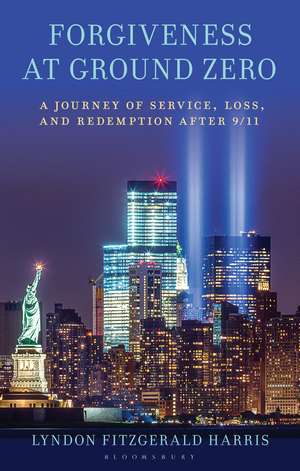
Forgiveness at Ground Zero: A Journey of Service, Loss, and Redemption after 9/11
Autor Lyndon Fitzgerald Harrisen Limba Engleză Hardback – 23 iul 2026
For close to a year Harris led an extraordinary, volunteer-driven ministry that provided food, rest, prayer, and human connection to those laboring day and night on "the Pile." St. Paul's became known worldwide as "the little chapel that stood," a symbol of hope amid devastation.
But when the chapel closed in 2002, Harris's own life unraveled. Years of conflict and resistance within his church left him overwhelmed by anger, resentment, and a desire for retribution. He ultimately lost his faith, left New York, and entered a long, private struggle with grief and disillusionment.
This book is not only a firsthand account of one of 9/11's most enduring symbols, but a deeply personal story of what happens after the cameras leave. Harris traces his journey from idealistic small-town priest to Ground Zero leader, through spiritual collapse, and finally toward an unexpected healing grounded in forgiveness.
Drawing on pioneering research developed with Stanford psychologist Dr. Frederic Luskin, cofounder of the Forgiveness Project, Harris explores forgiveness not as "forgive and forget," but as a rigorous, transformative practice essential for recovery after trauma. His story speaks to first responders, faith leaders, and anyone carrying unresolved pain-offering rare insight into the emotional cost of service, the limits of institutional faith, and the resilience required to truly move forward.
Preț: 187.66 lei
Preț vechi: 221.35 lei
-15% Nou
Puncte Express: 281
Carte disponibilă
Livrare economică 09-23 noiembrie
Livrare express 23-29 octombrie pentru 69.75 lei
Livrare prin curier în România Termenul estimat este afișat lângă disponibilitate.
Transport gratuit de la 400.00 lei Plată online sau ramburs, în funcție de opțiunile comenzii.
Retur gratuit în 14 zile Comandă securizată și suport în română.
Specificații
ISBN-13: 9798216279006
Pagini: 288
Ilustrații: 14 b&w images
Dimensiuni: 160 x 230 x 20 mm
Greutate: 0.52 kg
Editura: Bloomsbury Publishing
Colecția Bloomsbury Academic
Locul publicării:New York, United States
Pagini: 288
Ilustrații: 14 b&w images
Dimensiuni: 160 x 230 x 20 mm
Greutate: 0.52 kg
Editura: Bloomsbury Publishing
Colecția Bloomsbury Academic
Locul publicării:New York, United States
Cuprins
Foreword by Dr. Frederic Luskin
Author's Note
Prologue: New York City: A Love Story
1. My Dream Job
2. Ash Tuesday
3. We Showed Up
4. Radical Hospitality
5. Unlocking Anger (and Throwing Away the Key)
6. The Grievance Begins
7. Indulging the Revenge Fantasy
8. The Last Day (Unenforceable Rules)
9. Museum or Mission?
10. Compounding Traumas
11. "Ain't It Awful" Ain't Helping
12. Painful Acknowledgment
13. Will the Tears Stop?
14. Seen from the Start
15. To the End of the World (and Back)
16. It All Belongs
Epilogue: Re-membering
Acknowledgements
Appendix: A Brief History of St. Paul's Chapel
Notes
Index
Author's Note
Prologue: New York City: A Love Story
1. My Dream Job
2. Ash Tuesday
3. We Showed Up
4. Radical Hospitality
5. Unlocking Anger (and Throwing Away the Key)
6. The Grievance Begins
7. Indulging the Revenge Fantasy
8. The Last Day (Unenforceable Rules)
9. Museum or Mission?
10. Compounding Traumas
11. "Ain't It Awful" Ain't Helping
12. Painful Acknowledgment
13. Will the Tears Stop?
14. Seen from the Start
15. To the End of the World (and Back)
16. It All Belongs
Epilogue: Re-membering
Acknowledgements
Appendix: A Brief History of St. Paul's Chapel
Notes
Index
Recenzii
An affecting memoir about moving beyond blame.
I know this book will touch you and help you because that's what it did for me. It repeatedly surprised me with its wisdom, honesty, tenderness, and insight ... all flowing from a real and relatable story. If you've ever been pushed around, shoved aside, put down, or let down by people you trusted, this book will help you feel your grief without falling into grievance, so you can keep moving forward.
This powerful and unflinching memoir explores forgiveness not as a lofty ideal, but as a hard-won act of survival. After losing his ministry, a broken-hearted priest without status or peace of mind, embarks on a long and arduous journey of self-discovery. What begins as a story of grief, anger, and spiritual crisis becomes a powerful redemptive narrative of hope, healing and finding meaning. For anyone stranded in the wilderness of loss, Forgiveness at Ground Zero offers a creative map beyond blame and isolation. Grounded in the understanding that forgiveness is making peace with what we cannot change, this book illuminates the profound, transformative power of forgiveness and conveys a vital message for us all.
This book tells a monumental and deeply human story of trauma, reckoning, and transformation. With honesty and emotional precision, Lyndon Harris guides readers through every stage of an extraordinary journey-from the raw pull of revenge fantasies to the difficult, illuminating work of confronting them. His reflections on revenge, radical hospitality, and moral struggle are riveting and unsparing, revealing not only what he endured, but who he became in the process. Each chapter builds with clarity and courage, offering an intimate portrait of a person willing to look unflinchingly at his own darkness in order to find something truer on the other side.
What emerges is a powerful meditation on forgiveness-not as denial, weakness, or betrayal, but as a radical, life-altering act that refuses to let violence define the future. There is a sense of destiny woven throughout the narrative, as Harris comes to see how meaning, growth, and transformation were present from the very beginning, even in the worst moments. Challenging common assumptions about what is "unforgivable," this book invites readers to reconsider what forgiveness truly is, what it demands, and what it can make possible. It is a courageous, inspiring memoir that has the power to change how we understand suffering, grace, and the possibility of becoming someone new.
I have been involved in the science and teaching of forgiveness for over 25 years. In that time, I have met what seems like hundreds of people doing forgiveness work. What is truly incredible about Lyndon Harris' story is that his past pain and suffering is the present driving source of continued daily forgiveness, growth, and transformation. He tells his story with compassion, caring, and softness that will register with readers on many levels and shed light on a topic that is so often misconstrued and misunderstood. Follow the path of Lyndon Harris' story and you will find the substance of how you can move from broken to better. If only we could all find the healing of forgiveness the way Lyndon Harris has. My hope is that readers will follow his lead.
An interesting memoir.
Forgiveness at Ground Zero is a fabulous book for any reader who has an interest in the science of forgiveness, and who is equally engaged with forgiveness as a part of our existential journeys. I first met Rev. Lyndon F. Harris on the very grounds of St. Paul's Chapel, which miraculously survived the destruction of 9-11 as the World Trade Center Towers collapsed quite literally at the Chapel's back door. It was a few days after the towers fell. He was busy pastoring the many firefighters, police, and other rescuers whose meals were prepared by volunteers from all over the US and who slept exhausted in the pews. I remember his tremendous passion for this unexpected ministry. I honor him to this day for the work of pure love that he performed in prayer and resilience.
Essential reading for those of us (most of us) who harbor memories of slights and hurts, betrayals and more that can fester for a lifetime, if we don't find ways to transform what lurks as the shadows in our lives into what Lyndon Harris describes as "the sunlight of positive energy." Informative, inspiring and highly readable, this unique memoir offers a roadmap to recovery, as we "walk our path, free of darkness, illuminated by the light of truth.
Lyndon Harris speaks of a church that empties itself for the sake of the good. That is exactly what he has done with his life, and with this book. It is a rare example of someone saying something new (yet also, of course, something very ancient) about the horror and aftermath of the events of 9/11. Forgiveness at Ground Zero is not sentimental nor ideological. It is, quite simply, wisdom. This book is an act of prophetic generosity that calls forth compassion for all who suffer and points the way to help all of us build a world in which violence and senseless war are transformed into creative ways of dealing with difference, protecting the vulnerable, and elevating life itself.
This is literally a book for everyone, for who among us has not struggled with either the need for or the capacity to offer forgiveness? The truths that Lyndon opens up for the reader are forged out of his own soul-deep pain and soul-cleansing updrafts of grace. I have marveled at Lyndon's passionate sense of servanthood since he came to be my partner in ministry as a new priest and I have remained his close friend and colleague for 35 years. I have shared his many joys and sorrows. His characteristic humility and courage shine through his words, yet he does not set himself as a paragon of virtue. In these pages he encourages all of us to embrace our brokenness as the gateway to the path toward reconciliation and release. The way forward is filled with hope as his personal pilgrimage incarnates. This book is his invitation to each of us to join him on the Way.
On September 14th, 2001, I walked through ankle-deep ash to assess the calamity at the World Trade Center. This time I was hoping to see my friend Lyndon Harris. I had been to The Pile twice before as bishop for chaplaincies since it was my task to organize clergy support to the recovery effort. St. Paul's Church was the only intact structure on the eastern perimeter of the site, and its vitality made for a path of relief to beleaguered recovery efforts.
On September 14th, 2001, Lyndon in conversation with Trinity's Vicar, John Howard, outlined a modest plan to serve in the aftermath of the 9/11 tragedy. Lyndon initially agreed but had an innate sense there was something more profound at play in these days. History and the needs of that Ground Zero community quickly outpaced those modest plans. Here was the scene of a brewing storm Lyndon had to navigate. But his steely motivation helped him follow through when a course was chosen. History took advantage of that character strength, but it also set him in a tenuous direction.
At each visit I made the sidewalks filled with more offerings of hope and restoration. There were stacks of sandwiches and plates of hot food, countless urns of coffee, other refreshment supplies, barbecue grills, counselling booths, musicians, places to sign up for a variety of volunteer efforts, massage tables, and pews for resting recovery workers.
This incredible firsthand account, and the price it exacted, unfolds in the pages of this memoir.
This courageous memoir tells a powerful story of redemption in the aftermath of 9/11, weaving together personal trauma, institutional failure, communal compassion, and hard-won healing. Set against the backdrop of New York City's disaster response-much of it flowing through St. Paul's Chapel under Lyndon Harris's leadership-the book reveals both the extraordinary generosity of human community and the profound limitations of religious systems when confronted with a fast-moving crisis. As Harris becomes a microcosm of a nation wounded by terror, anger, and grief, he is pulled under by the psychic undertow of trauma even as he helps others survive. What unfolds is a deeply human pilgrimage toward wholeness that encompasses forgiveness, grief work, trauma recovery, medical care, and the sustaining power of community. At its heart, this is both an instructional guide to trauma healing and an intimate love story-most notably the sustaining bond between Lyndon and his wife, Maria-offering readers a hopeful testament to resilience, connection, and the possibility of renewal after catastrophe.
Harris's book is not only a historical testimony to the boots-on-the-ground ministry that became St. Paul's Chapel under his brave and determined leadership, but also a story of personal and spiritual survival in the face of overwhelming obstacles-and staggering disappointment. With unblinking honesty, he shares the anger and despair that held his spirit hostage for years. In doing so, he gently offers a way forward for others who are hurting. The path may not be easy, but Harris is a seasoned and trustworthy guide lighting the way towards forgiveness and love.
A profoundly moving and inspirational story that takes us to the heart of what forgiveness really means. One can only have deep respect for a man who can openly show us his vulnerability in the face of incredible difficulties. Lyndon's honesty and courage describe the depth of his emotional journey. Through his struggles and the wisdom he has personally gained, we begin to understand the transformative power only forgiveness can bring. We will all get a bit wiser from reading this heart-warming story, which will definitely capture your heart and your soul.
I know this book will touch you and help you because that's what it did for me. It repeatedly surprised me with its wisdom, honesty, tenderness, and insight ... all flowing from a real and relatable story. If you've ever been pushed around, shoved aside, put down, or let down by people you trusted, this book will help you feel your grief without falling into grievance, so you can keep moving forward.
This powerful and unflinching memoir explores forgiveness not as a lofty ideal, but as a hard-won act of survival. After losing his ministry, a broken-hearted priest without status or peace of mind, embarks on a long and arduous journey of self-discovery. What begins as a story of grief, anger, and spiritual crisis becomes a powerful redemptive narrative of hope, healing and finding meaning. For anyone stranded in the wilderness of loss, Forgiveness at Ground Zero offers a creative map beyond blame and isolation. Grounded in the understanding that forgiveness is making peace with what we cannot change, this book illuminates the profound, transformative power of forgiveness and conveys a vital message for us all.
This book tells a monumental and deeply human story of trauma, reckoning, and transformation. With honesty and emotional precision, Lyndon Harris guides readers through every stage of an extraordinary journey-from the raw pull of revenge fantasies to the difficult, illuminating work of confronting them. His reflections on revenge, radical hospitality, and moral struggle are riveting and unsparing, revealing not only what he endured, but who he became in the process. Each chapter builds with clarity and courage, offering an intimate portrait of a person willing to look unflinchingly at his own darkness in order to find something truer on the other side.
What emerges is a powerful meditation on forgiveness-not as denial, weakness, or betrayal, but as a radical, life-altering act that refuses to let violence define the future. There is a sense of destiny woven throughout the narrative, as Harris comes to see how meaning, growth, and transformation were present from the very beginning, even in the worst moments. Challenging common assumptions about what is "unforgivable," this book invites readers to reconsider what forgiveness truly is, what it demands, and what it can make possible. It is a courageous, inspiring memoir that has the power to change how we understand suffering, grace, and the possibility of becoming someone new.
I have been involved in the science and teaching of forgiveness for over 25 years. In that time, I have met what seems like hundreds of people doing forgiveness work. What is truly incredible about Lyndon Harris' story is that his past pain and suffering is the present driving source of continued daily forgiveness, growth, and transformation. He tells his story with compassion, caring, and softness that will register with readers on many levels and shed light on a topic that is so often misconstrued and misunderstood. Follow the path of Lyndon Harris' story and you will find the substance of how you can move from broken to better. If only we could all find the healing of forgiveness the way Lyndon Harris has. My hope is that readers will follow his lead.
An interesting memoir.
Forgiveness at Ground Zero is a fabulous book for any reader who has an interest in the science of forgiveness, and who is equally engaged with forgiveness as a part of our existential journeys. I first met Rev. Lyndon F. Harris on the very grounds of St. Paul's Chapel, which miraculously survived the destruction of 9-11 as the World Trade Center Towers collapsed quite literally at the Chapel's back door. It was a few days after the towers fell. He was busy pastoring the many firefighters, police, and other rescuers whose meals were prepared by volunteers from all over the US and who slept exhausted in the pews. I remember his tremendous passion for this unexpected ministry. I honor him to this day for the work of pure love that he performed in prayer and resilience.
Essential reading for those of us (most of us) who harbor memories of slights and hurts, betrayals and more that can fester for a lifetime, if we don't find ways to transform what lurks as the shadows in our lives into what Lyndon Harris describes as "the sunlight of positive energy." Informative, inspiring and highly readable, this unique memoir offers a roadmap to recovery, as we "walk our path, free of darkness, illuminated by the light of truth.
Lyndon Harris speaks of a church that empties itself for the sake of the good. That is exactly what he has done with his life, and with this book. It is a rare example of someone saying something new (yet also, of course, something very ancient) about the horror and aftermath of the events of 9/11. Forgiveness at Ground Zero is not sentimental nor ideological. It is, quite simply, wisdom. This book is an act of prophetic generosity that calls forth compassion for all who suffer and points the way to help all of us build a world in which violence and senseless war are transformed into creative ways of dealing with difference, protecting the vulnerable, and elevating life itself.
This is literally a book for everyone, for who among us has not struggled with either the need for or the capacity to offer forgiveness? The truths that Lyndon opens up for the reader are forged out of his own soul-deep pain and soul-cleansing updrafts of grace. I have marveled at Lyndon's passionate sense of servanthood since he came to be my partner in ministry as a new priest and I have remained his close friend and colleague for 35 years. I have shared his many joys and sorrows. His characteristic humility and courage shine through his words, yet he does not set himself as a paragon of virtue. In these pages he encourages all of us to embrace our brokenness as the gateway to the path toward reconciliation and release. The way forward is filled with hope as his personal pilgrimage incarnates. This book is his invitation to each of us to join him on the Way.
On September 14th, 2001, I walked through ankle-deep ash to assess the calamity at the World Trade Center. This time I was hoping to see my friend Lyndon Harris. I had been to The Pile twice before as bishop for chaplaincies since it was my task to organize clergy support to the recovery effort. St. Paul's Church was the only intact structure on the eastern perimeter of the site, and its vitality made for a path of relief to beleaguered recovery efforts.
On September 14th, 2001, Lyndon in conversation with Trinity's Vicar, John Howard, outlined a modest plan to serve in the aftermath of the 9/11 tragedy. Lyndon initially agreed but had an innate sense there was something more profound at play in these days. History and the needs of that Ground Zero community quickly outpaced those modest plans. Here was the scene of a brewing storm Lyndon had to navigate. But his steely motivation helped him follow through when a course was chosen. History took advantage of that character strength, but it also set him in a tenuous direction.
At each visit I made the sidewalks filled with more offerings of hope and restoration. There were stacks of sandwiches and plates of hot food, countless urns of coffee, other refreshment supplies, barbecue grills, counselling booths, musicians, places to sign up for a variety of volunteer efforts, massage tables, and pews for resting recovery workers.
This incredible firsthand account, and the price it exacted, unfolds in the pages of this memoir.
This courageous memoir tells a powerful story of redemption in the aftermath of 9/11, weaving together personal trauma, institutional failure, communal compassion, and hard-won healing. Set against the backdrop of New York City's disaster response-much of it flowing through St. Paul's Chapel under Lyndon Harris's leadership-the book reveals both the extraordinary generosity of human community and the profound limitations of religious systems when confronted with a fast-moving crisis. As Harris becomes a microcosm of a nation wounded by terror, anger, and grief, he is pulled under by the psychic undertow of trauma even as he helps others survive. What unfolds is a deeply human pilgrimage toward wholeness that encompasses forgiveness, grief work, trauma recovery, medical care, and the sustaining power of community. At its heart, this is both an instructional guide to trauma healing and an intimate love story-most notably the sustaining bond between Lyndon and his wife, Maria-offering readers a hopeful testament to resilience, connection, and the possibility of renewal after catastrophe.
Harris's book is not only a historical testimony to the boots-on-the-ground ministry that became St. Paul's Chapel under his brave and determined leadership, but also a story of personal and spiritual survival in the face of overwhelming obstacles-and staggering disappointment. With unblinking honesty, he shares the anger and despair that held his spirit hostage for years. In doing so, he gently offers a way forward for others who are hurting. The path may not be easy, but Harris is a seasoned and trustworthy guide lighting the way towards forgiveness and love.
A profoundly moving and inspirational story that takes us to the heart of what forgiveness really means. One can only have deep respect for a man who can openly show us his vulnerability in the face of incredible difficulties. Lyndon's honesty and courage describe the depth of his emotional journey. Through his struggles and the wisdom he has personally gained, we begin to understand the transformative power only forgiveness can bring. We will all get a bit wiser from reading this heart-warming story, which will definitely capture your heart and your soul.