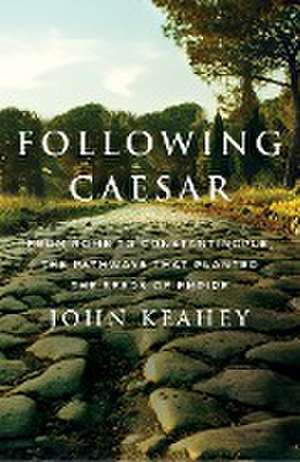
Following Caesar
Autor John Keaheyen Limba Engleză Hardback – 15 ian 2024
În cadrul programelor de studii dedicate istoriei antice și arheologiei mediteraneene, studiul infrastructurii romane ocupă un loc central, fiind coloana vertebrală a expansiunii imperiale. Notăm cu interes modul în care Following Caesar reușește să transforme acest subiect academic într-o narațiune de călătorie vibrantă. Volumul nu se limitează la o simplă trecere în revistă a pietrelor de hotar, ci propune o reconstituire a experienței umane pe parcursul a trei artere fundamentale: Via Appia, Via Egnatia și Via Traiana.
Suntem de părere că forța acestei lucrări rezidă în capacitatea lui John Keahey de a suprapune harta politică a prezentului peste cea a antichității. De la ambițiile politice ale tânărului Caesar, care s-a îndatorat pentru a restaura Via Appia în scopuri electorale, până la pelerinii medievali și turiștii de astăzi, drumul este prezentat ca un organism viu. Cititorii familiarizați cu All Roads Lead to Rome de Charles River Editors vor aprecia în acest volum trecerea de la analiza tehnică și militară la o abordare mult mai personală, care integrează peisajul actual al celor șase țări parcurse între Roma și Istanbul.
În contextul operei sale, Following Caesar continuă explorarea spațiului italian începută în Seeking Sicily sau Hidden Tuscany. Dacă în lucrările anterioare accentul cădea pe specificul regional, aici John Keahey adoptă o perspectivă panoramică, legând destinele unor figuri precum Cicero, Virgiliu sau Apostolul Pavel de geografia concretă a drumului. Este o lucrare de istorie aplicată care demonstrează cum vechile rute comerciale și militare au modelat fundamentul cultural al Europei moderne.
Preț: 164.00 lei
Carte disponibilă
Livrare economică 05-19 noiembrie
Livrare express 21-27 octombrie pentru 45.68 lei
Specificații
ISBN-10: 1250792401
Pagini: 256
Dimensiuni: 141 x 214 x 29 mm
Greutate: 0.39 kg
Editura: St. Martin's Press
De ce să citești această carte
Recomandăm această carte pasionaților de istorie și călătorii care doresc să înțeleagă logistica Imperiului Roman dincolo de hărțile statice. Cititorul câștigă o perspectivă rară asupra modului în care drumurile antice supraviețuiesc sub autostrăzile moderne. Este o lectură esențială pentru a înțelege cum infrastructura a facilitat nu doar mișcările de trupe, ci și răspândirea creștinismului și a culturii clasice în bazinul mediteraneean.
Despre autor
John Keahey este un jurnalist veteran cu o carieră de peste patruzeci și cinci de ani, dintre care două decenii petrecute ca reporter și editor la „The Salt Lake Tribune”. Licențiat în istorie la University of Utah, Keahey și-a dedicat o mare parte din activitatea sa literară explorării Italiei. Expertiza sa în combinarea cercetării istorice cu reportajul de teren este evidentă în lucrări precum Seeking Sicily și Hidden Tuscany. Pasiunea sa pentru spațiul mediteraneean și rigoarea jurnalistică se reflectă în modul documentat în care abordează vestigiile lumii romane.
Descriere scurtă
In 66 BC, young, almost unknown but ambitious Julius Caesar, seeking recognition and authority, became the curator of the Via Appia. He borrowed significant sums to restore the ancient highway. It was a way to gain crucial electoral votes from Roman citizens in towns and villages along the route, built from Rome to Brindisi between 312-191 B.C. He succeeded and rapidly grew in popularity, supported by grateful villagers along the route. After achieving greatness in Rome and the far reaches of Gaul, he led armies along this road to battle enemies in Roman civil wars. And then, across the Adriatic Sea, he joined Via Appia's sister road, the Via Egnatia that began in today's Albania. Other armies followed these two roads that eventually connected Rome to Byzantium, today's Istanbul. Octavian, who became, in 27 B.C., Rome's first emperor and his friend and later enemy Mark Antony traveled portions of both roads to defeat Caesar's murderers Brutus and Cassius at Philippi in eastern Macedonia. The great Roman statesman Cicero, the Roman poet Homer, the historian Virgil and many other notables traveled along one or both of these roads. In the first century of the Roman Empire in the earliest years of Christianity, the apostles Peter and Paul traversed portions of them, eventually meeting their deaths in Rome. Pilgrims, seeking salvation in far away Jerusalem, followed them as well throughout much of the Middle Ages. In the late first century A.D., the emperor Trajan charted a new coastal route between Benevento and Brindisi, later called the Via Traiana, bypassing the deteriorating final section of the Via Appia.
Today, short stretches of the original three roads can be seen in the ruins of ancient Roman cities, now preserved as archaeological wonders, and through the countryside near, and sometimes under, modern highways named for their predecessors. Following those routes -- in some places the hidden ancient roads had to be guessed at -- is the purpose of following the path that Caesar and so many others took over the early centuries. Modern eyes, seeing through the mists of more than two thousand years of history, lead the traveler along these three roads coursing through six countries between Rome and Istanbul. It is a journey full of adventure, discovery, and friendship, one worth taking.