Cantitate/Preț
Produs

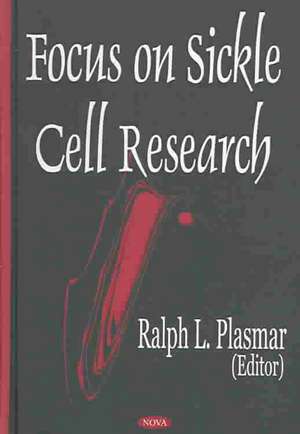
Focus on Sickle Cell Research

Editat de Ralph L Plasmar
en Limba Engleză Paperback – 14 oct 2004

Notăm cu interes apariția volumului Focus on Sickle Cell Research, o resursă clinică ce vine să completeze tabloul patologic al anemiei falciforme. Clinicienii care folosesc New Developments in Sickle Cell Disease Research de P D O'Malley ca referință vor găsi aici o aprofundare necesară a complicațiilor sistemice, dincolo de mecanismele de bază ale hemoglobinei defectuoase. În timp ce lucrările standard se concentrează adesea pe genetica bolii, volumul editat de Ralph L Plasmar face trecerea spre managementul complicațiilor de organ și noile frontiere terapeutice.

Reținem organizarea riguroasă a conținutului, care progresează de la metabolismul proteic și energetic către manifestările clinice critice. O secțiune extinsă este dedicată neurologiei, analizând vasculopatia cerebrală și utilizarea tehnicilor de neurodiagnostic, precum Doppler-ul transcranian, pentru a proteja integritatea cerebrală a pacienților. Față de Management of Sickle Cell Pain, care se axează pe paliație, această lucrare investighează cauzele profunde ale crizelor, inclusiv legătura cu malaria și defectele țesutului elastic.

Credem că valoarea tehnică a cărții rezidă în abordarea multidisciplinară: de la cardiologie (performanța ventriculară la copii) până la oncologie (carcinomul medular renal, considerat a șaptea nefropatie a bolii). Stilul este unul clinic, dens în date, axat pe investigații de laborator și studii de hemoglobină, oferind perspective asupra canalelor IK ca țintă moleculară pentru prevenirea deshidratării eritrocitare. Este o lectură specializată care transformă înțelegerea teoretică a bolii în instrumente de monitorizare și intervenție pentru practica hematologică modernă.

Citește tot Restrânge

Preț: 72118 lei

Preț vechi: 102698 lei
-30%

Puncte Express: 1082

Carte disponibilă

Livrare economică 13-27 mai


Specificații

ISBN-13: 9781590339206
ISBN-10: 1590339207
Pagini: 249
Ilustrații: colour illus
Dimensiuni: 260 x 180 x 20 mm
Greutate: 0.74 kg
Editura: Nova Science Publishers Inc
Colecția Nova Science Publishers, Inc (US)
Locul publicării:United States

De ce să citești această carte

Această lucrare este esențială pentru hematologi și pediatri care gestionează cazuri complexe de anemie falciformă. Cititorul câștigă acces la cercetări de ultimă oră privind prevenția accidentului vascular cerebral și identificarea complicațiilor rare, precum carcinomul renal. Este un instrument de diagnostic avansat care depășește descrierea clasică a bolii, oferind soluții clinice pentru monitorizarea funcției cardiace și neurologice a pacienților.


Descriere

Sickle cell anaemia is an inherited blood disorder, characterised primarily by chronic anaemia and periodic episodes of pain and occurring in approximately 1 in every 400 African-American infants born in the United States each year. Individuals of Mediterranean, Arabian, Caribbean, South and Central American, and East Indian ancestry can also be affected. The underlying problem involves haemoglobin, a component of the red cells in the blood. The haemoglobin molecules in each red blood cell carry oxygen from the lungs to the body organs and tissues and bring back carbon dioxide to the lungs. In sickle cell anaemia, the haemoglobin is defective. After the haemoglobin molecules give up their oxygen, some of them may cluster together and form long, rod-like structures. These structures cause the red blood cells to become stiff and to assume a sickle shape. Unlike normal red cells, which are usually smooth and donut-shaped, the sickled red cells cannot squeeze through small blood vessels. Instead, they stack up and cause blockages that deprive the organs and tissue of oxygen-carrying blood. This process produces the periodic episodes of pain and ultimately can damage the tissues and vital organs and lead to other serious medical problems. Unlike normal red blood cells, which last about 120 days in the bloodstream, sickled red cells die after only about 10 to 20 days. Because they cannot be replaced fast enough, the blood is chronically short of red blood cells, a condition called anaemia. Sickle cell anaemia is caused by an error in the gene that tells the body how to make haemoglobin. The defective gene tells the body to make the abnormal haemoglobin that results in deformed red blood cells. This book gathers the latest research in this important field.

Cuprins

Contents: Preface; Energy and Protein Metabolism in Sickle Cell Disease: Evidence of Aberrations; Cerebral Vasculopathy in Sickle Cell Anaemia: Diagnosis, Therapeutic Clinical Trials and the Potential for Prevention; Stroke in Sickle Cell Anaemia; Stroke in Sickle Cell Disease; Sickle Cell Disease and Stroke: Using Transcranial Dopplers and Other Neurodiagnostics Tests to Protect the Brain; Sickle Cell Crisis and Malaria, The Band 3 Connection; Multiple Myeloma in Sickle Cell Syndromes; Sickle Cell Haemoglobinopathy and Sudden Death; Global Left Ventricular Performance in Sickle Cell Anemia During Childhood as Determined by Echocardiography; Sickle Cell Disease: Laboratory Investigations and Haemoglobin Study; Renal Medullary Carcinoma: The Seventh Sickle Cell Nephropathy; Sickle Cell Disease: Introducing a Distinct Elastic Tissue Defect Associated With Inherited Haemolytic Syndromes; IK Channels, A Molecular Target for Inhibition of Erythrocyte Dehydration in Sickle Cell Anaemia; Effect of G6PD Deficiency Upon Sickle Cell Anemia as Reflected By Erythrocytes Pyridine Nucleotide Redox Potential; Oral Health Status and Anthropometric Findings in Sickle Cell Disease; Index.