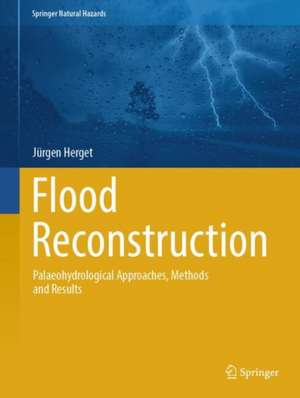
Flood Reconstruction: Springer Natural Hazards
Autor Jürgen Hergeten Limba Engleză Hardback – 23 oct 2024
Observăm modul în care volumul Flood Reconstruction abordează analiza dezastrelor naturale printr-o perspectivă interdisciplinară riguroasă, unind domenii conexe precum științele pământului, hidrologia, istoria și ingineria. Această sinteză este esențială pentru depășirea limitărilor înregistrărilor hidrometrice clasice, care rareori depășesc o sută de ani. Structura cărții ghidează cititorul de la fundamentele investigațiilor paleohidrologice și metodele de estimare a parametrilor, până la analiza inundațiilor din perioade istorice și preistorice. Cuprinsul indică o progresie logică clară, extinzându-se de la tipare de procese specifice inundațiilor de tip „outburst”, până la mega-inundațiile din perioada Pleistocenului și fenomenul de umplere a bazinelor oceanice în istoria Terrei. Această organizare sistematică face ca textul să fie perfect adaptat pentru includerea în curriculumul academic al facultăților de profil. În contextul operei autorului, această ediție din 2025 publicată de Springer în seria Springer Natural Hazards continuă și aprofundează tematicile fundamentale din lucrarea sa anterioară Geomorphologie, unde Jürgen Herget analiza formarea reliefului sub acțiunea apei. Aici, accentul se mută de la formele generale de relief la metodele concrete de reconstrucție a evenimentelor extreme. Cititorii familiarizați cu Palaeohydrology vor aprecia modul în care acest nou volum structurează informația special pentru începători, oferind instrumente metodologice clare și aproximativ 120 de ilustrații color care facilitează înțelegerea urmelor lăsate de sedimente și eroziune.
Din seria Springer Natural Hazards
- 15%
 Preț: 722.30 lei
 - 18%
 Preț: 1057.63 lei
 - 18%
 Preț: 998.68 lei
 - 20%
 Preț: 926.15 lei
 - 15%
 Preț: 670.48 lei
 - 18%
 Preț: 749.11 lei
 - 15%
 Preț: 663.45 lei
 - 15%
 Preț: 667.86 lei
 - 18%
 Preț: 951.45 lei
 - 18%
 Preț: 1279.95 lei
 - 18%
 Preț: 991.61 lei
 - 15%
 Preț: 661.49 lei
 - 18%
 Preț: 991.00 lei
 - 18%
 Preț: 754.91 lei
 - 15%
 Preț: 719.25 lei
 - 18%
 Preț: 1270.02 lei
 - 18%
 Preț: 1450.47 lei
 - 18%
 Preț: 1461.46 lei
 - 18%
 Preț: 756.82 lei
 - 15%
 Preț: 665.43 lei
 - 15%
 Preț: 710.19 lei
 - 24%
 Preț: 1205.84 lei
 - 18%
 Preț: 978.08 lei
 - 18%
 Preț: 1160.67 lei
Preț: 730.97 lei
Preț vechi: 859.96 lei
-15%
Carte disponibilă
Livrare economică 16-30 noiembrie
Specificații
ISBN-10: 3031668146
Pagini: 164
Ilustrații: Approx. 180 p. 120 illus. in color.
Dimensiuni: 215 x 285 x 15 mm
Greutate: 0.64 kg
Ediția:2025
Editura: Springer
Colecția Springer Natural Hazards
Seria Springer Natural Hazards
Locul publicării:Cham, Switzerland
V-ar putea interesa
-
 Forgotten ForestsJonathan MullardPreț: 158.37 lei
 -
 ApocalypseLizzie WadePreț: 143.12 lei
 -
 Silent CatastrophesW. G. SebaldPreț: 94.91 lei
 -
 Preț: 243.91 lei
 -
 Nature's MemoryJack AshbyPreț: 192.53 lei
 -
 Preț: 154.28 lei
 -
 Advances in Urban Flood ManagementRichard Ashley-8%Preț: 581.17 lei631.71 lei
 -
 Beneath our FeetIan Richardson-17%Preț: 196.29 lei235.58 lei
 -
 FloodStephen Baxter-25%Preț: 70.77 lei94.56 lei
 -
 Hydrometeorological HazardsPhilippe Quevauviller-19%Preț: 547.54 lei675.98 lei
 -
 Preț: 125.03 lei
 -
 2022 Pakistan FloodsTrudy BeckerPreț: 53.42 lei
 -
 -21%Preț: 94.29 lei118.98 lei
 -
 CatastropheFintan DruryPreț: 131.32 lei
 -
 Water Always WinsErica Gies-26%Preț: 58.71 lei79.32 lei
 -
 From Hydrology to Hydroarchaeology in the Ancient MediterraneanGiovanni Lecturer (UniPa) PolizziPreț: 299.00 lei
 -
 Unyielding FloodsPeter Caton-23%Preț: 261.08 lei338.02 lei
 -
 Preț: 336.89 lei
De ce să citești această carte
Apreciem acest volum ca pe un ghid esențial pentru studenții și cercetătorii aflați la început de drum în hidrologie și științele pământului. Cititorul câștigă o înțelegere clară a metodelor de clasificare și reconstrucție a inundațiilor istorice și preistorice pe baza indicatorilor naturali, precum sedimentele sau urmele de eroziune. Este o recomandare excelentă pentru completarea bibliografiei de curs, datorită aparatului ilustrativ bogat și referințelor riguroase.
Despre autor
Jürgen Herget este un cercetător specializat în științele pământului și paleohidrologie, cunoscut pentru contribuțiile sale academice publicate la editura Springer. În lucrările sale, precum volumul Geomorphologie, autorul explorează modul în care procesele geologice, intemperiile și acțiunea apei, vântului sau gheții modelează relieful planetei noastre. Această expertiză în dinamica formelor de relief și în analiza proceselor istorice de mediu se reflectă direct în abordarea sa riguroasă din Flood Reconstruction, unde combină datele geomorfologice cu analiza hazardelor naturale pentru a oferi instrumente de cercetare accesibile noilor generații de specialiști.
Descriere scurtă
These marks may exist in the form of historical records and descriptions, which vary in extent across different cultural contexts. In addition to historical records, natural indicators like deposited sediments or erosion traces provide valuable information about past flood levels. This is particularly important for prehistoric periods and for regions without dense settlements and related gauges. These investigations lead to further questions about maximum flood levels and the earliest recorded observations.
This book addresses these questions by exploring the reconstruction of floods from both historical and prehistoric times. It explains and discusses methods and results for beginners with diverse backgrounds in disciplines such as earth sciences, hydrology, history, and engineering. Extensive and carefully selected reference lists offer access to additional information.