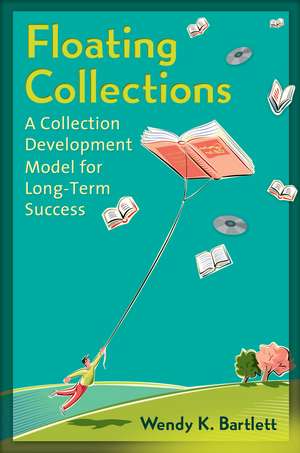
Floating Collections: A Collection Development Model for Long-Term Success
Autor Wendy K. Bartletten Limba Engleză Paperback – 13 ian 2014
Despite its increasing popularity, there are few published works about floating and floating collections. Virtually no one has addressed critical long-term issues like core collections, material selection, and weeding after floating has taken place. Floating Collections: A Collection Development Model for Long-Term Success makes all of this urgently needed information available in one place.
This unique guidebook defines "floating," explains the pros and cons, explores the impact of floating collections on collection work, and enables readers to establish a floating collection in any library. Not only does this book help librarians to decide rationally if, how, and when to float, it also outlines a how-to process for maximum success based on the real-world experience of many systems and identifies ways to maximize the advantages of a floating collection. In addition, the author addresses common collection concerns and outlines workable solutions for problematic issues that can arise.
Preț: 326.32 lei
Preț vechi: 487.96 lei
-33%
Puncte Express: 489
Carte tipărită la comandă
Livrare economică 30 noiembrie-14 decembrie
Livrare prin curier în România Termenul estimat este afișat lângă disponibilitate.
Transport gratuit de la 400.00 lei Plată online sau ramburs, în funcție de opțiunile comenzii.
Retur gratuit în 14 zile Comandă securizată și suport în română.
Specificații
ISBN-13: 9781598847437
ISBN-10: 1598847430
Pagini: 152
Dimensiuni: 156 x 235 x 10 mm
Greutate: 0.28 kg
Editura: Bloomsbury Publishing
Colecția Libraries Unlimited
Locul publicării:New York, United States
ISBN-10: 1598847430
Pagini: 152
Dimensiuni: 156 x 235 x 10 mm
Greutate: 0.28 kg
Editura: Bloomsbury Publishing
Colecția Libraries Unlimited
Locul publicării:New York, United States
V-ar putea interesa
-
 -29%Preț: 366.12 lei516.57 lei
 -
 Managing Reference Today: New Models and Best PracticesKay Ann Cassell-24%Preț: 280.66 lei370.46 lei
 -
 -27%Preț: 171.66 lei235.53 lei
 -
 Building Trustworthy Digital Repositories: Theory and ImplementationPhilip C. Bantin-29%Preț: 460.26 lei644.16 lei
 -
 Protecting Patron Privacy: A LITA GuideBobbi Newman-21%Preț: 363.62 lei459.81 lei
 -
 Assembling the Pieces of a Systematic Review: A Guide for LibrariansMargaret J. Foster-29%Preț: 616.72 lei873.95 lei
 -
 -33%Preț: 520.00 lei770.38 lei
 -
 Academic Librarianship TodayTodd Gilman-29%Preț: 395.00 lei554.02 lei
 -
 -21%Preț: 304.60 lei387.47 lei
 -
 Assessing Library Space for LearningSusan E. Montgomery-21%Preț: 365.69 lei461.03 lei
 -
 Preț: 449.69 lei
 -
 Library Services for Adults in the 21st CenturyElsie Okobi-19%Preț: 372.34 lei457.46 lei
 -
 -25%Preț: 288.82 lei386.64 lei
 -
 Assessing Information Needs: Managing Transformative Library ServicesRobert J. Grover Professor Emeritus-21%Preț: 344.11 lei435.91 lei
 -
 Librarian's Handbook for Seeking, Writing, and Managing GrantsSylvia D. Hall-Ellis-20%Preț: 325.66 lei409.38 lei
 -
 DIY Programming and Book Displays: How to Stretch Your Programming without Stretching Your Budget and StaffAmanda Catherine Struckmeyer-24%Preț: 284.64 lei373.09 lei
 -
 The Learning Commons: Seven Simple Steps to Transform Your LibraryPam Colburn Harland-25%Preț: 250.01 lei331.89 lei
 -
 Transforming Our Image, Building Our Brand: The Education AdvantageValerie J. Gross-29%Preț: 328.98 lei461.98 lei
 -
 -8%Preț: 361.34 lei392.76 lei
 -
 -8%Preț: 353.66 lei384.42 lei
Cuprins
Acknowledgments
Introduction to Floating Collections
Why Floating Works for Today's Libraries
A Word about eBooks
It Is Not All About the Money
Why a Book on Floating Collections?
Organization
Methodology
Common Concerns That Are Addressed
Chapter One: The History of Floating Collections
Floating Collections
How the Float Behaves-and Misbehaves
The Advantages and Disadvantages of a Floating Collection
Who Floats, Who Does Not, and Why
Has Anyone Ever Quit Floating?
Is Floating Right for Your Library System?
Chapter Two: Deciding Whether or Not to Float the Collection
Steering a Middle Course
How Will Floating Affect the Patrons?
How Will Floating Affect Circulation?
How Will Floating Affect the Staff?
How Will Floating Affect the Collection?
How Will Floating Affect Fellow Consortia Libraries?
Are There Other Mind-Bending, Paradigm-Shifting, Major Upheavals Taking Place?
Have Like Libraries Converted Successfully to Floating?
What Are the Hidden Costs or Risks?
Is Now the Right Time to Centralize?
What Is the Worst-Case Scenario?
Whom to Involve
Deciding to Float: Discussion Questions
Chapter Three: Prediction and Preparation
Branch Size and Circulation Rank
Measuring Patron Behavior
Predicting Success
Calculating the Prefloat Percentage
Tracking the Invisible Patron: Floating and the Hold Shelf
Location, Location, Location
Heed the Weed
Interpreting Results
Chapter Four: Communication: Preparing the Staff
Staff Morale
Managing the Change
Staff Concerns before the Float
Planning Staff Communication
Branch Visits
Rebalancing Work Group
Postfloat Staff Concerns
Chapter Five: Preparing the Collection to Float
What Should NOT Float
The High Cost of Bad Shelving Practices
The 24-Door-to-Floor Shelving Method
The Big Weed
Chapter Six: Implementation and Postfloat Considerations
Implementation and Postfloat Communication
Postfloat Branch Visits
The Postfloat Percentage
Rebalancing
The Float Is Right; the Shelves Are Wrong
Chapter Seven: Managing a Floating Collection in the Long Term
Selecting and Budgeting for a Floating Collection
The Importance of Branch Visits for Selectors
Floating and Circulation
Patron Behavior, Not Staff Opinion
Core Collection and Weeding
Vetting Old Editions in a Floating Collection
Weeding a Floating Collection
Epilogue: Floating and the User Experience
Floating and the User Experience
Collection Work and the User Experience
Facility Planning and Design and the User Experience
Readers' Advisory, Merchandising/Displays, Programming and the User Experience
Conclusion
Appendix A: 10 Great Reasons to Float
Appendix B: Partial List of Floating Libraries
Appendix C: Floating Risk Evaluation
Appendix D: Deciding to Float
Appendix E: Chart for Prefloat Branch Visits
Appendix F: Staff Communication
Appendix G: Communication Timeline
Appendix H: Sample 24-Door-to-Floor Cart Tag
Bibliography
Index
Introduction to Floating Collections
Why Floating Works for Today's Libraries
A Word about eBooks
It Is Not All About the Money
Why a Book on Floating Collections?
Organization
Methodology
Common Concerns That Are Addressed
Chapter One: The History of Floating Collections
Floating Collections
How the Float Behaves-and Misbehaves
The Advantages and Disadvantages of a Floating Collection
Who Floats, Who Does Not, and Why
Has Anyone Ever Quit Floating?
Is Floating Right for Your Library System?
Chapter Two: Deciding Whether or Not to Float the Collection
Steering a Middle Course
How Will Floating Affect the Patrons?
How Will Floating Affect Circulation?
How Will Floating Affect the Staff?
How Will Floating Affect the Collection?
How Will Floating Affect Fellow Consortia Libraries?
Are There Other Mind-Bending, Paradigm-Shifting, Major Upheavals Taking Place?
Have Like Libraries Converted Successfully to Floating?
What Are the Hidden Costs or Risks?
Is Now the Right Time to Centralize?
What Is the Worst-Case Scenario?
Whom to Involve
Deciding to Float: Discussion Questions
Chapter Three: Prediction and Preparation
Branch Size and Circulation Rank
Measuring Patron Behavior
Predicting Success
Calculating the Prefloat Percentage
Tracking the Invisible Patron: Floating and the Hold Shelf
Location, Location, Location
Heed the Weed
Interpreting Results
Chapter Four: Communication: Preparing the Staff
Staff Morale
Managing the Change
Staff Concerns before the Float
Planning Staff Communication
Branch Visits
Rebalancing Work Group
Postfloat Staff Concerns
Chapter Five: Preparing the Collection to Float
What Should NOT Float
The High Cost of Bad Shelving Practices
The 24-Door-to-Floor Shelving Method
The Big Weed
Chapter Six: Implementation and Postfloat Considerations
Implementation and Postfloat Communication
Postfloat Branch Visits
The Postfloat Percentage
Rebalancing
The Float Is Right; the Shelves Are Wrong
Chapter Seven: Managing a Floating Collection in the Long Term
Selecting and Budgeting for a Floating Collection
The Importance of Branch Visits for Selectors
Floating and Circulation
Patron Behavior, Not Staff Opinion
Core Collection and Weeding
Vetting Old Editions in a Floating Collection
Weeding a Floating Collection
Epilogue: Floating and the User Experience
Floating and the User Experience
Collection Work and the User Experience
Facility Planning and Design and the User Experience
Readers' Advisory, Merchandising/Displays, Programming and the User Experience
Conclusion
Appendix A: 10 Great Reasons to Float
Appendix B: Partial List of Floating Libraries
Appendix C: Floating Risk Evaluation
Appendix D: Deciding to Float
Appendix E: Chart for Prefloat Branch Visits
Appendix F: Staff Communication
Appendix G: Communication Timeline
Appendix H: Sample 24-Door-to-Floor Cart Tag
Bibliography
Index
Recenzii
[Barrett] argues that floating is a service to communities, is fiscally responsible for budget-strapped systems, and, in the end, a benefit to library staff. Chapters include tips on how to approach the practice with staff, how to ready facilities and collections, and, most importantly, how to manage new collections. Also offered are practical evaluations, FAQs, and a list of larger systems in the United States that offer floating collections.
With many libraries exploring floating collections, Bartlett's book is a useful primer on the process and should be on the reading list for any library looking at floating.
Bartlett, collection development manager for the Cuyahoga County (Ohio) Public Library, begins this book with an introduction that discusses the basics of floating collections-what they are, how they are organized, their methodology, and which concerns such collections address. . . . Eight appendixes offer additional visuals to help librarians and administrators in the decision-making process and the managing of a floating collection.
This is a superb guide that tackles a challenging decision facing libraries. . . a useful manual to ease the most discerning librarian or administrator who may not be convinced that floating their collection is the best way to go. . . . Floating Collections is an excellent resource to have in your personal and library collection. . . . If your library is debating implementing a floating collection, this is the book for you.
Bartlett has written the guide on how to float and live to tell the tale. She provides ample guidance for answering staff questions and helping libraries determine whether floating would be a positive initiative financially and for patron service. I recommend this book for large public libraries as well as academic libraries to whom floating appeals.
With many libraries exploring floating collections, Bartlett's book is a useful primer on the process and should be on the reading list for any library looking at floating.
Bartlett, collection development manager for the Cuyahoga County (Ohio) Public Library, begins this book with an introduction that discusses the basics of floating collections-what they are, how they are organized, their methodology, and which concerns such collections address. . . . Eight appendixes offer additional visuals to help librarians and administrators in the decision-making process and the managing of a floating collection.
This is a superb guide that tackles a challenging decision facing libraries. . . a useful manual to ease the most discerning librarian or administrator who may not be convinced that floating their collection is the best way to go. . . . Floating Collections is an excellent resource to have in your personal and library collection. . . . If your library is debating implementing a floating collection, this is the book for you.
Bartlett has written the guide on how to float and live to tell the tale. She provides ample guidance for answering staff questions and helping libraries determine whether floating would be a positive initiative financially and for patron service. I recommend this book for large public libraries as well as academic libraries to whom floating appeals.