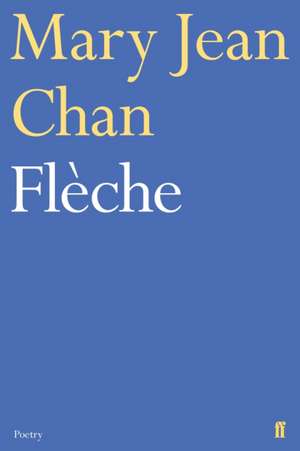
Flèche: Winner of the Costa Poetry Award 2019: The Costa Book Awards 2019
Autor Mary Jean Chanen Limba Engleză Paperback – 4 iul 2019
Observăm în volumul Flèche o construcție poetică ce pornește de la metafora scrimei, sportul practicat de Mary Jean Chan în Hong Kong. Exercițiile de precizie și atac specifice acestui sport devin un vehicul pentru explorarea vulnerabilității corpului queer și non-alb, oscilând între conceptul de „flesh” (carne) și „flèche” (săgeată/atac). Remarcăm modul în care autoarea integrează o secvență de opt poeme dedicată figurii materne, unde fragmentele de memorie despre istoria zbuciumată a Chinei se împletesc cu amintirile propriei copilării, creând o geografie personală și națională complexă. Această ediție „Main” publicată de FABER & FABER reușește să trateze teme dificile precum psihanaliza, identitatea multilingvă și moștenirea postcolonială fără a recurge la artificii inutile. Cititorii familiarizați cu Bright Fear vor aprecia în acest volum de debut rădăcinile temelor de identitate și rasism, însă într-o formă mai brută, ancorată în disciplina fizică a scrimei. Spre deosebire de abordarea istorică viscerală din Mass for Nanking's 1937, Mary Jean Chan alege o perspectivă mai intimă, unde trauma politică este filtrată prin experiența domestică și maternă. În contextul operei sale, Flèche reprezintă punctul de plecare pentru vocea lirică a autorului, care a coordonat ulterior antologia 100 Queer Poems. Dacă lucrările ulterioare tind spre o celebrare a vocilor diverse, acest volum premiat rămâne un studiu de caz esențial despre cum armura defensivă este abandonată în favoarea unei deschideri oneste către lume. Este o lectură marcată de un ritm controlat, unde precizia termenilor tehnici din scrimă întâlnește fluiditatea limbajului poetic englez și chinez.








Preț: 77.49 lei
Carte disponibilă
Livrare economică 09-23 septembrie
Livrare express 25-29 august pentru 29.50 lei
Specificații
ISBN-10: 0571348041
Pagini: 88
Dimensiuni: 159 x 203 x 9 mm
Greutate: 0.14 kg
Ediția:Main
Editura: FABER AND FABER
Colecția Faber & Faber
Seria The Costa Book Awards 2019
V-ar putea interesa
-
 J RJoy Williams-25%Preț: 156.44 lei208.37 lei
 -
 GroveEsther KinskyPreț: 93.06 lei
 -
 The RadicantJames GussenPreț: 122.88 lei
 -
 Preț: 63.43 lei
 -
 Co-existence of TimesJoahnne LogstrupPreț: 68.00 lei
 -
 Exhibition-ismMieke BalPreț: 63.77 lei
 -
 I Can’t SleepLionel RuffelPreț: 61.39 lei
De ce să citești această carte
Recomandăm acest volum celor care caută poezie contemporană cu o puternică încărcătură identitară și politică. Veți câștiga o perspectivă unică asupra intersecției dintre sport, sexualitate și istoria diasporei chineze. Este o alegere excelentă pentru cititorii interesați de evoluția poeziei anglofone asiatice, oferind o structură narativă rară în lirica actuală prin secvența dedicată memoriei materne.
Descriere
POETRY BOOK SOCIETY RECOMMENDATION Fl che (the French word for 'arrow') is an offensive technique commonly used in fencing, a sport of Mary Jean Chan's young adult years, when she competed locally and internationally for her home city, Hong Kong. This cross-linguistic pun presents the queer, non-white body as both vulnerable ('flesh') and weaponised ('fl che'), and evokes the difficulties of reconciling one's need for safety alongside the desire to shed one's protective armour in order to fully embrace the world. Central to the collection is the figure of the poet's mother, whose fragmented memories of political turmoil in twentieth-century China are sensitively threaded through the book in an eight-part poetic sequence, combined with recollections from Chan's childhood. As complex themes of multilingualism, queerness, psychoanalysis and cultural history emerge, so too does a richly imagined personal, maternal and national biography. The result is a series of poems that feel urgent and true, dazzling and devastating by turns.